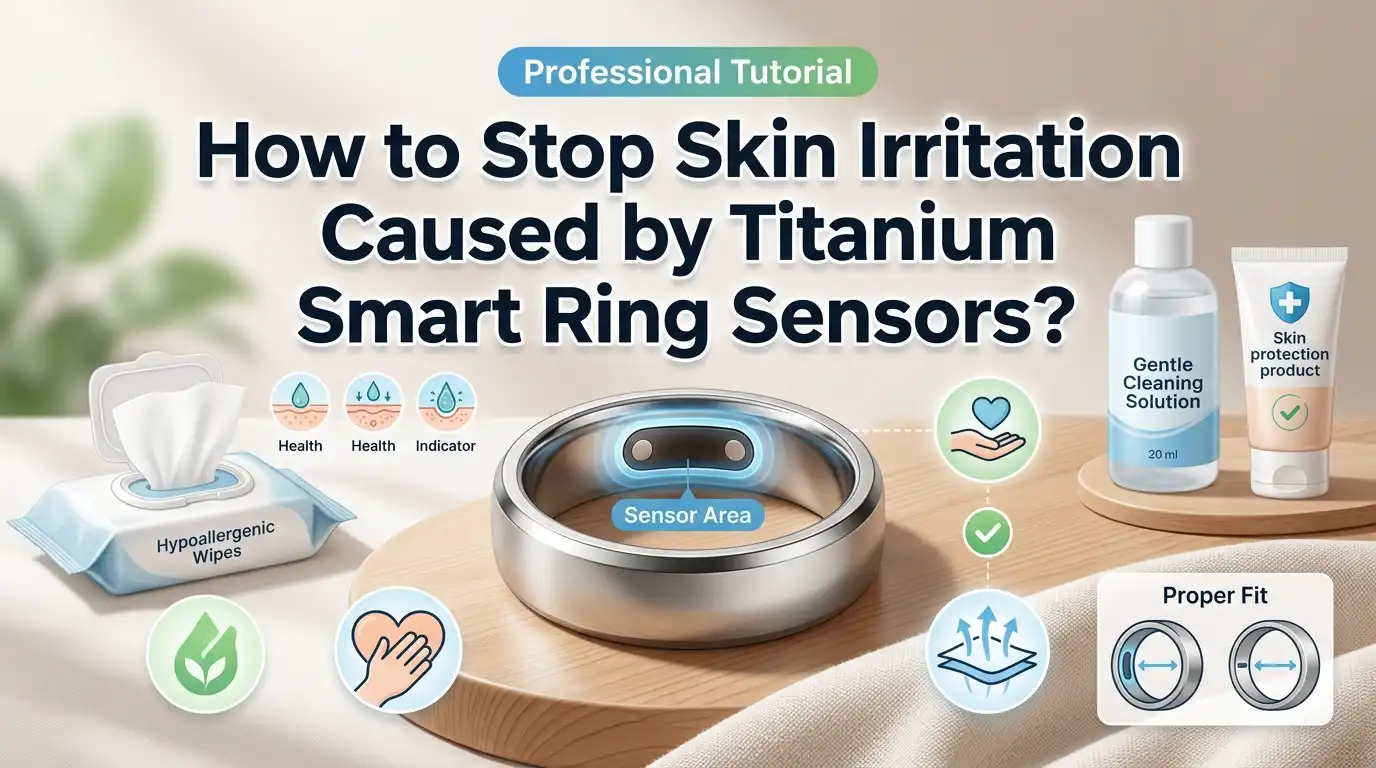
How to Stop Skin Irritation Caused by Titanium Smart Ring Sensors?
Your titanium smart ring tracks your sleep, heart rate, and steps with quiet precision. But one morning, you slip it off and spot an angry red ring under it. The skin feels tender, itchy, or even peels. You are not alone in this. Thousands of smart ring wearers report rashes, dryness, and bumps under their devices.
The good news is that titanium itself rarely causes true allergies. The real culprits are usually moisture, friction, trapped soap, or bacteria building up around the sensor bumps. This guide walks you through every fix, from quick first aid to long term habits, so you can keep wearing your ring without the itch.
Key Takeaways
Before you read the full breakdown, here are the most important points you need to remember:
- Titanium is hypoallergenic in most cases. The rash you see is usually from trapped moisture, soap residue, or friction near the sensor bumps, not a metal allergy.
- Remove your ring first and let your skin heal. A two to four day break gives the skin time to repair before you try new fixes.
- Cleaning matters more than people think. Wash the ring with mild soap weekly and dry it fully. Sensor crevices trap dead skin and bacteria that fuel irritation.
- Fit is everything. A ring that is too tight traps sweat. A loose ring rubs and scratches. Both lead to rashes. Resize if needed.
- Use barrier creams and rotate fingers. A thin layer of fragrance free ointment protects skin, and switching fingers gives the original spot rest.
- If symptoms last more than a week, see a dermatologist for a patch test. True titanium allergies are rare but possible, and only a doctor can confirm.
Now, let us go step by step through every method that works.
Understand Why Your Titanium Smart Ring Causes Irritation
Most people blame the metal first, but titanium is one of the safest materials used in medical implants and jewelry. The real reasons for irritation are different. Your ring sits tight against your finger all day and all night. It traps sweat, water, lotion, and tiny bits of soap underneath.
The inner surface of most smart rings also has small sensor bumps. These optical and temperature sensors stick out slightly to press against your skin. They create pressure points where friction happens with every hand movement.
Bacteria and yeast love this warm, damp space. They multiply quickly and inflame the skin. Dermatologists call this irritant contact dermatitis, and it looks like a true allergy but is not.
Sometimes the coating on the ring wears off and exposes underlying alloy layers. Cheaper smart rings may include trace nickel, which causes real allergic reactions in about 17 percent of women and 3 percent of men. Knowing the cause helps you pick the right fix. Most cases are moisture and friction, not metal.
Take Your Ring Off and Let Your Skin Heal First
The first step is the simplest one. Take the ring off completely. Your skin needs time to breathe, dry out, and rebuild its barrier before any other fix will work.
Leave the ring off for three to four days minimum. For severe rashes, plan on a full week. During this time, wash the area twice a day with lukewarm water and a gentle, fragrance free cleanser. Pat dry with a soft towel.
Apply a thin layer of plain petroleum jelly or a healing ointment at night. This locks in moisture and protects the raw skin. Avoid scented lotions, hand sanitizers, or harsh soaps on the affected finger.
Pros of this method:
- Free and works for almost every irritation type.
- Lets you confirm if the ring is the real cause.
- Helps the skin barrier fully recover.
Cons of this method:
- You lose tracking data during the break.
- Some people find it hard to stop wearing the ring.
- It treats the current rash but does not prevent future ones.
If the rash clears up quickly during the break, you know the ring or something under it caused it. That is good news. It means a few habit changes should solve the problem for good.
Clean Your Smart Ring the Right Way Every Week
A dirty ring is the number one cause of smart ring rashes. Dead skin cells, soap film, sweat salts, and skincare products build up inside the band and around the sensor bumps. You cannot see this layer, but your skin feels it.
Clean your ring at least once a week, and more often if you sweat heavily or use hand cream daily. Use lukewarm water and a small drop of mild, fragrance free dish soap. Rub the inside of the ring with your fingertip.
For the sensor crevices, use a soft bristled toothbrush kept just for this purpose. Gently scrub around each sensor bump. Rinse the ring with clean water until no soap remains. Dry it completely with a lint free cloth before putting it back on.
Pros of regular cleaning:
- Removes the main trigger of most rashes.
- Extends the life of the ring’s finish.
- Improves sensor accuracy too.
Cons of regular cleaning:
- Takes a few minutes every week.
- Strong soaps or alcohol can damage some coatings.
- You must avoid abrasive brushes that scratch the ring.
Never use bleach, hydrogen peroxide, or strong sanitizers. These damage the titanium finish and can leave a chemical film that irritates skin even more.
Dry Your Finger and Ring Completely Every Time
Trapped moisture is the silent enemy. Even if your ring is rated waterproof, the space between the ring and your skin holds water like a sponge. Every shower, hand wash, dish wash, or sweaty workout adds to the problem.
After any contact with water, slide the ring up your finger or take it off. Dry both the ring and your finger with a soft towel. Then twist the ring a few times as you slide it back into place to absorb any remaining drops.
A small trick that works well is using a hair dryer on the cool setting for ten seconds after a shower. This pushes air through the gap and dries the skin underneath.
Pros of the dry first habit:
- Stops bacteria and yeast from growing.
- Prevents soap residue from sticking.
- Costs nothing and takes seconds.
Cons of the dry first habit:
- Easy to forget when you are in a rush.
- Needs constant repetition through the day.
- Not enough on its own if the ring fits poorly.
Some users keep a small microfiber cloth by the sink as a reminder. The habit becomes automatic after about two weeks. Dry skin is happy skin.
Check If Your Ring Fits Correctly
A poorly sized ring is a major cause of irritation. Too tight and it cuts off airflow, traps sweat, and presses the sensors painfully into your skin. Too loose and it spins around, rubbing and scratching the surface all day.
The right fit feels snug but slides over your knuckle with a slight twist. You should be able to spin it gently with one hand, but it should not fly off when you shake your hand downward.
Your finger size changes through the day and across seasons. Fingers swell in heat, after exercise, after salty meals, and during sleep. Always test a ring size by wearing a sizing kit for at least 24 hours before ordering.
Pros of getting the right size:
- Solves pressure point rashes instantly.
- Improves sensor accuracy a lot.
- Reduces moisture buildup naturally.
Cons of resizing:
- May cost money if your current ring is wrong.
- Most smart rings cannot be resized like jewelry.
- You need to reorder a whole new ring.
If your ring spins too freely, try a smaller size. If it leaves deep grooves or feels tight in the morning, you need a larger size. Many brands offer free resizing within the first 30 days.
Switch the Ring to a Different Finger
Wearing the ring on the same finger every day stresses the same patch of skin. The skin never gets a chance to rest and rebuild. Switching fingers spreads the wear across more area.
Most people wear smart rings on the index or middle finger of the non dominant hand. This reduces the friction from typing, gripping, and writing. If you get irritation on your right index finger, try moving the ring to your left index finger for a few weeks.
Keep in mind that each finger is a different size. You may need a fresh sizing test before switching. Also, switching fingers can affect health data slightly because blood flow varies between fingers.
Pros of finger rotation:
- Gives the irritated skin time to fully heal.
- Spreads pressure across multiple sites.
- Helps you find your most comfortable finger.
Cons of finger rotation:
- May need a different size ring.
- Slight data inconsistency on some days.
- Some rings only fit certain fingers well.
A good rotation pattern is to switch fingers every few weeks, or whenever you notice the first signs of redness. Prevention beats treatment.
Apply a Barrier Cream or Skin Protectant
Barrier creams put a thin protective layer between your skin and the ring. They block soap, sweat, and friction from causing damage. Dermatologists often recommend them for people with hand dermatitis and frequent rashes under jewelry.
Look for creams that contain dimethicone, petrolatum, or zinc oxide. These ingredients form a breathable shield. Avoid heavy creams with fragrance, lanolin, or essential oils. Those can cause more irritation, not less.
Apply a very thin layer under the ring once a day, ideally at night. Let it absorb for five minutes before putting the ring back on. Too much cream traps moisture and makes things worse.
Pros of barrier creams:
- Protects damaged skin while it heals.
- Works against soap, water, and friction.
- Cheap and easy to find at any pharmacy.
Cons of barrier creams:
- Can attract dust if you use too much.
- May reduce sensor accuracy slightly.
- Needs daily reapplication.
Some people prefer using a thin coat of clear nail polish on the inside of the ring as a barrier instead. This blocks any trace metals from touching skin, but it wears off in a few weeks and may interfere with sensors. Test with caution.
Wash Your Hands With Mild Soap Only
Strong hand soaps and antibacterial gels strip the natural oils your skin needs. They leave a thin film that traps under the ring and triggers irritation. The soap, not the ring, is often the real attacker.
Switch to a fragrance free, dye free, gentle cleanser. Look for labels that say “sensitive skin,” “syndet,” or “soap free.” Brands like Cetaphil, CeraVe, and Vanicream make good options.
Rinse thoroughly after every wash. Soap residue is sneaky. It builds up over days and seeps under the ring band slowly. Always remove or shift the ring during hand washing when possible.
Pros of switching soaps:
- Reduces irritation across all your skin, not just under the ring.
- Helps with eczema and dry hands.
- Long lasting fix once you change habits.
Cons of switching soaps:
- Sensitive soaps cost more than regular ones.
- You cannot control soaps in public restrooms.
- Some people miss the scent of regular soap.
When you cannot avoid harsh soaps, rinse extra well and apply a light moisturizer afterward. Your finger and your ring will both thank you.
Avoid Wearing the Ring During High Sweat Activities
Smart rings are marketed as 24/7 trackers, but your skin needs breaks. Heavy sweating during workouts, hot yoga, saunas, or long runs creates the perfect storm for irritation. Sweat is acidic and salty, and it pools under the ring band.
Take the ring off for intense workouts and put it back on after a shower. You lose a little exercise tracking, but most smart ring apps let you log the activity manually. The skin benefit is worth it.
Hot tubs, swimming pools, and salt water also push chemicals into the gap. Chlorine and sea salt irritate raw skin quickly. Remove the ring before swimming and rinse it with fresh water afterward.
Pros of taking ring breaks:
- Stops irritation before it starts.
- Protects the ring finish from chemicals.
- Extends battery life with less sensor use.
Cons of taking ring breaks:
- Missing workout heart rate data.
- Easy to lose the ring when traveling.
- Some people find it inconvenient.
Keep a small ring case in your gym bag or by the pool. This makes it easy to take the ring off without losing it. Your skin needs to breathe sometimes.
Test for a True Metal Allergy
If irritation continues after every other fix, you may have a real metal allergy. Titanium itself is rarely the cause. But some smart rings have inner coatings with nickel, cobalt, or chromium in trace amounts. These metals cause allergic contact dermatitis in many people.
A board certified dermatologist can do a patch test. Small patches with different metals are stuck to your back for 48 hours. The doctor checks which ones cause a reaction. This is the only reliable way to know.
Until you get tested, try the clear nail polish trick. Paint two thin coats on the inside of the ring and let each layer fully dry. If the irritation stops, a metal under the surface is likely the problem.
Pros of allergy testing:
- Gives a definite answer instead of guessing.
- Helps you avoid other jewelry that causes reactions.
- May qualify you for a refund or exchange.
Cons of allergy testing:
- Costs money even with insurance.
- Takes a few visits over several days.
- Cannot test for every possible metal.
If you do have a confirmed allergy, look for smart rings made of pure titanium grade 5 or surgical stainless steel with no plating. Some brands now make all silicone or ceramic models for sensitive users.
Treat the Existing Rash With Safe Topical Care
While you work on the cause, treat the rash itself. A clean, gentle approach speeds up healing and stops infection. Do not pick, scratch, or scrub the area, even if it itches badly.
Wash the area with cool water and a mild cleanser. Pat dry. Apply a thin layer of 1 percent hydrocortisone cream twice a day for up to seven days. This reduces redness and itching fast.
For dry, peeling skin, use a fragrance free moisturizer with ceramides or shea butter. If you see yellow crust, pus, or red streaks spreading, the rash may be infected. See a doctor for antibiotics.
Pros of topical treatment:
- Quick relief from itch and burning.
- Most products are over the counter.
- Helps the skin barrier rebuild.
Cons of topical treatment:
- Hydrocortisone thins skin if overused.
- Some creams cause their own reactions.
- Hides symptoms without fixing the cause.
Never use hydrocortisone for more than a week without medical advice. If your rash keeps coming back, you have not fixed the root cause yet. Keep working through the other steps.
Consider Switching to a More Skin Friendly Smart Ring
Sometimes the fix is the device itself. Not all smart rings are built the same. Some use higher grade titanium, smoother inner coatings, and lower profile sensors. These features lead to far less skin trouble.
When shopping for a new ring, look for these features. A concave inner shape reduces contact area with your skin. PVD or DLC coatings are smoother and less reactive. Smaller sensor bumps mean less pressure on one spot.
Check user reviews for words like “rash,” “irritation,” and “sensitive skin.” Real wearers share honest feedback that brands often hide. A return policy of at least 30 days is also important.
Pros of switching brands:
- May fully solve the problem with no daily habits.
- Newer models often have better comfort designs.
- You can pick a better fit.
Cons of switching brands:
- Costs more money.
- You lose your data history if apps differ.
- No guarantee the new one will be better.
If you decide to switch, save the receipt and document the irritation with photos. Many brands offer medical exemption refunds beyond the standard return window.
Frequently Asked Questions
Can pure titanium really cause an allergic reaction?
True titanium allergies are very rare but possible. Studies show fewer than 0.6 percent of people react to pure titanium. Most “titanium” smart ring rashes are caused by trapped moisture, soap, or trace metals in the coating, not titanium itself.
How long should I leave my smart ring off when I get a rash?
Plan for three to seven days off the ring. Mild irritation clears in three to four days. Severe rashes with blisters or peeling need a full week or longer. If symptoms last past two weeks, see a doctor.
Is it safe to wear my smart ring in the shower?
It depends on the brand. Most are water resistant, but wearing it in the shower traps soap and shampoo under the band. This is a major cause of irritation. Take it off before showering and dry it well after any water contact.
What is the best way to clean sensor bumps on a smart ring?
Use a soft toothbrush and a drop of mild dish soap. Gently scrub each sensor area with circular motions. Rinse with lukewarm water and dry completely with a soft, lint free cloth. Avoid alcohol, bleach, and abrasive cleaners.
Should I see a dermatologist or just keep trying fixes at home?
Try the home fixes first for two weeks. If the rash keeps returning, spreads, has pus, or causes severe pain, see a dermatologist. A patch test can confirm whether you have a true metal allergy or just irritant contact dermatitis.
Can I put nail polish inside my smart ring to block irritation?
Yes, this works as a short term test. Apply two thin layers of clear nail polish to the inside of the band, letting each dry fully. It blocks metal contact for a few weeks. However, it may interfere with sensors and wears off quickly, so it is not a permanent fix.

Dillip is the founder and editor of ImageScaleLab.com, a passionate tech enthusiast who loves breaking down complex gadgets and accessories into simple, honest reviews and buying guides. With years of hands-on experience exploring the latest in tech, he is dedicated to helping readers make smarter, more confident purchasing decisions.