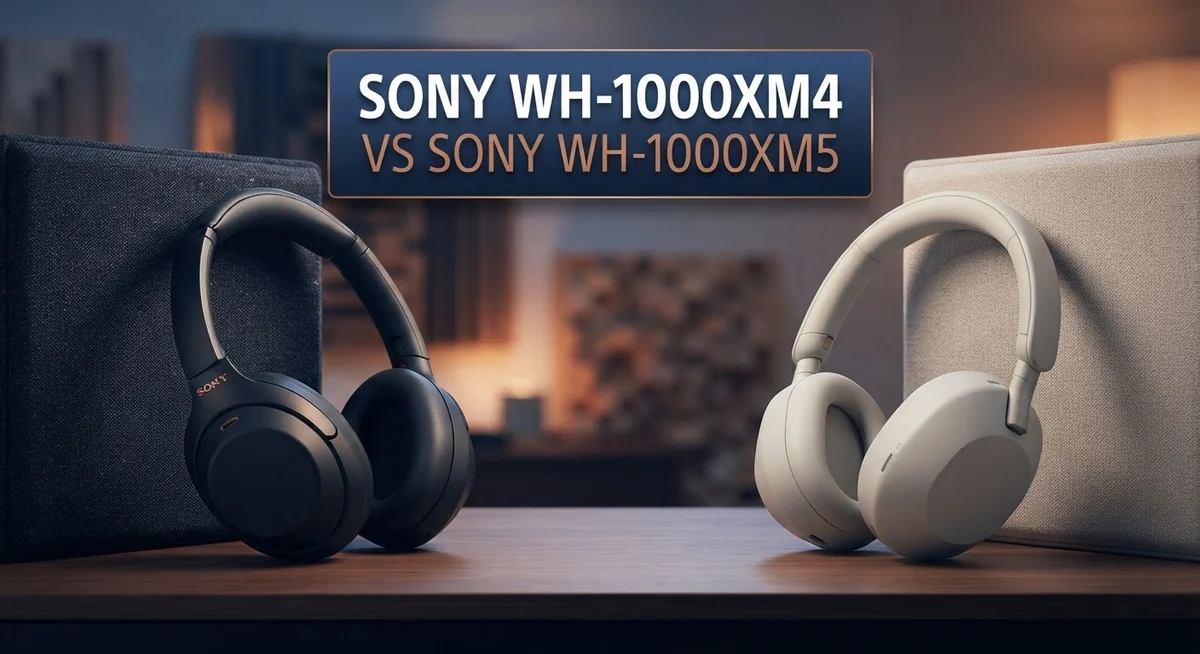
Sony WH-1000XM4 vs WH-1000XM5: Complete Headphones Comparison Guide
Picking the right headphones can feel tricky. Sony gives you two amazing choices: the WH-1000XM4 and the WH-1000XM5.
Both models pack strong noise cancellation. Both promise all day comfort. But they are not identical twins.
The XM5 brings a lighter build and sharper call quality. It also improves the ambient sound mode for better awareness around you.
The XM4 still holds its own. It offers memory foam ear cups and handy multipoint connectivity. Many fans still love its warm, detailed sound.
So which one fits your life better? This guide breaks down every key difference. We compare comfort, sound, mic performance, and daily usability.
By the end, you will know exactly which Sony headphone matches your needs. Let’s jump right in.
In a Nutshell
Here is a quick summary before you dive deeper.
-
The XM5 feels lighter on your head. It suits long listening sessions without neck strain.
-
The XM4 uses memory foam ear cups. This gives a snug fit that many users love.
-
Multipoint connectivity works only on the XM4. You can pair two devices at once easily.
-
Call quality improves a lot on the XM5. Its mic picks up your voice more clearly.
-
Ambient mode sounds more natural on the XM5. You hear surroundings without removing your headphones.
-
Bass depth feels stronger on the XM4. The XM5 leans towards flatter, balanced sound.
-
Build quality feels solid on both models. Neither one feels flimsy or cheap.
-
Battery performance stays consistent on the XM5. Some XM4 units show minor battery drain issues.
-
Both headphones compete well against brands like Bose and Bowers & Wilkins.
Your final pick depends on comfort, connectivity needs, and call quality preferences.
Noise Cancellation Performance
The noise cancellation performance separates these two Sony models in meaningful ways. Both deliver exceptional sound isolation, but they take slightly different approaches to block out the world around you.
The XM5 features elite noise cancellation technology. It uses dual noise sensor microphones to detect ambient sounds with greater precision. This means fewer low frequency rumbles from traffic or airplane engines reach your ears. The system adapts faster to changing environments as you move around. You get a smoother, more seamless listening experience without sudden sound bursts breaking through.
The XM4 still offers excellent noise cancellation that handles most real world situations well. It blocks out office chatter, construction noise, and general background sounds effectively. The main difference lies in refinement rather than raw capability. The XM4 catches about 95% of what the XM5 does, but with slightly less finesse in extreme noise environments.
Ambient mode performance shows a clear upgrade on the XM5. This feature lets outside sounds in when you need awareness. The XM5 captures ambient noise more naturally and cleanly. Conversations sound like people are actually speaking near you instead of through a filter. The XM4’s ambient mode works fine but feels less transparent by comparison.
Low frequency handling matters too. The XM5 excels at canceling deep bass rumbles from engines or HVAC systems. If you fly frequently or work near constant mechanical noise, you’ll notice this advantage. The XM4 handles these frequencies well but doesn’t quite reach the same depth of isolation.
Real world testing shows the XM5 maintains consistent performance across different noise types. Sudden loud sounds, sustained hums, and variable noise all get managed smoothly. The XM4 performs reliably but shows minor inconsistencies when noise patterns shift rapidly.
Battery stability affects noise cancellation too. The XM5 maintains peak performance throughout its entire charge cycle. The XM4’s noise cancellation can vary slightly as battery depletes, though most users won’t detect this in daily use.
Both headphones compete strongly against premium competitors like Bose and Bowers & Wilkins. Your choice depends on whether you need the absolute best isolation or solid performance that handles everyday situations perfectly.

- PREMIUM NOISE CANCELLATION: Two processors control 8 microphones for unprecedented noise...
- MAGNIFICENT SOUND: Engineered to perfection with the new Integrated Processor V1.
Last update on 2026-11-10 / Affiliate links / Images from Amazon Product Advertising API
Design, Build Quality, and Comfort
The XM5 weighs noticeably less than its predecessor. You feel the difference immediately when you put them on your head. The lighter frame reduces fatigue during long listening sessions.
The XM4 relies on memory foam ear cups for comfort. These cups adapt to your ears and provide a snug fit. Many users appreciate how the foam feels soft against their skin.
Both models feature an over-ear design that sits securely on your head. The headband adjusts smoothly to fit different head sizes. You get a stable fit whether you move around or stay still.
The XM5 improves the overall build materials. Sony made the frame more refined. The finish feels premium to the touch. However, some users report the build feels less durable than expected.
The XM4 maintains a solid construction that withstands regular use. The materials feel robust and reliable. This model has proven its durability over time.
Ear cup padding differs between the two models. The XM5 uses new padding that feels softer initially. The XM4 padding lasts longer without breaking down quickly.
Swivel hinges on both models allow easy folding. You can pack them into a bag without hassle. The hinges rotate smoothly and feel well made.
Headband cushioning plays a key role in all day comfort. The XM5 features improved cushioning that spreads pressure evenly. The XM4 cushioning works well but feels slightly firmer.
Ear cup size matters for extended wear. Both models offer generous ear cup dimensions. Your ears fit comfortably inside without touching the speaker drivers.
The carrying case comes with both headphones. You get a sturdy case that protects your investment. The case fits easily into backpacks and travel bags.
Temperature regulation affects comfort during hot weather. The XM5 design allows better airflow around your ears. The XM4 ear cups can feel warmer after extended use.
Overall, the XM5 edges ahead in comfort for all day wear. The lighter weight and improved padding make the difference. The XM4 still delivers solid comfort for most users. Your choice depends on how much you value weight reduction and padding quality.
Sound Quality and Audio Features
The sound quality between these two Sony models shows meaningful differences that matter for different listening styles.
The XM5 delivers a more balanced audio profile right out of the box. Mids and vocals come through with clarity. Treble frequencies stay smooth without harshness. The soundstage feels wider, giving you a sense of space around each instrument. However, the stock tuning runs slightly shallow in the low end. You can fix this easily through the Sony app’s EQ settings to boost bass response.
The XM4 leans toward a warmer, bass forward sound signature. Low frequencies hit harder and feel more present. This makes it great for hip hop, electronic music, and pop tracks. The highs and mids stay crisp but don’t dominate the mix. Some listeners find this more engaging than the XM5’s neutral approach.
Codec support matters for audio quality too. Both headphones use LDAC technology, which streams high resolution audio from compatible devices. This means you get better sound quality than standard Bluetooth codecs on both models. Connection stability stays strong on either option.
The microphone setup differs significantly. The XM5 includes four mics that capture your voice better and reduce background noise during calls. Speech clarity improves noticeably. The XM4 uses fewer mics, so call quality feels less polished in noisy environments.
Ambient mode audio quality shows a real upgrade on the XM5. External sounds blend naturally with your music. Voices come through without distortion. The XM4’s ambient mode works fine but sounds slightly processed in comparison.
Active noise cancellation affects how you hear music too. The XM5 removes more ambient noise, so your audio feels more isolated and focused. This can make bass hit harder and details pop more. The XM4 still handles noise well, but some background sound leaks through, which changes the listening experience slightly.
For streaming services and standard Bluetooth audio, both headphones perform excellently. Choose the XM5 if you want neutral, detailed sound with room for customization. Pick the XM4 if you prefer bass forward tuning and warmer vocals out of the box.
Top 3 Alternatives
Bose QuietComfort 45

- Noise cancelling wireless headphones – The perfect balance of quiet, comfort, and sound. Bose uses...
- High-fidelity audio – The TriPort acoustic architecture offers depth and fullness...
Last update on 2026-11-10 / Affiliate links / Images from Amazon Product Advertising API
The Bose QuietComfort 45 offers excellent noise cancellation that rivals both Sony models. You get a comfortable fit for long listening sessions. The headphones deliver clean audio with balanced mids and lows. Battery life reaches 24 hours on a single charge, which beats the Sony options. Connection is smooth via Bluetooth, and the touch controls work intuitively.
One advantage is the lightweight design. Your ears won’t feel fatigued during extended wear. The microphone quality shines during calls, making conversations clear. These headphones work well for travel, work, and casual listening.
Apple AirPods Max

- ULTIMATE OVER-EAR LISTENING EXPERIENCE—Powered by the H2 chip, AirPods Max 2 delivers improved...
- TUNE OUT THE NOISE—Up to 1.5x more Active Noise Cancellation than the previous generation, fully...

Last update on 2026-11-10 / Affiliate links / Images from Amazon Product Advertising API
Apple AirPods Max brings premium build quality and seamless integration with Apple devices. The spatial audio feature creates an immersive listening experience. You’ll enjoy automatic switching between your iPhone, iPad, and Mac. The sound signature leans toward clarity and detail across all frequencies.
Comfort improves with the headband’s weight distribution. The digital crown lets you control volume and playback with precision. Battery life delivers around 20 hours of listening. These headphones suit Apple ecosystem users who want a cohesive experience.
Sennheiser Momentum 4
No products found.
Sennheiser Momentum 4 stands out with outstanding battery endurance—up to 60 hours per charge. This makes them perfect for frequent travelers. Sound quality emphasizes warm, engaging tones that feel natural. The noise cancellation performs admirably in various environments.
The build feels sturdy and premium. Comfort comes from the well-padded ear cups and adjustable headband. Connection stability remains consistent. These headphones offer excellent value for users prioritizing durability and longevity over cutting-edge features.
Battery Life and Charging
Both the XM4 and XM5 deliver 30 hours of battery life, which means you get roughly a month of typical listening before needing a charge. This endurance keeps you going through long commutes, travel days, and work weeks without anxiety.
The XM5 introduces more stable battery performance across different usage scenarios. Real world testing shows the XM5 maintains consistent runtime whether you use noise cancellation at full strength or switch to ambient mode frequently. The XM4 sometimes delivers slightly variable battery life depending on your noise cancellation settings and listening habits.
Quick charging works on both models, so you can grab a fast top up when you’re in a rush. A short charging session gives you enough juice for several hours of listening. This feature matters when you forget to plug in overnight.
Battery stability directly impacts noise cancellation performance. The XM5’s improved power management means active noise cancellation stays strong throughout your battery cycle. The XM4 performs well too, but you might notice slight fluctuations in cancellation quality as the battery drains.
Charging speed itself feels similar between both headphones. You’ll use the same USB cable type, and the charging dock works with both models. Neither one charges dramatically faster than the other, so this isn’t a deciding factor.
The XM5’s lighter weight also contributes to overall battery efficiency. Less mass means the motor doesn’t work as hard during active noise cancellation, which helps preserve battery life during extended sessions. The XM4’s memory foam ear cups add slight weight, though this doesn’t dramatically affect runtime.
For daily users, both headphones eliminate battery worry. You’ll rarely face a dead battery situation with either model. The real difference lies in consistency. The XM5 delivers more predictable battery performance, while the XM4 requires slightly more attention to battery management if you use maximum noise cancellation constantly.
Call Quality and Microphone Performance
When you take calls on your headphones, microphone quality makes all the difference. The XM5 steps up here with improved mic technology that captures your voice more clearly. You sound cleaner and more natural to the person on the other end of the line.
The XM4 has a solid microphone, but it doesn’t match the XM5’s performance level. Wind noise affects the XM4 more during outdoor calls. The XM5’s enhanced mic setup filters out background sounds better, so your voice stands out even in noisy environments.
Both headphones use multiple microphones for call processing. This setup helps reduce echo and background chatter. However, the XM5’s mic array works with improved algorithms that Sony refined specifically for voice clarity.
Call quality depends on more than just the microphone itself. Noise cancellation technology plays a big role too. The XM5’s superior noise cancellation means fewer distractions reach the other person. When you’re on a busy street or in an office, this matters tremendously.
The XM4 still handles calls well for everyday situations. You won’t feel frustrated with its performance on regular phone calls. The difference becomes obvious when you’re in challenging environments like coffee shops or transit stations.
Ambient mode also affects how you hear the other person. The XM5’s improved ambient mode lets you listen to calls while staying aware of your surroundings. You can hear if someone taps your shoulder or if a car approaches. The XM4 offers ambient mode too, but the audio quality feels less natural.
For video conferencing, the XM5 shines even brighter. Remote participants praise the clarity they receive. The XM4 works fine for video calls, yet the XM5 creates a noticeably better experience for both you and the people you’re talking to.
If call quality matters to you, the XM5 delivers measurably better performance. The improved microphone, stronger noise cancellation, and refined ambient mode all work together. The XM4 remains capable for basic calling needs, but the XM5 handles demanding situations with confidence.
Pros and Cons
Sony WH-1000XM4 Pros
- Elite noise cancellation that blocks out most ambient sounds effectively
- Memory foam ear cups provide comfort during extended listening sessions
- Multipoint connectivity lets you switch between two devices seamlessly
- Pleasing sound quality with warm, bass forward character
- Strong build quality that withstands regular use
Sony WH-1000XM4 Cons
- Battery life can feel inconsistent across different usage patterns
- Highs and mids sound crisp but lack the bass depth found in newer models
- Microphone performance doesn’t match what newer competitors offer
Sony WH-1000XM5 Pros
- Next level noise cancellation with superior isolation capability
- Lightweight design reduces ear fatigue during all day wear
- Improved microphone quality makes calls and video conferencing much clearer
- Better ambient mode lets you hear surroundings without removing the headphones
- More balanced audio profile straight out of the box
Sony WH-1000XM5 Cons
- Stock sound signature feels shallow until you adjust EQ settings
- Build quality feels less durable compared to the XM4 model
- Requires more tweaking to match your preferred sound signature
Who Should Buy It
The XM5 suits you best if you spend most of your day wearing headphones. Its lightweight design keeps your ears comfortable for eight hours or more without fatigue. The improved microphone quality also matters if you take frequent video calls or conference calls through your headphones.
Choose the XM5 if noise cancellation performance matters most to you. The elite isolation blocks out more ambient sounds than the XM4. This makes it ideal for open office environments, crowded commutes, or when you need deep focus. The superior ambient mode also lets you hear announcements or conversations without removing your headphones.
The XM4 remains an excellent choice if you value proven reliability. Many users have owned this model for years without issues. You get excellent noise cancellation that handles most real world situations. The memory foam ear cups deliver genuine comfort during extended sessions. If you already own compatible devices, the multipoint connectivity lets you switch between them effortlessly.
Pick the XM4 if you prefer a warmer sound signature. The bass forward character appeals to people who enjoy music with punch and depth. The crisp highs and mids work well across different genres. This sound profile has remained popular with audio enthusiasts since release.
Consider the XM5 if call quality directly impacts your work. The microphone improvements make a noticeable difference during important meetings. Your colleagues will hear you more clearly. The stronger noise cancellation also keeps background sounds from interrupting your calls.
The XM4 works well for casual listeners who want solid all around performance. You get noise cancellation, comfort, and good sound without complexity. Everyday users won’t notice major limitations. The strong build quality means these headphones will last through years of regular use.
Choose based on your primary use case. Frequent travelers and remote workers benefit more from the XM5. Daily commuters and office workers find both models sufficient. Music enthusiasts might prefer the XM4’s warmer character. Professional users who take many calls should lean toward the XM5’s superior microphone.
Final Verdict
Choosing between these two headphones comes down to what you value most in daily use. Both models deliver strong performance, but they shine in different situations.
Think about how you travel first. If you fly often or move between locations, the XM5’s lighter frame reduces strain during long trips. This makes a real difference on cross country flights or long commutes.
Software experience also matters here. Sony updates both models through the same app, but the XM5 receives newer features first. This means you get fresh tools and adjustments before they reach the XM4.
For gym sessions or workouts, neither headphone was built specifically for sweat resistance. However, the XM4’s sturdier build might handle occasional bumps better during active movement.
If you already own accessories or cases designed for the XM4, switching models means adjusting to new dimensions. The XM5 has a different shape that won’t fit older XM4 accessories.
Long term durability plays into this decision too. The XM4 has been on the market longer, so its performance over time is well documented by real users. The XM5 is newer, so its long term track record is still building.
Your listening environment shapes this choice as well. Office workers who need clear calls throughout the day benefit more from XM5 features. Home listeners who prioritize a familiar sound profile might stick with the XM4.
Both headphones serve loyal audiences for good reasons. Neither one is a wrong choice. Your specific habits, work setup, and comfort preferences will point you toward the right pick.
Take time to think about your daily routine first. Consider where you’ll wear these headphones most and what tasks matter to you. That answer will guide you toward the model that truly fits your life, whether that’s the tried and tested XM4 or the refined XM5.
Frequently Asked Questions
Which headphones have better noise cancellation?
The XM5 takes the lead here. It delivers next-level isolation that blocks out more ambient sound than the XM4. If you spend your workday in loud environments like offices, coffee shops, or airplanes, the XM5 handles it better. The XM4 still offers excellent noise cancellation. Many listeners find it more than enough for daily use.
Do both headphones have the same battery life?
Yes, both models offer 30-hour battery life on a single charge. Quick charging works on both too. However, the XM4’s battery performance can feel inconsistent depending on how you use the headphones. The XM5 delivers more stable, predictable battery performance across different usage patterns.
Which model is better for video calls and meetings?
The XM5 wins for call quality. It has improved microphone technology that captures your voice more clearly. If your work involves frequent calls, video meetings, or voice recordings, the XM5 makes a real difference. The XM4’s microphone works fine for occasional calls but doesn’t match newer competitor standards.
Can I use both headphones with multiple devices at once?
Only the XM4 includes multipoint connectivity. This feature lets you connect to two devices simultaneously and switch between them seamlessly. The XM5 does not have this capability. If you regularly jump between a laptop and phone, the XM4 offers more convenience here.
Which headphones feel lighter during long wear sessions?
The XM5 is lighter and reduces ear fatigue during extended use. Its design matters if you wear headphones all day. The XM4 uses memory foam ear cups that provide comfort too, but the XM5’s overall weight advantage makes a difference for marathon listening sessions.

Dillip is the founder and editor of ImageScaleLab.com, a passionate tech enthusiast who loves breaking down complex gadgets and accessories into simple, honest reviews and buying guides. With years of hands-on experience exploring the latest in tech, he is dedicated to helping readers make smarter, more confident purchasing decisions.