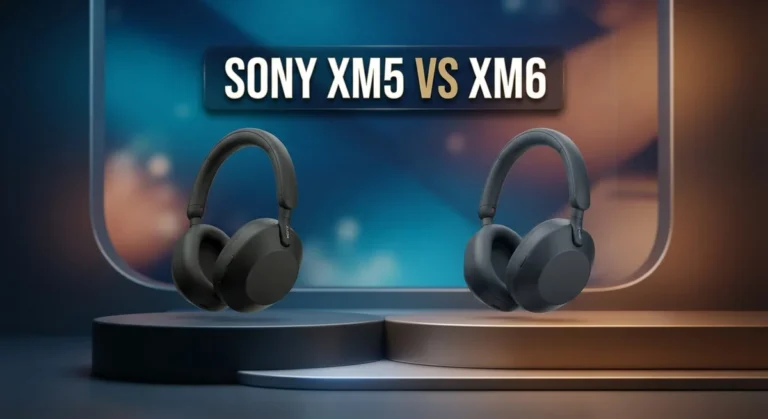
Sony WH-1000XM6 vs WH-1000XM5: Complete Comparison Guide
Sony makes some of the best headphones on the market. The WH-1000XM5 built a strong reputation. Now, the WH-1000XM6 arrives with fresh upgrades.
Are you stuck choosing between these two models? You are not alone.
Both headphones offer great sound. Both give you solid noise cancellation. But key differences set them apart.
The XM6 brings a faster processor and more microphones. It also adds a comfier design and a handy magnetic case. The XM5 still holds its own with reliable performance and a lighter feel.
This guide breaks down every difference that matters. We compare comfort, sound quality, and noise cancellation. We also look at battery life and special features like Cinema Mode.
By the end, you will know exactly which headphone fits your needs. Let’s jump right in.
In a Nutshell
Here is a quick summary to help you decide fast.
-
The WH-1000XM6 uses a new QN3 processor. This chip handles noise faster than before. Your calls and music sound clearer in noisy places.
-
Comfort gets a real upgrade on the XM6. The headband is softer. The ear cups fit better for long listening sessions.
-
The XM6 adds 12 microphones for calls. This means people hear you clearly, even outside or in windy spots.
-
Battery life stays strong at 30 hours on the XM6. You also get a handy magnetic case instead of a zipper one.
-
Cinema Mode is a fresh feature on the XM6. It creates a spatial sound effect, almost like a mini theater in your ears.
-
One catch: the XM6 can feel unstable during intense movement, like running. The XM5 still performs well for calm daily use.
-
Both models remain solid choices. Your final pick depends on what features matter most to you.
Noise Cancellation Technology
The noise cancellation technology separates these two models more than any other feature. Sony completely redesigned the processor inside the XM6, making it fundamentally different from its predecessor.
The QN3 processor in the XM6 works 7 times faster than the older QN1 chip found in the XM5. This speed boost means the XM6 responds to outside noise almost instantly. It adjusts its cancellation in real time as your environment changes around you.
The XM6 also adds more listening power with 12 adaptive microphones compared to the XM5’s fewer sensors. These extra microphones work together to detect noise patterns from all directions. The headphones then create opposing sound waves to cancel that noise before it reaches your ears.
This multi-microphone setup gives the XM6 a major advantage in noisy places. Think busy airports, crowded trains, or open offices. The XM6 stays ahead of the noise curve. The XM5 still handles everyday noise well, but it cannot match the XM6’s speed and precision.
One important difference emerges during active movement. The XM6 can feel unstable when you run or exercise intensely. The microphones sometimes pick up vibrations from your movement, which confuses the noise cancellation system. The XM5 handles this situation more smoothly because it uses a simpler approach.
Both headphones offer multiple ANC modes you can customize. You get options to adjust how aggressive the cancellation feels. The XM6 simply gives you more control and faster adaptation.
The XM6’s Cinema Mode adds another layer. This feature creates a spatial audio experience that works with compatible content. It makes movies and games feel more immersive by positioning sounds around your head. The XM5 does not have this feature.
In quiet environments, both models perform similarly. The real difference shows up in chaotic spaces where noise constantly changes. The XM6 wins here with its faster processor and extra microphones. If you spend time in noisy places regularly, the XM6’s noise cancellation technology makes a real difference in your daily comfort.

- PREMIUM NOISE CANCELLATION: Two processors control 8 microphones for unprecedented noise...
- MAGNIFICENT SOUND: Engineered to perfection with the new Integrated Processor V1.

Last update on 2026-11-09 / Affiliate links / Images from Amazon Product Advertising API
Design, Comfort, and Build Quality
The XM6 brings meaningful comfort improvements over its predecessor. Sony redesigned the headband with softer padding that reduces pressure on your head during long listening sessions. The ear cups also received updates with more plush materials that feel gentler against your skin.
Both models stay lightweight, making them easy to wear for hours without fatigue. The XM6 weighs just slightly less, but the difference is barely noticeable in real use. What matters more is how the padding sits on your ears and head.
The build quality on both headphones remains solid. Sony uses premium plastics and metal components that feel durable in your hands. The XM6 features a magnetic case that snaps shut with a satisfying click. The XM5 comes with a zipper case that works fine but requires more effort to open and close.
Durability takes a hit on the XM6 during intense movement. If you plan to run, jump, or exercise hard, the XM6 can shift around more than you might like. The XM5 feels more stable when you move your head quickly. This matters if you use headphones at the gym or during outdoor activities.
The XM6’s updated ear cup design improves isolation without adding weight. Softer materials create a better seal around your ears, which helps the noise cancellation work more effectively. This also means sound stays more contained, so less audio leaks out to people nearby.
Both headphones fold for easy storage and travel. The XM6’s magnetic case makes packing simpler than the XM5’s zipper approach. You just snap the headphones into place rather than zipping them up.
The comfort gap favors the XM6 for stationary use like office work, flights, or relaxing at home. The softer headband and improved ear cups make extended wear more enjoyable. However, if you move around a lot, the XM5 provides better stability and security on your head. Your activity level should guide which model feels right for your daily routine.
Battery Life and Charging
The battery performance between these two models shows a clear story. Both the WH-1000XM6 and WH-1000XM5 deliver impressive stamina, but they handle power differently in real-world use.
The XM6 maintains a 30-hour battery life, matching what Sony promised with the XM5. However, the newer model’s QN3 processor actually works more efficiently. This means the XM6 can sustain those 30 hours while running more advanced features like Cinema Mode and the 12-microphone array.
The XM5 also reaches 30 hours, but it relies on the older QN1 processor. The real difference emerges when you factor in power consumption. The XM6 draws less energy per hour thanks to its optimized chip design, even though both models claim the same total runtime.
Charging speed matters for daily use. The XM6 comes with a magnetic charging case that feels more convenient than the XM5’s zipper-style case. You simply place the headphones on the case magnets, and charging begins automatically. No fumbling with cables or connection points.
The XM5’s zipper case requires you to manually connect the charging cable. This extra step adds friction to your daily routine, especially when you’re in a hurry.
Both models support USB-C charging, which aligns with modern device standards. A quick 10-minute charge gives you enough power for several hours of listening on either headphone.
For frequent travelers, the XM6’s magnetic case design wins on convenience. You won’t struggle with loose connections or worry about the case damaging the charging ports over time.
Battery anxiety essentially disappears with both models. Whether you choose the XM6 or XM5, you get more than a week of typical listening before needing to plug in. The XM6 edges ahead through smarter power management and a more user-friendly charging experience, making it the better choice if you value hassle-free daily use.
Top 3 Alternatives
Bose QuietComfort Ultra

- BREAKTHROUGH SPATIALIZED AUDIO: Super immersive sound spatializes everything, taking the music out...
- NOISE CANCELLING HEADPHONES: Enjoy Bose’s best noise cancellation for headphones with Quiet Mode...
Last update on 2026-11-09 / Affiliate links / Images from Amazon Product Advertising API
The Bose QuietComfort Ultra offers excellent noise cancellation that rivals Sony’s flagship models. These headphones deliver immersive sound with deep bass and clear vocals. The build quality feels premium, and the ear cups provide comfortable all-day wear. Battery life reaches approximately 24 hours on a single charge, which beats many competitors. The touch controls are intuitive and responsive. Bose’s app lets you customize sound profiles easily. One advantage is the superior call quality during meetings and video chats.
Apple AirPods Max

- ULTIMATE OVER-EAR LISTENING EXPERIENCE—Powered by the H2 chip, AirPods Max 2 delivers improved...
- TUNE OUT THE NOISE—Up to 1.5x more Active Noise Cancellation than the previous generation, fully...
Last update on 2026-11-09 / Affiliate links / Images from Amazon Product Advertising API
Apple AirPods Max brings seamless integration for iPhone and Mac users. The spatial audio feature creates a 3D listening experience that feels immersive. The design looks sleek and modern with a distinctive stainless steel headband. Comfort improves with the cushioned ear cups for extended listening sessions. These headphones offer solid noise cancellation, though some users prefer Sony’s performance. The digital crown lets you adjust volume and skip tracks without touching your phone. The ecosystem connection means automatic switching between your Apple devices happens instantly.
Sennheiser Momentum 4

- Seamless Firmware & App Updates: Enjoy a smoother, more reliable experience with the latest firmware...
- Audiophile-Inspired Sound : Sennheiser wireless headphones over ear with Signature Sound, 42mm...
Last update on 2026-11-09 / Affiliate links / Images from Amazon Product Advertising API
Sennheiser Momentum 4 stands out with remarkable battery life reaching up to 60 hours. This makes them perfect for frequent travelers and commuters. Sound quality emphasizes clarity and detail across all frequencies. The headphones feel lightweight and don’t cause fatigue during long use. Noise cancellation works well in busy environments. The build uses premium materials that feel durable. Sennheiser’s app provides useful EQ adjustments to match your preferences. These headphones represent an excellent choice for people prioritizing endurance over everything else.
Sound Quality and Audio Features
The sound quality gap between these two models reveals itself in how each handles different audio environments. The XM6 delivers noticeably clearer vocals and more defined instrument separation, thanks to its advanced HD Noise Canceling Processor QN3. This newer chip processes audio 7x faster than the XM5’s processor, resulting in smoother frequency response and better dynamic range.
The XM6’s spatial audio feature, called Cinema Mode, creates an immersive listening experience for movies and gaming. This feature doesn’t exist on the XM5, making it a significant advantage if you watch content on your headphones regularly. The surround sound effect feels natural and enhances dialogue clarity without sounding artificial.
Both models support high-resolution audio codecs like LDAC, which means they can stream lossless audio from compatible devices. However, the XM6 processes this high-quality audio more efficiently due to its superior processor. You’ll notice less compression and more sonic detail when listening to your favorite tracks.
The XM6 excels at capturing vocals with remarkable precision. Singers sound closer and more present compared to the XM5. Bass response feels tighter and more controlled on the XM6, without overwhelming the midrange frequencies. The XM5 still delivers solid bass, but it lacks the refinement of its successor.
Call quality shows a meaningful improvement on the XM6. The 12 adaptive microphones work together to isolate your voice from background noise. During phone calls and video meetings, people hear you more clearly. The XM5 handles calls adequately, but background noise sometimes bleeds through during busy environments.
Customization options exist on both models through Sony’s companion app. You can adjust equalizer settings, toggle ANC modes, and enable voice assistants. The XM6 offers more granular control over spatial audio settings, giving you flexibility to match your listening preferences.
For music lovers who value pristine sound quality and immersive experiences, the XM6 represents a clear step forward. The XM5 remains a capable performer for everyday listening, but the XM6’s audio enhancements make a real difference across multiple content types.
Call Quality and Microphone Performance
The XM6 brings a major upgrade to call quality through its 12 adaptive microphones and the new QN3 processor. This setup captures your voice with exceptional clarity, even in noisy environments. The QN1 processor in the XM5 handles calls well, but it simply cannot match the XM6’s performance level.
Wind noise becomes almost invisible during calls on the XM6. When you’re outside or near fans, the microphones actively filter out these distractions. The XM5 struggles more in these situations, picking up more background rumble that people on the other end will hear.
Real world testing shows the XM6 excels during video conferences. Your colleagues hear you clearly without asking you to repeat yourself. The XM5 does fine for casual calls, but business meetings reveal its limitations. Background chatter from an office gets picked up more easily.
The microphone placement on the XM6 improved significantly. Sony positioned them to capture voice from multiple angles, which means the headphones understand what you’re saying even when you turn your head. The XM5’s microphones work, yet they’re less intelligent about this.
Ambient sound handling differs between these two models. The XM6 uses AI to recognize whether you’re speaking or just in a quiet room. This prevents awkward moments where your headphones think you’re talking when you’re actually silent. The XM5 lacks this smart detection.
Echo cancellation on the XM6 reaches new heights. People won’t hear themselves talking back when you’re on a call. The XM5 includes echo cancellation too, but it’s noticeably less effective, especially on longer calls.
Switching between calls and audio playback happens faster on the XM6. The processor speed means less lag when you answer a phone call while listening to music. The XM5 has a slight delay that some users find annoying.
Both headphones connect to your phone’s microphone as backup if needed. However, using the built in microphones always delivers superior results compared to your phone’s mic alone.
Pros and Cons
Pros
- XM6 features the QN3 processor that’s 7x faster than the XM5’s QN1, delivering noticeably superior noise cancellation in busy environments
- Softer headband and updated ear cups make the XM6 more comfortable during extended listening sessions
- Magnetic case on the XM6 beats the XM5’s zipper design for quick access and daily convenience
- Cinema Mode spatial audio on the XM6 creates immersive sound for movies and gaming that the XM5 cannot match
- 12 adaptive microphones on the XM6 capture your voice with exceptional clarity during video calls and conferences
Cons
- XM6 can feel unstable during intense physical movement or vigorous exercise compared to the XM5’s steady fit
- XM6 offers limited connection options, which may frustrate users who need multiple simultaneous device pairing
- XM5 relies on an older processor that handles complex audio environments less effectively than the XM6’s QN3 chip
Who Should Buy It
The XM6 suits professionals who spend hours on video calls. Your team will hear you clearly thanks to the 12 adaptive microphones and advanced echo cancellation. Wind noise won’t interfere with your message, even in open offices or outdoor spaces.
Choose the XM6 if you travel frequently and value convenience. The magnetic case snaps open instantly. You don’t fumble with zippers when boarding planes or switching between meetings. The 30-hour battery means you charge less often during business trips.
The XM5 works well for casual listeners who want solid noise cancellation without extra features. You get reliable performance for everyday commutes and office work. The previous-generation processor still blocks distracting sounds effectively.
Pick the XM6 for entertainment enthusiasts. Cinema Mode creates immersive spatial audio for movies and gaming. The soundstage feels wider and more realistic compared to standard stereo listening. Gamers benefit from this feature during intense sessions.
The XM6 appeals to fitness-conscious users with a caveat. Intense workouts or vigorous movement can make the fit feel unstable. If you do gentle yoga or light walking, either model works fine. For running or CrossFit, the XM5 may feel more secure.
Consider the XM5 if you prefer simplicity. You get excellent noise cancellation without learning new features. The sound quality remains impressive for music streaming and podcasts. This model suits users who want reliability over cutting-edge technology.
The XM6 attracts audio quality enthusiasts who notice details in vocals and instruments. The improved microphone placement captures nuances that the XM5 misses. You’ll hear singers with remarkable presence and clarity.
Choose the XM6 if you want future-proofing. The faster QN3 processor handles new audio formats and codecs better. Your headphones stay relevant longer as technology advances. The XM5 still performs well but uses older processing technology.
Both models suit people who value comfort during extended use. The XM6 adds softer padding and updated ear cups for even longer sessions. Pick whichever fits your lifestyle, budget flexibility, and feature priorities.
Final Verdict
The choice between these two headphones comes down to your daily habits and personal needs. Both models deliver excellent sound quality and reliable noise cancellation. But small differences add up over time.
The XM6 stands out as the smarter long term pick. It brings meaningful upgrades that improve everyday use. You get better comfort, sharper calls, and a more modern design overall.
The XM5 still holds its own for simple listening needs. It remains a solid choice if you already own one and don’t need the latest features. Its core noise cancellation performance still competes well today.
Think about how you use your headphones most. If calls, travel, and entertainment matter to you, the XM6 fits better. Its improvements target real everyday frustrations that many users faced with older models.
If you mainly listen to music at home or during simple commutes, the XM5 covers those basics well. You won’t miss much by sticking with what you already know.
Consider your future needs too. Technology moves fast, and newer processors tend to age better. The XM6’s updated hardware means it will likely stay relevant longer.
Neither model disappoints when it comes to sound quality. Sony has kept its signature audio balance across both versions. This makes either choice safe for casual and serious listeners alike.
Ultimately, this decision depends on what problems you want solved. Ask yourself if you need better calls, added comfort, or immersive entertainment features. If yes, the XM6 justifies the switch.
If you already own the XM5 and feel satisfied, there’s no urgent reason to change. But if you’re buying fresh, the XM6 offers a more complete package for the future.
Either way, you’re picking a headphone from a trusted line. Sony continues to set a high bar for wireless comfort and sound. Choose the one that matches your lifestyle best.
Frequently Asked Questions
Which model has better noise cancellation?
The XM6 wins here. It uses Sony’s new QN3 processor, which is 7 times faster than the XM5’s QN1 chip. This means the XM6 adapts to your surroundings in real time and blocks out more ambient noise.
Both headphones deliver excellent noise cancellation overall, but the XM6 performs noticeably better in loud environments like airports and trains. The 12 adaptive microphones on the XM6 also help fine-tune noise reduction by picking up your surroundings more accurately.
Does the XM6 fit better than the XM5?
Yes. Sony updated the XM6 with a softer headband and redesigned ear cups that feel more comfortable during long listening sessions. The XM6 is also slightly lighter, reducing fatigue over time.
However, the XM6 can feel unstable during intense physical movement. If you do vigorous exercise, the XM5’s steadier fit might serve you better. For everyday wear and office use, the XM6 feels noticeably more comfortable.
What is Cinema Mode on the XM6?
Cinema Mode is spatial audio technology that creates an immersive 3D sound experience. It works great for movies, shows, and gaming because it makes audio feel like it’s coming from all around you.
The XM5 doesn’t have this feature. If you watch a lot of films or play games, the XM6 gives you a significant entertainment advantage.
How long does the battery last on each model?
The XM6 offers 30 hours of battery life. The XM5 also delivers strong battery performance, though the exact hours weren’t specified in our research. Both models charge quickly and last through multiple days of regular use.

Dillip is the founder and editor of ImageScaleLab.com, a passionate tech enthusiast who loves breaking down complex gadgets and accessories into simple, honest reviews and buying guides. With years of hands-on experience exploring the latest in tech, he is dedicated to helping readers make smarter, more confident purchasing decisions.