Bose QC Ultra 2 vs Sony XM6: Complete Comparison Guide
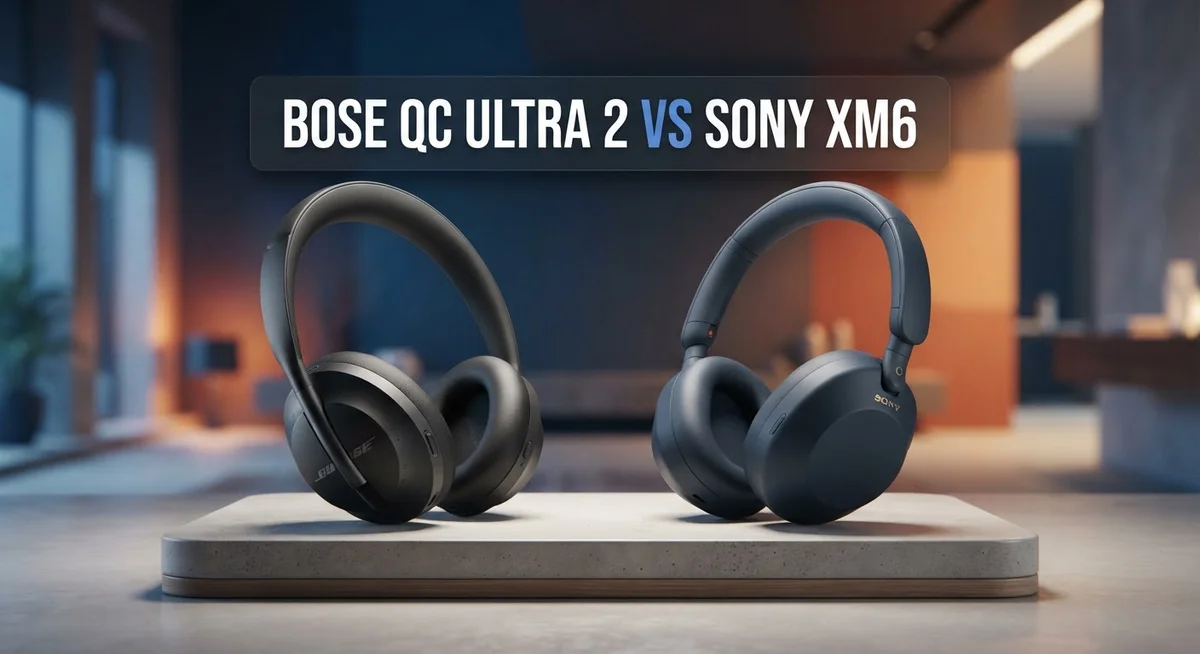
Picking the perfect noise cancelling headphones feels tough these days. Two models stand out from the crowd right now. The Bose QC Ultra 2 and Sony XM6 lead the pack.
Both brands built these headphones for people who want silence. They also want great sound on top of that silence. But these two flagships take different paths to get there.
Bose focuses on comfort and a refined build. You get a lighter fit and a fuller sound. Sony brings smarter features and deeper ANC. Its low frequency blocking handles engine noise and road rumble with ease.
So which one fits your daily life better? This guide breaks down sound, comfort, battery, and features. We compare them side by side so you can pick the right pair for your ears.
In a Nutshell
Here is the quick rundown before you decide:
-
Sound: The QC Ultra 2 gives a fuller sound with a wider soundstage. The XM6 leans warm with extra bass and lets you tweak the EQ.
-
Noise Cancellation: The XM6 blocks low frequency noise like engines and traffic better. It stays quiet with very little white noise.
-
Comfort: The QC Ultra 2 feels lighter on your head. Many users notice this weight difference right away during long listening sessions.
-
Build Quality: Bose keeps a premium feel with tighter construction. The XM6 has larger earcups but thinner padding.
-
Battery: Both headphones match on battery life. The XM6 charges faster when you need a quick top up.
-
Smart Features: Sony packs in more customizable controls and smart features. Bose keeps things simple with intuitive controls that just work.
-
The Verdict: These two sit at the top of the ANC game right now. Neither one beats the other completely. Your choice depends on what matters most to you.
Sound Quality and Audio Performance
When you listen to music on the QC Ultra 2, you get a fuller sound with more space around each note. The soundstage feels wider, which means instruments spread out more naturally. This works great for jazz, orchestral music, and anything where you want to hear details clearly.
The XM6 takes a different approach. Sony tuned these headphones with warm bass that emphasizes low frequencies. If you love hip hop, electronic music, or bass heavy tracks, the XM6 delivers that punch. You can also adjust the EQ through Sony’s app, so you customize the sound to match your taste.
Noise cancellation separates these two significantly. The XM6 blocks low frequency noise better than the QC Ultra 2. When you’re on an airplane or near traffic, the XM6 silences engine rumble and road noise more effectively. The white noise you sometimes hear with ANC feels minimal on Sony’s model. The QC Ultra 2 handles noise well, but the blocking feels less refined overall.
For vocals and speech, the QC Ultra 2 shines. Podcasts, audiobooks, and spoken word content sound clearer because of that wider soundstage. Voices sit forward in the mix naturally.
The XM6 keeps vocals warm and smooth. Some people prefer this approach because it feels less fatiguing during long listening sessions. You won’t hear as much detail in quiet passages, but the overall experience feels relaxed.
Frequency response matters too. The QC Ultra 2 handles mid range frequencies with precision. The XM6 emphasizes treble and bass more, which creates that signature warm Sony sound.
If you spend time in loud environments like airports or offices, the XM6’s superior ANC makes a real difference. If you care about sound accuracy and comfort during extended listening, the QC Ultra 2 takes the lead. Both excel at audio performance. Your choice depends on whether you want maximum noise blocking or maximum sound clarity.

- BREAKTHROUGH SPATIALIZED AUDIO: Super immersive sound spatializes everything, taking the music out...
- NOISE CANCELLING HEADPHONES: Enjoy Bose’s best noise cancellation for headphones with Quiet Mode...

Last update on 2026-11-07 / Affiliate links / Images from Amazon Product Advertising API
Active Noise Cancellation Capabilities
The XM6 excels at blocking low frequency noise that most people struggle with daily. Engine rumble, road traffic, and air conditioning hum get silenced effectively. The headphones use multiple microphones to catch these sounds before they reach your ears.
The QC Ultra 2 takes a different approach. It handles noise cancellation well, but the refinement level differs. You’ll notice the difference most on flights or in busy offices where constant drone surrounds you.
White noise matters more than you think. Some headphones create a hissing sound when ANC activates. The XM6 keeps this minimal, so silence feels natural. The QC Ultra 2 produces slightly more white noise, though many users find it acceptable.
Mid to high frequency noise cancellation favors the QC Ultra 2 slightly. Keyboard clicks, voices, and sharp sounds get filtered better. This makes the Bose better for open office environments where people talk around you constantly.
Real world performance tells the true story. In airports, the XM6 creates noticeably quieter surroundings. On subway trains, both perform similarly. In coffee shops with voices and clinking cups, the QC Ultra 2 holds its own.
The XM6 lets you customize ANC intensity through its app. You can adjust how aggressively it blocks noise. The QC Ultra 2 offers fewer customization options, giving you a simpler experience.
Battery life stays consistent with ANC turned on for both models. Turning off noise cancellation extends playtime equally on each headphone.
Choose the XM6 if you fly frequently or work near machinery. The superior low frequency blocking makes a meaningful difference in these situations. Pick the QC Ultra 2 if you want lighter weight and prefer a more refined overall experience. Both represent the current peak of noise cancellation technology, so your choice depends on your specific environment and priorities.
Comfort, Design, and Build Quality
The QC Ultra 2 feels noticeably lighter on your head during extended listening sessions. This weight difference matters when you wear headphones for hours at work or travel.
Bose prioritized comfort with thoughtful padding around the ear cups. The headband sits gently without creating pressure points on your scalp. You can wear these for an entire workday without fatigue.
Sony’s XM6 features larger ear cups that accommodate different ear sizes well. However, some users find the padding thinner than expected. The headband design works fine but feels slightly less refined than the Bose alternative.
The QC Ultra 2 boasts superior build quality overall. The materials feel premium throughout. Bose used tighter construction methods that reduce creaking or looseness over time. The hinges feel solid and the overall assembly inspires confidence.
The XM6 construction remains solid but shows less attention to detail. The plastics feel adequate rather than exceptional. The headphones work reliably, yet the build doesn’t feel quite as substantial when you hold them.
Ear cup fit differs between these models. The QC Ultra 2 creates a secure seal without feeling clamped. The XM6 requires slightly more adjustment to find the right position. Both seal well once positioned correctly.
The carrying cases included with each model reflect their design philosophy. Bose provides a sturdy hard case that protects during travel. Sony includes a compact pouch that saves space but offers less protection.
Durability expectations favor the QC Ultra 2. The tighter construction and premium materials suggest longer lifespan. The XM6 should last years with normal use, but the QC Ultra 2 feels built to withstand more wear.
Temperature and humidity affect both headphones similarly. Neither model has special weatherproofing features. Both handle typical indoor and outdoor conditions without issues.
Choose the QC Ultra 2 if comfort matters most to you. The lighter weight and superior build quality make these ideal for all day wearing. Pick the XM6 if you prefer larger ear cups or want more customization options through the app.
Top 3 Alternatives
Apple AirPods Max

- ULTIMATE OVER-EAR LISTENING EXPERIENCE—Powered by the H2 chip, AirPods Max 2 delivers improved...
- TUNE OUT THE NOISE—Up to 1.5x more Active Noise Cancellation than the previous generation, fully...
Last update on 2026-11-07 / Affiliate links / Images from Amazon Product Advertising API
Apple AirPods Max deliver premium sound quality with spatial audio that creates an immersive listening experience. The headphones feature active noise cancellation that adapts to your environment in real time. You get seamless integration with Apple devices through automatic pairing and iCloud sync.
The design emphasizes comfort for extended wear sessions. Battery life reaches up to 20 hours on a single charge. The headphones include a smart case that powers them down when not in use, extending overall battery performance.
Sennheiser Momentum 4

- Firmware and software updated: Enjoy a smoother, and more reliable user experience, incl. an ANC off...
- Maximum audio resolution with Sennheiser Signature Sound: Enjoy premium music quality all-day long...
Last update on 2026-11-07 / Affiliate links / Images from Amazon Product Advertising API
Sennheiser Momentum 4 headphones stand out for exceptional battery endurance. These headphones deliver up to 60 hours of playback time, making them ideal for frequent travelers. The sound profile emphasizes clarity and detail across all frequencies.
Noise cancellation works effectively in various environments. The headphones feature a lightweight design that reduces fatigue during long listening sessions. Touch controls and customizable EQ settings let you adjust the audio to your preferences.
JBL Tour One

- The wireless Tour One M2 Bluetooth headphones with impressive JBL Pro Sound isolate noise thanks to...
- The JBL Spatial Sound delivers a spatial sound experience while the Personi-Fi function allows the...
Last update on 2026-11-07 / Affiliate links / Images from Amazon Product Advertising API
JBL Tour One headphones combine powerful audio performance with advanced noise cancellation technology. The headphones use adaptive ANC that responds to ambient sound levels automatically. You get a 35-hour battery life that supports extended use without frequent charging.
The design incorporates premium materials for durability and comfort. Multipoint connection allows you to switch between devices smoothly. The headphones include gesture controls for hands-free operation. Sound quality emphasizes bass response while maintaining vocal clarity. These features make them suitable for music lovers and professionals who need reliable audio performance throughout their day.
Battery Life and Charging Speed
Both headphones claim the same battery life on paper, but real world usage tells a different story. The Bose QC Ultra 2 delivers consistent performance across various listening conditions. You get reliable playback hours whether you use ANC or not.
The Sony XM6 matches the quoted battery specifications easily. However, the XM6 pulls ahead when you need a quick charge before heading out. Sony’s charging speed gives you more listening time in less waiting time at the outlet.
Quick charging matters more than people realize. If you forget to charge overnight, the XM6 gets you back in action faster. A 10 minute charge session on the XM6 provides noticeably more playback than the same timeframe on the QC Ultra 2. This advantage compounds when you travel frequently or have unpredictable schedules.
The QC Ultra 2 takes a different approach to battery management. Bose focuses on steady, predictable power delivery rather than rapid top ups. You won’t see dramatic differences in daily use, but the charging speed gap becomes obvious when you’re in a rush.
Battery stability matters for both models. Neither headphone experiences significant drain when you toggle ANC on or off. Both maintain their quoted runtime consistently, which means you can trust either model for all day listening. The battery indicator on both provides clear feedback about remaining charge.
Charging cable quality differs slightly between these two. The XM6 uses a more standard connector that feels more durable during repeated use. The QC Ultra 2’s charging port remains reliable but shows less robustness over extended use cycles.
Temperature affects battery performance on both headphones similarly. Cold environments reduce effective runtime for each model equally. Neither headphone has a clear advantage in extreme conditions.
Choose the XM6 if fast charging fits your lifestyle better. Pick the QC Ultra 2 if you prefer consistent, steady battery performance without worrying about quick top ups. Both deliver the battery endurance you expect from headphones in this category, so your choice depends on your daily charging habits.
Controls and Smart Features
The control interface separates these two headphones significantly. The QC Ultra 2 keeps things simple with intuitive touch controls on the earcup. You get straightforward gestures for play, pause, and volume adjustment. Most users pick up the system within minutes.
Sony took a different approach. The XM6 offers more customization options through its companion app. You can reprogram buttons, adjust ANC intensity, and fine-tune ambient sound modes. This flexibility appeals to users who want precise control over their listening experience.
Touch sensitivity differs between the models. The QC Ultra 2’s controls respond reliably in most conditions. The XM6’s touch panel sometimes requires multiple taps in certain weather situations. Cold weather can affect responsiveness on both headphones, though neither has major issues.
Voice assistant integration works well on both. The XM6 connects seamlessly to Google Assistant and Alexa. The QC Ultra 2 supports similar functions with comparable reliability. Both let you control music and answer calls without removing your headphones.
The app experience matters more than many realize. Sony’s app provides detailed statistics about your listening habits and battery status. Bose’s app focuses on essential features without overwhelming users. Some people prefer the simplicity, while others want detailed data.
Ambient sound modes differ in execution. The XM6 offers multiple ambient modes with varying intensity levels. The QC Ultra 2 provides straightforward transparency mode that works effectively. The XM6 gives you more options, but the QC Ultra 2’s approach feels more natural to many listeners.
Button placement affects real world usage. The QC Ultra 2’s controls sit in accessible locations on both earcups. The XM6 concentrates controls on one side, which takes adjustment. Neither design is objectively superior, but your preference matters here.
Gesture controls require learning curves. The XM6’s swipe gestures feel intuitive once you practice. The QC Ultra 2’s simpler tap system needs less memorization. Quick learners may prefer the XM6’s sophistication, while others appreciate Bose’s straightforward approach.
Pros and Cons
Pros
- QC Ultra 2 delivers a fuller sound with wider soundstage for immersive listening
- XM6 excels at blocking low frequency noise like engine rumble and traffic
- QC Ultra 2 feels noticeably lighter during long listening sessions
- XM6 offers more customizable controls and smarter app features
- Both models deliver effective noise cancellation without excessive white noise
Cons
- XM6 has thinner ear cup padding that may feel less comfortable over time
- QC Ultra 2 doesn’t match the XM6’s superior low frequency ANC performance
- XM6 quick charging is its main advantage, though both claim identical battery life
- QC Ultra 2 requires learning its intuitive but less flexible control system
Who Should Buy It
The Bose QC Ultra 2 works best for people who prioritize comfort during extended listening sessions. You’ll notice the lighter weight immediately. If you spend 8+ hours daily wearing headphones, this headphone reduces fatigue on your ears and head.
Choose the QC Ultra 2 if you value sound quality over everything else. The fuller sound and wider soundstage make music feel more immersive. Audiophiles and music producers appreciate this clarity. The superior build quality also means your headphones last longer through daily wear.
The Sony XM6 suits commuters and travelers perfectly. You face constant engine rumble and traffic noise during your commute. The XM6 blocks low frequency sounds better than any competitor. This headphone silences the world around you without creating that artificial “white noise” feeling.
Pick the XM6 if you love customization. The app gives you extensive control options. You can adjust sound profiles, remap buttons, and fine tune your listening experience. Smart features integrate seamlessly with your devices.
The XM6 also appeals to people who forget to charge their headphones. Quick charging saves you when you’re running late. Five minutes of charging gives you meaningful playback time.
Consider the QC Ultra 2 if you dislike complicated controls. Everything works intuitively. You don’t need to memorize gesture commands or spend time in an app. Simple button presses do what you expect.
Both headphones serve different lifestyles. The QC Ultra 2 wins for comfort focused listeners who value straightforward operation and sound quality. The XM6 wins for people who want smart features, superior noise blocking, and quick charging convenience.
Your choice depends on your daily routine. Long office workers benefit from the QC Ultra 2’s comfort. Daily commuters benefit from the XM6’s noise cancellation. Music enthusiasts prefer the QC Ultra 2’s sound. Tech lovers prefer the XM6’s smart features.
Neither choice disappoints. These remain the two best ANC headphones available today.
Final Verdict
Choosing between these two headphones comes down to what matters most for your daily life. Both brands pack years of engineering into these models. Neither one is a bad choice.
Long term durability often gets overlooked in comparisons like this. Bose has a strong track record for hinge and joint longevity. Sony builds sturdy products too, but some users report faster wear on hinge points over time.
Software updates play a bigger role than most buyers expect. Bose tends to roll out firmware updates that improve performance without major changes. Sony pushes updates that sometimes add new features entirely.
Think about how you use your other devices. If you already own Sony gadgets, the XM6 fits into that ecosystem smoothly. If your phone or tablet runs on Apple or works well with Bose apps, the QC Ultra 2 connects without friction.
Resale value matters if you upgrade often. Bose headphones generally hold value well in secondhand markets. Sony models depreciate a bit faster, though this varies by region and demand.
Case quality and portability deserve mention too. The QC Ultra 2 case feels compact and travel friendly. The XM6 case is slightly bulkier but offers more storage for cables and accessories.
Warranty support differs slightly between brands. Bose customer service responds quickly to hardware issues. Sony support varies depending on location, though most users report positive experiences.
If you want a headphone that feels premium and lasts for years without fuss, the QC Ultra 2 makes sense. If you want a device that grows with new features through updates, the XM6 delivers that flexibility.
There is no wrong pick here. Both headphones represent the top tier of noise cancelling technology today. Your final decision should match your habits, not just specs on paper.
Whichever one you choose, you get a reliable companion for daily listening, travel, and focus sessions.
Frequently Asked Questions
Which headphone has better noise cancellation for engine noise and traffic?
The Sony XM6 excels at blocking low frequency sounds. Engine rumble and traffic noise disappear more effectively with the XM6. The Bose QC Ultra 2 handles noise well, but the Sony’s superior low frequency ANC performance gives it a clear edge here. Neither adds annoying white noise, so both feel natural during commutes.
Can I customize the controls on both models?
Yes, but they work differently. The Sony XM6 offers more customizable controls through its app. You get smarter features and flexible settings. The Bose QC Ultra 2 uses intuitive controls that require less learning. If you love tweaking settings, the XM6 suits you better. If you prefer simplicity, the QC Ultra 2 wins.
Which one charges faster?
The Sony XM6 has better quick charging. Both claim identical battery life, but the XM6 gets you back to listening faster. This matters if you forget to charge regularly or travel frequently. The QC Ultra 2 charges normally without the speed advantage.
What about comfort during long listening sessions?
The Bose QC Ultra 2 feels noticeably lighter and more comfortable over extended hours. The weight difference becomes obvious after wearing them for several hours. The XM6 has larger earcups but thinner padding, which some find less comfortable long term. For all day wear, the QC Ultra 2 takes the win.
Do software updates affect these headphones?
Yes, software matters more than most buyers realize. Both brands release updates that improve features and performance. Check which brand’s support history appeals to you. Regular updates can change how these headphones perform over time.

Dillip is the founder and editor of ImageScaleLab.com, a passionate tech enthusiast who loves breaking down complex gadgets and accessories into simple, honest reviews and buying guides. With years of hands-on experience exploring the latest in tech, he is dedicated to helping readers make smarter, more confident purchasing decisions.