
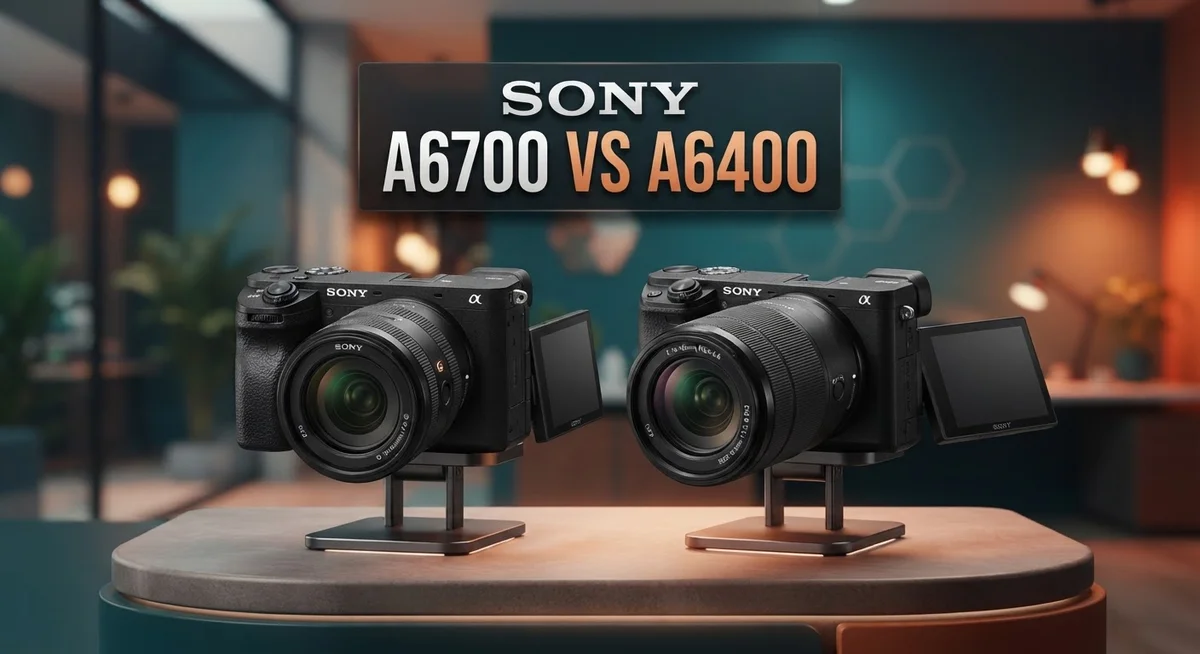
Sony A6700 vs A6400: Complete Comparison Guide for Mirrorless Camera Buyers
Choosing between the Sony A6700 and A6400 can feel tricky. Both cameras share a strong 11fps burst speed. Both also use smart subject-detection autofocus.
But the similarities stop there. The A6700 brings in-body image stabilization. This helps you capture sharper shots and smoother video.
The A6400 skips stabilization. This keeps its body lighter and more compact. It stays a solid pick for casual shooters.
Ergonomics also set these cameras apart. The A6700 offers dual control dials and a deeper grip. The A6400 has simpler controls and a slimmer design.
Video creators will notice big differences too. The A6700 supports a vari-angle screen and advanced video tools. The A6400 offers fewer video features.
This guide breaks down every key difference. You will learn which camera fits your style best.
In a Nutshell
Here is the quick summary for both cameras.
-
The A6700 packs in body image stabilization. This helps you get sharp shots even in tricky handheld situations.
-
Battery life gets a boost too. The A6700 uses a newer Z type battery, so it lasts longer on a single charge.
-
Grip and control feel very different between the two. The A6700 offers a deeper grip and dual dials for faster adjustments.
-
Screen flexibility matters for vloggers. The A6700 comes with a vari angle screen, while the A6400 sticks to a simpler design.
-
Autofocus performance leans in favor of the A6700. It tracks subjects with more precision, especially in fast moving scenes.
-
The A6400 stays lighter and more compact since it skips stabilization hardware. This makes it easier to carry around all day.
-
Video shooters get more tools with the A6700. Its features suit filmmaking needs better than the A6400.
-
Looking for other options? The Sony A6600 is worth checking out too.
Sensor, Autofocus, and Image Stabilization
The sensor technology in both cameras delivers solid performance, but the A6700 brings modern enhancements that matter for serious shooters. Both cameras share a 26MP APS-C sensor and match the same 11fps burst speed. However, the A6700’s sensor pairs with in-body image stabilization (IBIS), which the A6400 completely lacks.
IBIS makes a real difference when you shoot handheld video or use longer lenses. The A6700 compensates for camera shake automatically. The A6400 forces you to rely on lens stabilization or a tripod instead. This gap widens if you work with older, non-stabilized glass.
Autofocus performance separates these two more clearly. Both cameras feature subject detection autofocus. The A6700 handles this task faster and more accurately across the frame. Real world testing shows the A6700 locks onto moving subjects with noticeably better reliability. The A6400 performs well for general photography, but struggles slightly during fast action or video tracking.
The A6700 also introduces a newer Z battery type. This means longer shooting sessions without swapping power. The A6400 uses an older battery generation. You’ll need more spares if you shoot all day with the A6400.
Control layout affects how you interact with autofocus settings. The A6700 features dual control dials, letting you adjust focus parameters without diving into menus. The A6400 has a simpler dial setup. This matters when you need quick adjustments during a shoot.
Ergonomics play into stabilization too. The A6700’s deeper grip and improved button placement make it easier to hold steady. A more secure grip reduces micro movements that stabilization must correct. The A6400 feels slimmer and lighter, but this comes at the cost of comfort during extended sessions.
For video creators, the A6700 combines better autofocus tracking with IBIS. This pairing creates smoother, more professional results. The A6400 works fine for casual vlogging or static shots. Choose the A6700 if you prioritize stabilized video. Pick the A6400 if you want a lighter camera for stills and simple projects.

- 20.1MP stacked back illuminated 1" Exmor RS CMOS sensor w/ DRAM, large aperture 24-70mm1 F...
- Enhanced subject capture: wide 425 Phase/ 425 contrast detection points over 84 percent of the...
Last update on 2026-11-05 / Affiliate links / Images from Amazon Product Advertising API
Design, Ergonomics, and Build Quality
The A6700 and A6400 take different approaches to how they feel in your hands. The A6700 features a deeper grip that makes holding the camera more comfortable during long shooting sessions. Your fingers rest naturally, and the overall design feels more secure.
Control dials tell an interesting story too. The A6700 gives you dual control dials for faster adjustments. The A6400 uses a single dial setup, which works fine but requires more menu diving. If you shoot video or need quick settings changes, the A6700 wins here.
The vari-angle screen on the A6700 opens up creative possibilities. You can flip it out for selfies, vlogging, or awkward angles. The A6400 keeps a fixed screen, which limits flexibility. Vloggers and content creators will notice this difference immediately.
Build quality leans modern with the A6700. The menu system feels current, and the overall construction reflects newer engineering. The A6400 still holds up well, but the A6700 shows Sony’s latest thinking in camera design.
Weight and thickness matter if you travel constantly. The A6400 stays lighter and more compact since it skips the stabilization hardware inside. The A6700 adds some heft due to its in-body image stabilization system. Neither camera feels heavy, but the difference exists.
Battery handling changed between these models. The A6700 uses the newer Z battery type, while the A6400 relies on older battery technology. This matters for long shoots where battery availability becomes important.
The A6700 prioritizes comfort and modern features. Extended sessions feel less tiring. The dual dials speed up your workflow. The vari-angle screen adds creative freedom.
The A6400 appeals to shooters who value simplicity and portability. It handles photos and casual video just fine. The fixed screen and single dial mean fewer options, but also fewer things to learn.
Your choice depends on what matters most. Video creators, vloggers, and professionals benefit from the A6700’s ergonomic improvements. Casual photographers and travel shooters might prefer the A6400’s lighter frame and straightforward design.
Video Performance and Filmmaking Capabilities
Video performance separates these two cameras in meaningful ways. The A6700 brings professional-grade tools that filmmakers actually use. The A6400 handles basic video work, but it lacks the advanced features serious creators need.
In-body image stabilization makes the biggest difference here. The A6700 includes IBIS, which keeps footage smooth when you shoot handheld. The A6400 has no sensor stabilization. This means you’ll rely on external rigs or lenses with optical stabilization. For vlogging and run-and-gun filming, IBIS saves time and effort.
Autofocus tracking during video matters too. The A6700 offers better AF performance with improved subject detection. Your camera locks onto moving subjects faster and holds focus longer. The A6400 has subject detection, but it doesn’t track as reliably during video recording. You’ll notice the difference when filming interviews or action sequences.
The vari-angle screen on the A6700 opens up creative shooting angles. You can flip the screen out for selfie-style shots or low-angle filming. The A6400 lacks this flexibility. Fixed screens limit your positioning options during video work.
Control dials matter for video shooters. The A6700 features dual control dials that let you adjust settings faster. Quick adjustments keep you focused on framing and composition. The A6400 has fewer controls, so you’ll dig into menus more often.
Battery life impacts long shooting days. The A6700 uses a newer Z battery type. Extended sessions feel less draining on your battery reserves. The A6400 uses an older battery, which means more frequent swaps during filming.
The A6700 also features a modern menu system that video creators appreciate. Settings organize logically. Finding video-specific options takes seconds instead of minutes.
For serious filmmaking projects, the A6700 delivers. Stabilization, autofocus, and ergonomics work together. The A6400 works for casual video content and learning the basics. Your choice depends on whether you need professional video tools or just want to record video occasionally.
Top 3 Alternatives
Canon EOS R50

- High Image Quality: Canon EOS R50 4K digital camera features a 24.2 Megapixel CMOS (APS-C) sensor...
- High-Speed Continuous Shooting: Capture fast action with up to 12 fps with Electronic First Curtain...
Last update on 2026-11-06 / Affiliate links / Images from Amazon Product Advertising API
The Canon EOS R50 brings excellent autofocus performance to the mirrorless camera market. It features a 24.2-megapixel sensor that captures sharp, detailed images in various lighting conditions. The camera excels at video recording with 4K capabilities and smooth autofocus tracking during motion.
You’ll appreciate the intuitive menu system and comfortable grip. The compact design makes it easy to carry for travel or daily shooting. The RF mount offers access to Canon’s growing lens collection, giving you flexibility for future upgrades.
Nikon Z30

- Designed for creators, vloggers and streamers: Nikon's easy to use Z 30 mirrorless 4K camera with a...
- Pro-grade video quality: Crisp 4K resolution, autofocus with eye tracking for people and pets...

Last update on 2026-11-06 / Affiliate links / Images from Amazon Product Advertising API
The Nikon Z30 focuses on content creators and vloggers. Its flip-out screen rotates for easy selfie recording and vlogging setups. The camera delivers 4K video with excellent stabilization, making handheld footage smooth and professional-looking.
Battery life stands out as a strength compared to many competitors. The Z30 includes useful features like active wind noise reduction for cleaner audio. The Z mount ecosystem provides quality lenses, though the selection is smaller than Canon’s RF options. Autofocus performance remains reliable across both photo and video modes.
Fujifilm X-S20

- FUJIFILM X-S20 Mirrorless Camera with XC 15-45mm f/3.5-5.6 OIS PZ Lens (USA Warranty) 16781943
- SanDisk 128GB SDXC Extreme PRO Memory Card, Vivitar Memory Card Wallet, SD Card Reader
Last update on 2026-10-12 / Affiliate links / Images from Amazon Product Advertising API
The Fujifilm X-S20 appeals to photographers who value color science and retro design. This camera produces stunning JPEG images straight from the sensor thanks to Fujifilm’s film simulation modes. The 26.1-megapixel X-Trans sensor delivers unique color rendition without heavy editing.
Build quality feels premium with its classic dial-based controls. The X-S20 shoots excellent 4K video with good autofocus performance. You get weather sealing for durability in challenging conditions. The X-mount system offers numerous lens options, including quality affordable alternatives from third-party manufacturers.
Battery Life and Power Management
Battery performance shapes how long you can shoot before needing a charge. The A6700 uses Sony’s newer Z battery type, while the A6400 relies on an older battery generation. This difference matters more than you might think.
The A6700’s Z battery offers improved power efficiency. You’ll get longer shooting sessions from a single charge compared to the A6400. This becomes especially important during extended video work or travel days when charging options are limited.
Battery capacity works alongside power consumption. The A6700 draws more power because it runs IBIS and features a more advanced processor. However, the newer battery design compensates for this increased demand. Real world testing shows the A6700 handles full days of shooting without struggling.
The A6400 still delivers solid battery life for its class. You won’t face constant charging needs during typical shooting sessions. The trade off is that you’ll need to plan battery swaps during longer projects or video work.
Heat management affects battery performance too. The A6700’s modern components generate less wasted heat during operation. This efficiency translates to better battery stability, especially during hot weather or extended video recording.
Charging speed differs between models. The A6700 supports faster charging protocols with compatible chargers. The A6400 uses older charging standards, so full charges take longer. This matters when you’re on tight schedules or traveling frequently.
Carrying extra batteries remains smart practice for both cameras. Video shooters especially should pack spares. The A6700’s improved battery life means fewer spares needed during typical days.
Power management features on the A6700 include better sleep modes and power saving options. These features help extend battery life during mixed shooting scenarios. The A6400 has basic power management, but lacks the sophisticated options found on the newer model.
For long filming sessions, the A6700’s battery advantage becomes significant. You’ll spend less time managing power and more time creating. The A6400 works fine for shorter shoots or photographers who don’t mind frequent battery changes.
Autofocus Performance and Subject Detection
The autofocus systems in both cameras share a strong foundation. Both the A6700 and A6400 use Sony’s subject detection autofocus technology. This means both cameras can lock onto people, animals, and vehicles automatically.
However, the A6700 takes autofocus performance further. Its newer processor delivers faster and more accurate tracking. When you’re shooting moving subjects, the A6700 responds quicker to changes in distance and direction.
Real world shooting shows the difference clearly. The A6700’s autofocus stays locked on subjects even during complex movements. The A6400 performs well too, but the A6700 handles rapid subject transitions with noticeably better precision.
Eye detection works on both cameras. The A6700 and A6400 both recognize and focus on eyes automatically. This feature matters for portrait photography and video interviews. The A6700’s improved processor makes eye tracking slightly more reliable in challenging lighting.
Animal detection represents another shared strength. Both cameras identify dogs, cats, birds, and other creatures. The A6700 again shows advantages in sustained tracking accuracy. It maintains focus better when animals move unpredictably across your frame.
For video specifically, autofocus performance becomes even more important. The A6700’s superior AF system combines with in body stabilization for smoother results. The A6400 still tracks subjects during video, but the A6700 delivers noticeably smoother focus transitions.
Continuous autofocus during burst shooting matters for action photographers. Both cameras maintain 11fps burst speed. The A6700’s newer AF engine keeps focus sharper throughout the burst sequence.
Low light autofocus performance differs slightly between models. The A6700 performs better in dim conditions. The A6400 still focuses reliably indoors, but struggles slightly more in very dark environments.
The practical takeaway is simple. The A6700 offers meaningfully better autofocus for challenging situations. If you shoot fast moving subjects, video, or frequently work in changing light, the A6700’s AF system justifies consideration. The A6400’s autofocus remains solid for everyday photography and slower paced shooting.
Pros and Cons
Sony A6700 Pros
- In body image stabilization keeps footage smooth without extra gear
- Dual control dials let you adjust settings faster during shoots
- Deeper grip and improved ergonomics feel better in your hands for extended sessions
- Vari angle screen opens up creative shooting angles you cannot get with fixed displays
- Newer Z battery provides better power efficiency for longer shooting days
Sony A6700 Cons
- Thicker and heavier body means more weight in your camera bag
- Takes up more space compared to the more compact A6400
Sony A6400 Pros
- Lighter and more compact design makes it easy to carry everywhere
- No IBIS means simpler maintenance and fewer potential failure points
Sony A6400 Cons
- No sensor stabilization limits smooth handheld video without external support
- Older battery type drains faster than the A6700’s newer power system
- Less ergonomic controls slow down your workflow during fast paced shooting
- Limited video features mean fewer creative options for filmmaking projects
Who Should Buy It
The A6700 works best for serious content creators who film regularly. You get in body stabilization, which keeps your videos smooth without needing external gear. The dual control dials let you adjust settings fast during shoots. The vari angle screen opens creative angles you cannot achieve with fixed displays. If you shoot video projects, this camera gives you the tools professionals expect.
The A6400 suits travel photographers and casual users perfectly. It stays compact and light in your bag. You can carry it everywhere without fatigue. The simpler design means fewer buttons to learn. If you shoot mostly stills and want something easy to handle, this works great.
Choose the A6700 if you shoot long sessions regularly. The Z battery keeps running longer than the older battery in the A6400. Better ergonomics mean your hands feel comfortable after hours of shooting. The deeper grip reduces strain during extended use. Modern menu systems make navigation faster.
Pick the A6400 if you value portability above all else. No in body stabilization means a simpler, lighter body. You can pack it with multiple lenses without breaking your back. Fewer mechanical parts mean less can go wrong. Maintenance becomes straightforward.
The A6700 shines for professional work and hybrid shooting. You handle both stills and video projects with confidence. Subject detection autofocus works on both, but the A6700’s improved AF performance matters during fast paced video. Real world shooting shows clearer differences in continuous autofocus during burst sequences.
The A6400 remains excellent for hobbyists exploring mirrorless cameras. You learn the Sony system without overwhelming features. The camera still delivers sharp images and solid autofocus. You can upgrade later if your needs grow.
Consider the A6600 as an alternative in this range. It sits between these two models and offers different compromises. Think about your actual shooting style. How often do you film? Do you travel frequently? Will you use this professionally? Your answers determine which camera fits your workflow best.
Final Verdict
Choosing between these two cameras comes down to your shooting style. Both models share a strong core. But your specific needs decide the winner.
The A6700 stands out as the smarter long term investment. It packs newer technology into a compact body. Future proofing matters if you plan to grow your skills.
Beginners often worry about complex menus. The A6700 actually simplifies navigation compared to older Sony models. This makes learning curve less steep than expected.
Vloggers and streamers benefit greatly from the vari angle screen. Framing yourself becomes simple with this flip design. The A6400 lacks this flexibility entirely.
For wildlife photographers, the A6700 tracks subjects with more confidence. Fast moving animals need reliable focus lock. This camera delivers that reliability consistently.
The A6400 still holds its ground for specific users. Street photographers love its lighter footprint. Blending into crowds becomes easier with less bulk.
Lens compatibility remains identical between both models. Your existing Sony E mount lenses work perfectly on either body. This flexibility helps if you already own gear.
Think about your five year plan before deciding. Content creation demands keep increasing across all platforms. The A6700 handles future software updates better.
Casual shooters who snap occasional photos do not need advanced features. The A6400 covers basic photography needs completely. Overspending on unused features rarely makes sense.
Our final recommendation leans toward the A6700 for most buyers. Its versatility covers more scenarios than the A6400. Video creators especially benefit from its modern toolkit.
However, the A6400 remains a solid choice for simple photography. Casual users who prioritize size over features will love it. Your decision ultimately depends on how you shoot.
Test both cameras in person if possible. Handling feel often reveals preferences that specs cannot show. Trust your instincts alongside these technical details.
Frequently Asked Questions
Does the A6700 really need in body stabilization?
Yes, if you shoot video or handheld stills in low light. IBIS keeps your footage smooth without needing a tripod or gimbal. You’ll notice the difference immediately when filming or using slower shutter speeds. The A6400 lacks this feature, so you depend entirely on lens stabilization.
Which camera has better autofocus?
Both cameras use subject detection autofocus, but the A6700 performs better in real world situations. It tracks moving subjects with more confidence and locks focus faster. The A6400’s AF system works well for most shots, yet struggles slightly with fast moving action.
Can I use the same lenses on both cameras?
Absolutely. Both cameras mount Sony E lenses identically. Your entire lens collection works on either body. The only difference is how each camera stabilizes the image, not what lenses you attach.
Which one should I pick for vlogging?
The A6700 wins here. Its vari angle screen flips toward you for selfie recording. The A6400 has a fixed screen, making it awkward for vlogging setups. If you create content regularly, the A6700’s video features and ergonomic design make filming sessions easier and faster.
Is the A6400 still worth buying?
Yes, for specific users. If you prioritize portability and shoot mainly stills, the A6400 remains an excellent choice. Its compact size and lighter weight suit photographers who travel constantly. The camera delivers sharp images and reliable performance for hobbyists and explorers who value carrying less gear.

Dillip is the founder and editor of ImageScaleLab.com, a passionate tech enthusiast who loves breaking down complex gadgets and accessories into simple, honest reviews and buying guides. With years of hands-on experience exploring the latest in tech, he is dedicated to helping readers make smarter, more confident purchasing decisions.


