Sony Bravia 8 vs LG C5: OLED TV Comparison Guide
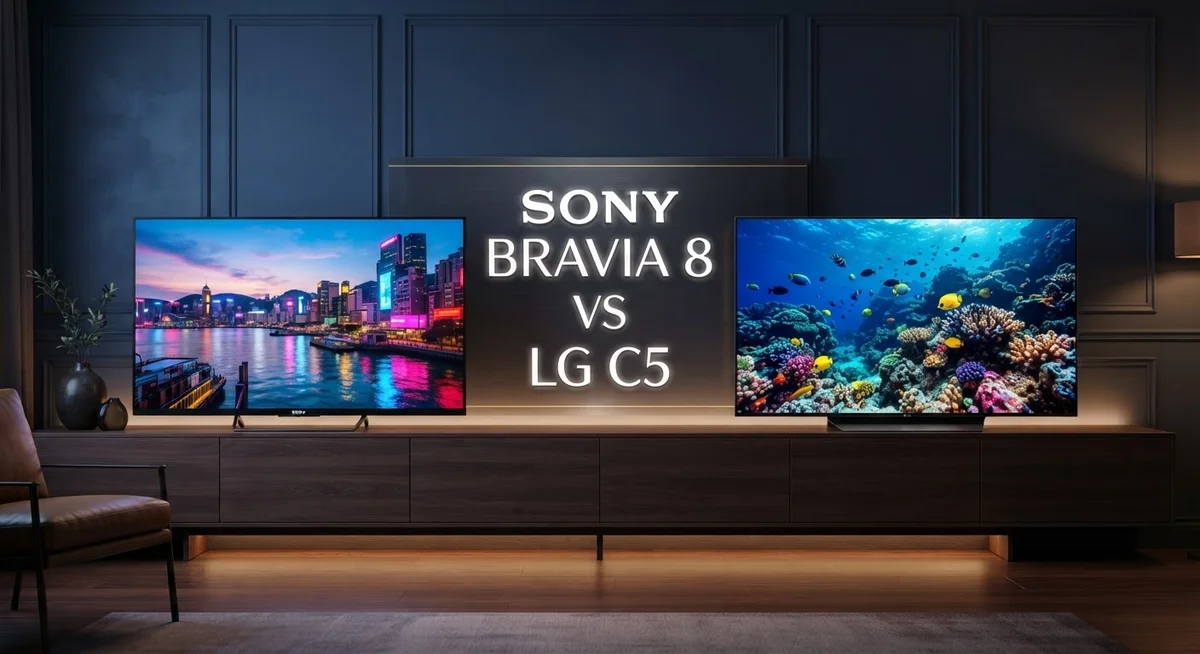
Picking a new OLED TV can feel like a big decision. Two models often top the list: the Sony Bravia 8 and the LG C5. Both promise stunning picture quality, but they take different paths to get there.
The Sony Bravia 8 focuses on color accuracy and natural image processing. It uses a proven OLED panel and delivers a calm, true to life picture.
The LG C5 brings brightness and speed to the table. Its newer OLED evo panel pushes higher peak brightness and adds a 144Hz refresh rate for smooth gaming.
So which TV fits your living room better? This guide breaks down specs, performance, and features side by side. You will see exactly where each screen shines and where it falls short.
By the end, you will know which OLED matches your viewing habits best.
In a Nutshell
Here is a quick side by side look at both TVs before you dive deeper into the details.
- The LG C5 uses a newer OLED evo panel. This gives it higher peak brightness for both SDR and HDR content.
- The Sony Bravia 8 relies on an older panel design. It still holds its own with natural color accuracy and smooth gradients.
- Gamers will likely prefer the LG C5. It packs four HDMI 2.1 ports, a 144Hz refresh rate, and lower input lag for fast paced titles.
- Sony shines with its restrained approach to HDR and SDR tone mapping. This creates a calmer, more lifelike picture.
- LG offers wider viewing angles. This makes it a better fit for larger rooms with multiple seating spots.
- Both TVs deliver deep blacks and strong contrast. LG edges ahead in overall brightness for well lit rooms.
In short, pick the Sony Bravia 8 for color precision and a softer image. Choose the LG C5 if brightness, gaming speed, and wide angle viewing matter more to you.
Display Technology and Brightness
The display technology behind each TV shapes how you experience movies, sports, and games. The Sony Bravia 8 uses an older OLED panel that has proven itself across multiple LG TV generations. This panel delivers steady performance and reliable color handling across different content types.
The LG C5 steps forward with a newer OLED evo panel. This upgraded technology brings real improvements to brightness levels. The C5 reaches 1,200 nits at peak brightness, while the Sony tops out around 780 to 820 nits. That difference matters most in bright rooms where sunlight floods through windows.
Brightness affects how HDR content appears on your screen. The LG C5 shows brighter highlights in movies and shows. You will notice this advantage during daytime viewing or in rooms with lots of ambient light. The Sony Bravia 8 takes a more restrained approach, which some viewers prefer for evening viewing when the room is dark.
Both TVs maintain near infinite contrast ratios. OLED technology ensures that blacks stay truly black, no matter what appears on screen. This shared strength means both displays excel at dark scenes and dramatic moments in films.
The C5 also features a 144Hz OLED panel, which matters if you play fast moving games or watch high frame rate content. This higher refresh rate creates smoother motion during action sequences.
Viewing angles favor the LG C5. If you sit off to the side or have a wide seating arrangement, the C5 maintains better color and brightness across wider angles. The Sony performs well from straight on but shows more color shift when viewed from the side.
One consideration with the C5 involves local brightness control. In very specific dark scenes, you may notice direct light sources appearing slightly visible. This happens rarely and affects only certain content types.
The Sony Bravia 8 keeps its display more uniform and consistent. You won’t experience that occasional brightness variation. For viewers who prioritize smoothness and predictability in image behavior, this consistency appeals strongly.

- HANDPICKED BY AMAZON: They did the research so you don’t have to.
- PURE BLACK AND OUR HIGHEST OLED BRIGHTNESS: Over 8 million self-lit pixels are precisely controlled...

Last update on 2026-11-06 / Affiliate links / Images from Amazon Product Advertising API
Picture Quality and Color Accuracy
The Sony Bravia 8 and LG C5 take different approaches to color and picture quality. Understanding these differences helps you pick the right TV for how you watch content.
Color accuracy matters most for movies and streaming shows. The Sony Bravia 8 excels here with precise color grading. Sony’s processing keeps colors natural and restrained. You get less oversaturation and more film-like results. This approach works well if you watch a lot of cinema or prestige content. The LG C5 offers vibrant colors too, but leans toward a punchier presentation. Some viewers prefer this energy, while others find it less true to the source material.
Brightness levels create a real gap between these two TVs. The LG C5 reaches 1,200 nits peak brightness. The Sony Bravia 8 peaks around 780 to 820 nits. In bright rooms or during daytime viewing, the C5 pulls ahead significantly. HDR content on the C5 feels more explosive and immersive. The Sony delivers solid HDR performance but with a more measured tone. Neither TV fails at HDR. The choice depends on your room lighting and viewing preferences.
Contrast performance stays exceptional on both models. OLED technology gives you near infinite contrast ratios on each TV. Blacks remain pure black whether you watch in daylight or darkness. This is a strength both TVs share equally.
The Sony Bravia 8 prioritizes color fidelity and restraint. You get accurate, natural looking images that respect the filmmaker’s intent. The LG C5 prioritizes brightness and visual impact. You get images that pop off the screen with more intensity.
Choose the Sony for color precision and a more cinema focused experience. Pick the LG C5 if you want maximum brightness and a more dynamic visual presentation. Both deliver excellent picture quality. Your choice comes down to whether you value accuracy or impact more.
Gaming and Connectivity Features
When you game on modern consoles or play PC titles, connectivity and gaming features make a real difference. The LG C5 pulls ahead here with its superior gaming toolkit.
The LG C5 includes 4x HDMI 2.1 ports. This means you can connect multiple gaming devices without swapping cables. The Sony Bravia 8 uses an older panel design, which limits its gaming capabilities compared to the newer C5 technology.
Input lag matters when you play competitive games. The LG C5 delivers low input lag performance. You’ll notice faster response times between your controller input and what appears on screen. This advantage becomes obvious in fast paced shooters or fighting games.
The LG C5 features a 144Hz OLED panel. This refresh rate handles high frame rate gaming smoothly. If your gaming PC or next generation console outputs 120fps or higher, the C5 keeps up without stuttering. The Sony Bravia 8 operates at standard refresh rates, so you won’t experience the same fluid motion during intense gaming sessions.
Variable refresh rate (VRR) support is another C5 strength. VRR syncs the TV’s refresh rate with your console or PC output. This eliminates screen tearing and creates a smoother gaming experience overall.
The LG C5 also supports HGiG (HDMI Games Interest Group) standards. This ensures HDR gaming content displays correctly without crushing shadows or blowing out highlights. Gamers see exactly what developers intended.
The Sony Bravia 8 takes a different approach. It prioritizes color accuracy over gaming features. If you watch movies and streaming content more than you game, the Sony’s restraint in tone mapping creates a more cinema like experience.
Your choice depends on how you use your TV. Pick the LG C5 if gaming sits at the center of your entertainment. Its 144Hz panel, low input lag, and full HDMI 2.1 support give you the gaming edge. Choose the Sony Bravia 8 if you balance gaming with serious movie watching and want exceptional color precision.
Top 3 Alternatives
Samsung QN90D QLED

- QUANTUM MATRIX w/ MINI LEDs: Catch every detail in dark to bright scenes; Precise lighting from Mini...
- NEO QUANTUM HDR+: See sensational contrast, stellar brightness & vivid color—just as the director...
Last update on 2026-11-06 / Affiliate links / Images from Amazon Product Advertising API
The Samsung QN90D QLED stands out with its bright, vibrant picture quality. This TV uses quantum dot technology to deliver rich colors and deep blacks. The 144Hz refresh rate makes it excellent for gaming and sports.
Brightness is a major strength here. The QN90D gets incredibly bright, which helps in well-lit rooms. The local dimming system provides good contrast control. You get smooth motion handling with its advanced motion processing.
The TV runs Samsung’s Tizen operating system, which feels fast and responsive. Gaming features include variable refresh rate support and low input lag. Sound quality is decent but not exceptional.
TCL QM8 Mini-LED

- SQD-Mini LED: As the ultimate Mini LED TV, it integrates the expansive TCL Deep Color System with...
- TCL Ultra Color Filter: TCL’s Ultra Color Filter with fine 5 nanometer particles (vs. standard...
Last update on 2026-11-06 / Affiliate links / Images from Amazon Product Advertising API
The TCL QM8 Mini-LED brings impressive performance at a competitive level. Mini-LED backlighting creates thousands of dimming zones for better contrast. Colors appear natural and well-balanced across different content types.
This model excels in brightness and shadow detail. The full-array local dimming system helps blacks look deeper. Response times are quick, making it suitable for gaming. The TV supports major gaming features like HDMI 2.1 and variable refresh rates.
TCL’s Google TV interface is clean and user-friendly. You get quick access to popular streaming apps. Picture processing is solid, though not quite as advanced as premium options.
Hisense U8N ULED

- MINILED PRO WITH UP TO 5000 NITS PEAK BRIGHTNESS AND UP TO 5600 LOCAL DIMMING ZONES: See the realism...
- HI-VIEW AI ENGINE PRO: Enjoy the game from home, but feel like you’re there. Powered by the...
Last update on 2026-11-06 / Affiliate links / Images from Amazon Product Advertising API
The Hisense U8N ULED offers strong performance with ULED technology. It features full-array local dimming with many dimming zones. Colors pop nicely, and the contrast looks sharp.
Brightness and color accuracy are notable strengths. The TV handles HDR content well, showing good detail in bright and dark areas. Gaming performance is solid with low latency and high refresh rate support.
Hisense’s interface runs on Google TV, which feels smooth and familiar. The remote is intuitive and easy to navigate. Sound quality provides decent audio without extra speakers needed.
Design and Build Quality
The Sony Bravia 8 and LG C5 take different design philosophies that affect how each TV fits into your space.
The Sony Bravia 8 features a minimalist design with a slim profile and understated bezels. The TV sits on a sturdy stand that keeps the footprint compact. Sony chose restraint in the overall aesthetic, letting the picture quality take center stage. The build feels solid without drawing attention to itself.
The LG C5 adopts a sleeker modern look with thinner bezels and a premium finish. The stand design offers stability while maintaining a clean appearance. LG’s approach emphasizes the screen itself as the focal point of your entertainment space. The overall construction quality matches Sony’s durability standards.
Both TVs use OLED panel technology, which affects their physical design. OLED displays eliminate the need for backlighting systems, allowing both manufacturers to create thinner TV bodies. This makes either option suitable for wall mounting or placement on a stand in tight spaces.
The brightness capabilities influence practical design considerations. The LG C5 reaches 1,200 nits peak brightness, which means you’ll see the full picture even in brightly lit rooms. The Sony Bravia 8 maxes out around 780 to 820 nits, so it performs better in controlled lighting environments. This difference matters when you consider room placement and ambient light conditions.
Heat management differs slightly between models. The LG C5’s brighter panel generates slightly more heat, though both TVs handle thermal performance efficiently. Ventilation requirements remain minimal for either option.
Connectivity ports are positioned differently on each model. The LG C5 places its 4x HDMI 2.1 ports for easy access, while the Sony Bravia 8 maintains a clean cable management approach. Both designs accommodate modern gaming consoles and streaming devices without clutter.
The viewing angle design favors the LG C5 slightly. OLED evo technology provides better image consistency when you sit off center. The Sony Bravia 8 still performs well for typical seating arrangements, but the C5 maintains superior picture quality from wider angles.
Your choice depends on room aesthetics, lighting conditions, and seating position preferences.
Viewing Experience in Different Lighting
Bright rooms and dark rooms demand different things from your TV. The LG C5 and Sony Bravia 8 handle these situations quite differently.
In a bright room with lots of windows or lamps, brightness becomes your best friend. The LG C5 delivers 1,200 nits of peak brightness. This means you won’t struggle with glare or washed out colors when sunlight floods your living room. The Sony Bravia 8 reaches 780 to 820 nits instead. That’s a significant gap. You’ll notice this difference immediately if you watch during daytime hours.
The LG C5’s superior brightness helps preserve picture details in bright scenes. Colors stay vivid. Highlights don’t crush into white areas. This matters for sports, nature documentaries, and action movies where bright scenes happen frequently.
In darker rooms, both TVs shine because OLED technology gives you near infinite contrast. Black levels stay perfectly black on both models. The Sony Bravia 8 actually performs better here because its lower brightness allows for more refined shadow details. Your eyes won’t feel strained during late night viewing.
The LG C5 can seem overly bright in dark rooms if you don’t adjust settings. You’ll want to lower the brightness manually. The Sony Bravia 8 feels more natural in these conditions right out of the box.
For mixed lighting situations where you watch at different times, the LG C5 adapts better overall. Its extra brightness handles morning and afternoon viewing without complaints. You simply dial it back for evening sessions.
The Sony Bravia 8 works best if you primarily watch in controlled lighting. Movie enthusiasts who watch in darker rooms will appreciate its restraint and cinema focused approach.
Consider your room’s light sources honestly. Do you have large windows? Do you watch mostly at night? The LG C5 handles variable lighting better. The Sony Bravia 8 prefers consistent, dimmer environments. Your daily viewing habits should guide this decision more than anything else.
Pros and Cons
Pros
- Sony Bravia 8: Delivers exceptional color accuracy and cinema focused picture quality that film lovers appreciate
- Sony Bravia 8: Handles SDR, HDR, and EOTF performance with restraint and precision
- LG C5: Produces significantly brighter images in both SDR and HDR modes for better visibility in lit spaces
- LG C5: Offers superior gaming features including 144Hz refresh rate, 4x HDMI 2.1 ports, and low input lag
- LG C5: Provides near infinite contrast and wider viewing angles thanks to its OLED evo panel technology
Cons
- Sony Bravia 8: Uses older panel technology that limits peak brightness compared to newer OLED displays
- Sony Bravia 8: Dimmer screen makes it less ideal if you watch in brightly lit rooms
- LG C5: Direct light sources may become visible in certain viewing conditions despite excellent overall brightness
Who Should Buy It
The Sony Bravia 8 suits you if you love film and content that demands color precision. You appreciate cinema focused picture quality and don’t mind a dimmer display in exchange for accurate blacks and restrained highlights. This TV works best when you watch in controlled lighting environments where brightness isn’t a priority.
Choose the Sony Bravia 8 if you spend most of your time with movies, streaming shows, and standard content. You value accurate color reproduction over peak brightness. Your room has controllable lighting, and you sit at normal viewing angles. This TV rewards you with exceptional EOTF performance and faithful color accuracy.
The LG C5 is your pick if you want a TV that performs everywhere. You need brightness for daytime viewing or rooms with lots of natural light. You game frequently and want 144Hz refresh rates plus low input lag. You appreciate having four HDMI 2.1 ports for multiple gaming devices.
Pick the LG C5 if you watch content across different times of day. Your room gets bright sunlight, and you don’t want to adjust settings constantly. You care about gaming performance and want the latest OLED panel technology. You value near infinite contrast and wide viewing angles for group viewing.
The LG C5 also suits you if you want a modern OLED that handles everything well. You don’t need specialized color accuracy tools. You want a TV that performs equally well for movies, games, and sports without compromise.
Choose the Sony Bravia 8 only if you’re willing to accept lower brightness for superior color science. You’re a content creator, film enthusiast, or professional who needs accurate color grading reference. Your viewing environment stays dark or dimly lit most of the time.
Both TVs serve different audiences. The Sony Bravia 8 targets specialists and enthusiasts. The LG C5 targets general consumers who want performance, brightness, and gaming features. Your choice depends on your room, your viewing habits, and what matters most to you.
Final Verdict
Choosing between these two TVs comes down to your personal viewing habits and home setup. Both models are excellent, but they shine in different ways.
If you want a TV that adapts to any room and any activity, the LG C5 stands out. Its smart platform runs smoothly, and the interface feels snappy for daily use.
The Sony Bravia 8 pairs beautifully with a home theater setup. Its sound processing complements the picture, giving movies a more immersive feel.
Think about how long you plan to keep your TV. The LG C5 uses newer panel technology, which may offer better longevity for future content standards.
Design also matters for many buyers. Both TVs have slim profiles, but the remote control experience differs. LG’s Magic Remote adds a fun, intuitive way to navigate menus.
If you already own other LG or Sony devices, ecosystem integration might sway your decision. Matching brands can simplify remote controls and smart home connections.
For casual streamers who want a no fuss experience, the LG C5 fits well. It handles everything from sports to sitcoms without much tweaking.
For dedicated movie fans who tweak settings for perfect calibration, the Sony Bravia 8 rewards that effort. Its picture processing respects the director’s intent more closely.
Neither TV is a wrong choice. Your final decision should reflect how you actually watch content, not just specs on paper.
Quick tip: If you’re unsure, think about your last five viewing sessions. Were they daytime binge watches or dark room movie nights? That answer often reveals the better fit.
In the end, both the Sony Bravia 8 and LG C5 deliver outstanding OLED performance. Your lifestyle, not the spec sheet, should make the final call.
Frequently Asked Questions
Which TV handles bright rooms better?
The LG C5 wins here. It reaches 1,200 nits peak brightness, while the Sony Bravia 8 tops out around 780-820 nits. This difference matters if sunlight floods your room during the day. The LG’s brightness keeps images clear and vibrant even with windows open.
The Sony performs well in darker spaces. It excels at film viewing where you control the lighting. For mixed lighting conditions throughout your day, the LG adapts better.
Is the Sony Bravia 8 better for movies?
Yes, absolutely. The Sony delivers superior color accuracy and restraint that film enthusiasts love. It handles SDR, HDR, and EOTF performance with precision that feels like cinema.
The LG C5 is brighter and more versatile. It works great for movies too, but the Sony’s color science gives it an edge for serious film fans. If you calibrate settings and want perfection, the Sony rewards that effort.
Which TV is better for gaming?
The LG C5 dominates gaming. It features a 144Hz OLED panel, 4x HDMI 2.1 ports, and low input lag. These specs matter for competitive gamers and console players.
The Sony Bravia 8 handles gaming fine. It’s not its specialty though. If gaming is your main activity, the LG’s feature set gives you a real advantage.
Does panel technology matter between these two?
Yes, it does. The LG C5 uses a newer OLED evo panel. The Sony Bravia 8 uses an older LG OLED panel (same as the B3, B4, and B5 models). The newer panel in the LG means better brightness potential and more advanced technology.
Both deliver excellent contrast and picture quality. The LG’s newer tech future proofs your investment better.

Dillip is the founder and editor of ImageScaleLab.com, a passionate tech enthusiast who loves breaking down complex gadgets and accessories into simple, honest reviews and buying guides. With years of hands-on experience exploring the latest in tech, he is dedicated to helping readers make smarter, more confident purchasing decisions.