
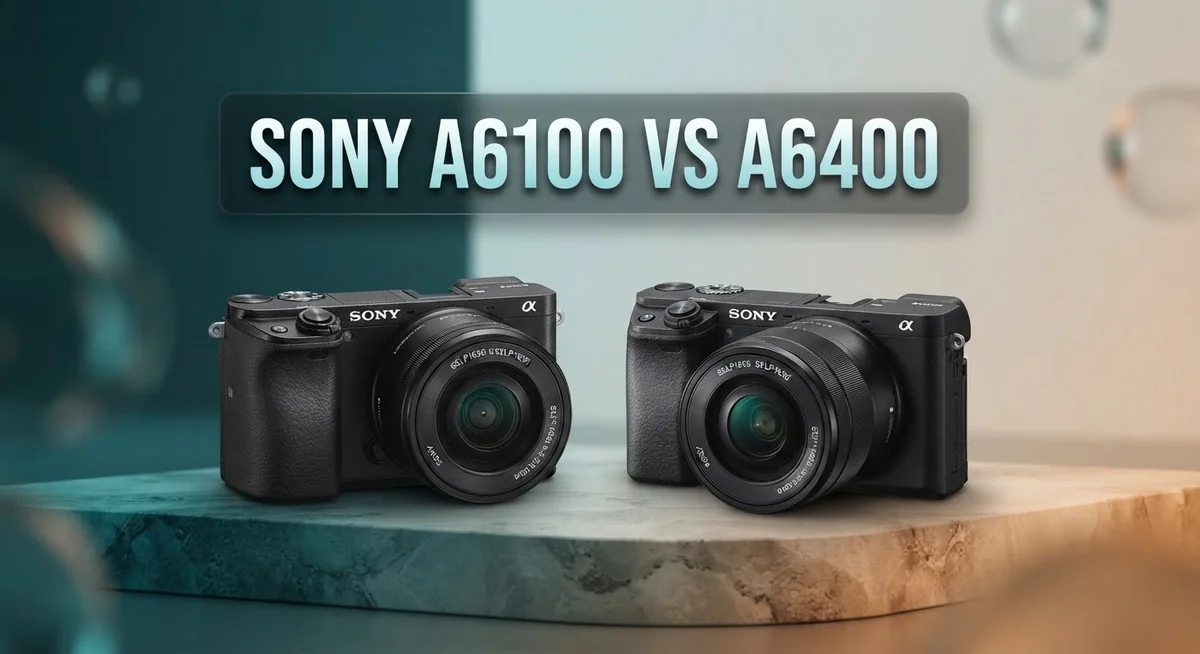
Sony A6100 vs A6400: Complete Camera Comparison Guide
Choosing a camera can feel tricky. The Sony A6100 and Sony A6400 both stand out as smart choices for photography lovers.
They share a lot in common. Both pack a 24MP APS-C sensor. Both offer 4K video and Real-time Eye AF.
But some key differences set them apart. The A6400 brings a sharper viewfinder and a weather-sealed body. It also offers faster burst shooting for action shots.
The A6100 still holds its own. It delivers similar image quality and works great for beginners.
So which one fits your needs? This guide breaks down the specs, features, and real-world performance of each camera.
You will learn what makes these two cameras special. We compare autofocus, build quality, and video capabilities. By the end, you will know exactly which Sony camera belongs in your bag.
In a Nutshell
Both cameras share the same 24MP APS-C sensor. They also use the same BIONZ X processor. This means image quality stays sharp and clear on both models.
Here is a quick breakdown of what makes each camera unique:
-
Autofocus Performance: The A6400 offers class-leading autofocus. It locks onto subjects fast and tracks them with ease. The A6100 still performs well but does not match this level.
-
Build Quality: The A6400 comes with a weather-sealed magnesium body. This makes it tougher in rough conditions. The A6100 has a lighter build suited for casual use.
-
Viewfinder Quality: The A6400 has a higher-resolution viewfinder. You get a clearer view of your scene. The A6100 uses a lower-resolution display for framing shots.
-
Burst Shooting: The A6400 shoots faster bursts. This helps you catch quick action shots without missing a beat.
-
Ease of Use: The A6100 feels more beginner-focused. It suits new photographers who want simple controls without extra bulk.
-
Portability: Both cameras stay compact. The A6400 remains travel-ready despite its extra features.
Sensor and Image Quality
Both cameras pack the same 24MP APS-C CMOS sensor and BIONZ X processor. This means they capture images with nearly identical color accuracy, dynamic range, and detail. You get the same sharp, vibrant results from either camera in most shooting situations.
The real difference shows up in the viewfinder experience. The A6400 features a higher resolution viewfinder at 1024×768 pixels. This gives you a clearer, more detailed live view when composing shots. The A6100’s viewfinder is less sharp by comparison. For photographers who spend time looking through the viewfinder, this matters.
4K video recording works on both cameras. You can shoot smooth, professional looking footage without upgrading. Both also include Real-time Eye AF, which locks focus on faces automatically. This feature works great for portraits and video work.
Where image quality truly diverges is in autofocus performance during shooting. The A6400 offers class-leading autofocus that tracks subjects faster and more accurately. This means sharper images when photographing moving subjects like sports or wildlife. The A6100 still focuses well, but the A6400 excels here.
Burst shooting speed also differs between these two. The A6400 shoots faster consecutive frames. If you photograph action or need quick sequences, the A6400 keeps up better. The A6100 still captures bursts, just at a slower rate.
The A6400’s weather-sealed magnesium body protects your investment better than the A6100’s plastic construction. This matters if you shoot in challenging conditions or travel frequently. Durability translates to image consistency over time.
In everyday shooting, both cameras produce stunning photos. The A6100 delivers excellent image quality for learning photography. The A6400 performs better when you push the camera harder—fast action, tough conditions, or professional work. Your shooting style determines which sensor performance matters most to you.

- Sony USA Authorized. A6400 with 16–50mm lens, 64GB Extreme PRO card, NP-FW50 battery, Photo Video...
- Complete Mirrorless Camera Kit – The Sony a6400 comes bundled with the 16–50mm OSS power zoom...
Last update on 2026-10-12 / Affiliate links / Images from Amazon Product Advertising API
Autofocus and Performance
The autofocus system separates these two cameras in meaningful ways. The A6400 delivers class-leading autofocus performance with 425 phase-detection points that cover most of the frame. The A6100 uses 425 points as well, but the A6400’s implementation feels snappier in real shooting situations.
Real-time Eye AF works on both models. This feature locks onto eyes and tracks them during video or photo capture. In practice, the A6400’s eye tracking holds focus more reliably, especially when subjects move quickly across the frame.
Burst shooting speed shows another gap between them. The A6400 shoots at 11 fps with autofocus tracking active. The A6100 manages 11 fps too, but the A6400 sustains this speed longer before the buffer fills. This matters when you photograph fast action like sports or wildlife.
The viewfinder experience affects how you monitor autofocus performance. The A6400’s higher-resolution display (1024×768 pixels) makes it easier to confirm focus before you press the shutter. The A6100’s lower-resolution viewfinder still works fine, but smaller details appear less crisp.
Autofocus speed in low light reveals another difference. The A6400 locks focus faster when light drops. The A6100 occasionally hesitates in dim conditions, though both cameras handle most normal lighting well.
For video recording, the A6400 offers superior autofocus performance. Continuous autofocus during 4K capture stays smoother and more predictable. The A6100’s video autofocus works, but you might notice occasional hunting or hesitation when subjects move toward or away from the camera.
The A6400’s overall autofocus system feels more refined and responsive. If you shoot fast action, track moving subjects, or record video frequently, the A6400 delivers noticeably better performance. The A6100 still captures sharp images in most situations, but it requires more careful focus point selection and slightly slower shooting techniques to maintain reliability.
Design and Build Quality
The body and materials of these cameras tell different stories. The A6400 features a weather-sealed magnesium alloy chassis. This means dust and moisture stay out during outdoor shoots. The A6100 uses a plastic body instead. Both cameras feel comfortable to hold, but the A6400 gives you extra confidence in tough conditions.
Size matters when you carry gear around. The A6100 measures 120.0 x 66.9 x 48.2mm. The A6400 sits at 120.0 x 66.9 x 53.3mm. The A6400 is slightly thicker, but both stay compact enough for travel. Neither camera feels bulky in your hands or camera bag.
The viewfinder experience shapes how you see your shots. The A6400 has a 1024×768 pixel viewfinder. The A6100 offers lower resolution. This means the A6400 shows you clearer details before you press the shutter. You see focus points and exposure information more clearly on the A6400.
Button placement and controls feel intuitive on both models. The A6400 includes more dedicated buttons for quick adjustments. The A6100 keeps things simpler for beginners. Both cameras have touchscreens, so you can tap to focus or adjust settings.
Grip comfort differs slightly between them. The A6400’s magnesium body feels more solid and premium. The A6100’s plastic construction feels lighter. Some photographers prefer the weight savings. Others want the durability of metal.
The A6400 includes a built in ND filter option in the menu. The A6100 does not have this feature. This matters for video work in bright sunlight.
Overall, the A6400 offers professional build quality. The magnesium chassis and weather sealing protect your investment. The A6100 prioritizes simplicity and ease of use. The plastic body works fine for studio or controlled environments. Choose the A6400 if you shoot outdoors regularly. Pick the A6100 if you want a straightforward, lightweight option.
Top 3 Alternatives
Canon EOS M50 Mark II

- 24.1 megapixel (aps-c) cmos sensor with iso 100-25600 (h: 51200).
- digic 8 image processor with auto lighting optimizer.
Last update on 2026-11-09 / Affiliate links / Images from Amazon Product Advertising API
This camera works great for vloggers and content creators. It has a flip-out touchscreen that makes recording yourself easy. The autofocus system locks onto faces quickly, which helps during video work.
The sensor captures good detail in both bright and dim lighting. You get smooth video at various frame rates. The compact design means you can carry it anywhere without much hassle.
Fujifilm X-T30 II

- Camera: 26.1MP APS-C X-Trans BSI CMOS 4 Sensor; X-Processor 4 with Quad CPU; DCI and UHD 4K30 Video...
- Camera: 3.0" 1.04m-Dot Tilting LCD Touchscreen; 425-Point Phase-Detection Autofocus; Extended ISO...
Last update on 2026-11-09 / Affiliate links / Images from Amazon Product Advertising API
This option offers film simulations that give your photos a unique look right out of the camera. The retro design feels premium and comfortable to hold. The autofocus performs well, especially when tracking moving subjects.
The viewfinder shows you a clear preview of your shot. Battery life lasts longer than many competitors. The lens options available give you flexibility for different shooting situations.
Nikon Z fc

- Bundle Kit Items Include: 1 x Nikon Zfc Mirrorless Camera (Silver) with 16-50mm Lens, 1 x SanDisk...
- The Nikon Zfc Mirrorless Camera effortlessly combines retro design with advanced technology...
Last update on 2026-11-09 / Affiliate links / Images from Amazon Product Advertising API
This mirrorless camera brings retro styling with modern performance. The compact size makes it perfect for travel photography. The autofocus system tracks subjects smoothly during video recording.
The sensor delivers sharp images with accurate colors. You can use older Nikon lenses with an adapter, giving you more options. The ergonomic grip feels natural during extended shooting sessions. The menu system is straightforward once you learn the basics.
All three cameras offer solid performance for different needs. Your choice depends on what matters most to you—whether that’s screen flexibility, film simulations, or lens compatibility.
Video Capabilities and Features
Both cameras record stunning 4K video, but their video performance differs in important ways during actual shooting.
The A6400 excels with autofocus tracking during video. Its autofocus system stays locked on moving subjects with impressive accuracy. This matters when you film people walking, sports, or any dynamic scene. The A6100 handles 4K recording well, yet its autofocus feels less responsive when subjects move across the frame.
Real-time Eye AF works on both models for video. However, the A6400’s implementation feels smoother and more reliable. Your subject’s eyes stay in focus even when they turn their head or move closer to the camera. The A6100 catches eyes too, but the tracking feels slightly less confident.
Video stabilization performs similarly on both cameras. Both use electronic stabilization to reduce shaky footage. Handheld 4K shooting becomes more manageable with this feature active on either model.
The A6100 records at standard frame rates for 4K work. You get 24p, 25p, and 30p options. The A6400 adds more flexibility with additional frame rate choices. This matters if you shoot slow motion or need specific timing for projects.
Audio handling shows another distinction. The A6400 includes a built-in microphone jack for external audio. This lets you connect a wireless microphone or shotgun mic directly. The A6100 requires adapters for external audio input, making it less convenient for serious video work.
Both cameras feature touchscreen controls that work during recording. You can tap to shift focus or adjust settings without stopping. This feels intuitive on both models.
The A6400’s refined autofocus system makes it the stronger video performer. If you shoot fast-moving subjects or need reliable eye tracking, the A6400 delivers. The A6100 still produces quality 4K footage for slower, more controlled scenes. Choose based on how much dynamic subject tracking you need in your videos.
Viewfinder and Display
The viewfinder and display setup shapes how you frame and monitor your shots. The A6400 pulls ahead here with its higher resolution viewfinder at 1024×768 pixels. This extra clarity matters when you’re composing precise shots or checking focus details in the field.
The A6100’s viewfinder offers solid performance for most shooting situations. You’ll see your scene clearly and track moving subjects without strain. The difference becomes noticeable only when you zoom in to verify critical focus or when shooting in bright sunlight where every pixel of clarity helps.
Both cameras feature electronic viewfinders that refresh smoothly. You get real time preview of exposure and white balance adjustments before you press the shutter. This live feedback helps you nail exposure on the first try rather than chimping between shots.
The touchscreen displays on both models measure 3 inches and support touch autofocus and menu navigation. You can tap to focus on a subject, then shoot immediately. This responsive touch interface works during video recording too, letting you shift focus smoothly between subjects without touching physical buttons.
The A6400’s higher resolution viewfinder becomes especially valuable during video work. You’ll see autofocus tracking more clearly as it locks onto moving subjects. The larger pixel count means less pixelation when you’re monitoring focus performance in real time.
Display brightness matters for outdoor shooting. Both cameras handle daylight reasonably well, though neither completely eliminates glare in harsh conditions. You’ll want an external monitor if you’re shooting in direct sunlight for extended periods.
The viewfinder magnification feels similar on both models, giving you a natural view of your scene. Eye relief is comfortable for glasses wearers on both cameras. The diopter adjustment dial lets you customize focus to your eyesight.
For everyday photography and casual video, both viewfinders serve you well. The A6100 won’t frustrate you with its display quality. However, if you spend hours framing shots or monitoring autofocus during professional video work, the A6400’s superior resolution becomes a meaningful upgrade that reduces eye fatigue and improves your workflow efficiency.
Pros and Cons
Pros
- A6100: 24MP sensor delivers sharp images matching the A6400’s output quality
- A6100: Lightweight and compact design makes it ideal for travel and everyday shooting
- A6400: Class leading autofocus system locks onto subjects faster and more reliably
- A6400: Weather sealed magnesium body withstands dust and moisture better than the A6100
- A6400: Burst shooting speed captures more frames per second for fast action scenes
Cons
- A6100: Lower resolution viewfinder makes it harder to review fine details and focus points
- A6100: Autofocus performance lags behind the A6400 in challenging lighting conditions
- A6400: Heavier build and more features add bulk compared to the A6100’s simplicity
- A6400: More complex menu system requires longer learning curve for beginners
Who Should Buy It
The A6100 suits you if you’re starting your photography journey. You want a camera that doesn’t overwhelm you with options. This model keeps things simple while delivering excellent image quality. The 24MP sensor produces sharp, detailed photos for social media, prints, and personal projects.
Travel photographers love the A6100. Its compact, lightweight body fits easily into bags and backpacks. You can carry it all day without fatigue. The camera performs well in everyday lighting conditions and handles casual video work smoothly.
The A6400 appeals to serious enthusiasts and semi-professionals. You need fast, reliable autofocus that tracks moving subjects instantly. This matters if you shoot sports, wildlife, or unpredictable moments. The A6400’s advanced autofocus system catches focus faster than the A6100, especially in dim light.
Choose the A6400 if you shoot in demanding environments. Its weather sealed magnesium body protects against dust and moisture. Rain, sand, and harsh conditions won’t damage your investment. The A6100’s standard plastic body offers less protection.
The A6400 wins for action and speed. Its burst shooting captures more frames per second than the A6100. You’ll never miss the decisive moment. Video creators benefit from the A6400’s superior autofocus tracking during recording.
Pick the A6100 if you value simplicity and straightforward operation. You want a camera that works without constant adjustments. The learning curve stays gentle. You’ll spend more time shooting and less time fiddling with settings.
The A6400 demands more engagement. You’ll explore advanced features, customize settings, and push creative boundaries. This camera rewards photographers who want control and precision.
Both cameras share the same 24MP sensor and Real-time Eye AF technology. The core image quality remains identical. Your choice comes down to workflow style and shooting scenarios. The A6100 handles everyday photography beautifully. The A6400 excels when you need speed, durability, and advanced performance. Consider your typical shooting situations and future growth plans before deciding.
Final Verdict
Picking between these two cameras comes down to your shooting goals. Both models share a strong sensor and smart autofocus tech. But your specific needs should guide the final choice.
Think about how you shoot before deciding. Casual shooters and beginners often feel happier with a simple setup. Professionals and hobbyists chasing action shots need extra speed and precision.
The A6100 works well for anyone stepping into photography for the first time. It handles everyday scenes, family photos, and travel snapshots with ease. Its straightforward controls mean less time fiddling with settings and more time capturing moments.
The A6400 fits photographers who push their gear harder. Sports, wildlife, and fast paced events benefit from its quicker focus lock and sturdier build. It also holds up better in tough outdoor conditions like rain or dust.
Lens compatibility stays the same across both cameras since they share the Sony E mount. This means you can grow your lens collection without worrying about which body you own. Upgrading later becomes simple if your needs change.
Storage and battery life stay comparable too, so neither camera pulls ahead there. Your decision really centers on how demanding your shooting style becomes over time.
If you want a camera that grows with you as skills improve, the A6400 offers more room to expand. If you prefer a camera that just works without extra thought, the A6100 delivers that comfort.
Competitors like the Panasonic GX9 and Canon M50 exist, but neither matches the autofocus speed or lens ecosystem these two Sony models offer. That makes this comparison mostly a choice between two strong siblings rather than picking against outside rivals.
In the end, both cameras reward you with sharp photos and reliable performance. Your final pick should match your shooting habits, not just specs on paper. Choose based on how you plan to use the camera daily, and you will feel satisfied with either option.
Frequently Asked Questions
Which camera has a better autofocus system?
The A6400 leads here. It offers class-leading autofocus that locks onto subjects faster and more reliably, especially in challenging lighting. The A6100’s autofocus performs well for most situations, but it doesn’t match the A6400’s speed and accuracy when you push it harder.
Real-time Eye AF comes on both cameras, so they both track faces and eyes effectively. The difference shows up when you shoot fast action or work in dim conditions.
Can I use the same lenses on both cameras?
Yes, absolutely. Both cameras use the Sony E mount, so your lens collection works on either body without any adapters or compatibility issues.
This means upgrading from one to the other won’t force you to buy new glass. You keep your existing lenses and just swap the camera body.
What’s the viewfinder difference?
The A6400 has a higher resolution viewfinder at 1024×768 pixels. The A6100’s viewfinder is lower resolution, which makes it harder to review fine details and focus points before you take the shot.
If you spend hours composing images through the viewfinder, the A6400 gives you a clearer, brighter view. Casual shooters may not notice the gap as much.
Which camera handles tough conditions better?
The A6400 wins here thanks to its weather sealed magnesium body. It withstands dust and moisture better than the A6100, so it performs reliably in rain, sand, or humid environments.
The A6100 lacks this protection, so you’ll want to be more careful with it outdoors. For studio or controlled indoor work, this difference doesn’t matter.

Dillip is the founder and editor of ImageScaleLab.com, a passionate tech enthusiast who loves breaking down complex gadgets and accessories into simple, honest reviews and buying guides. With years of hands-on experience exploring the latest in tech, he is dedicated to helping readers make smarter, more confident purchasing decisions.


