
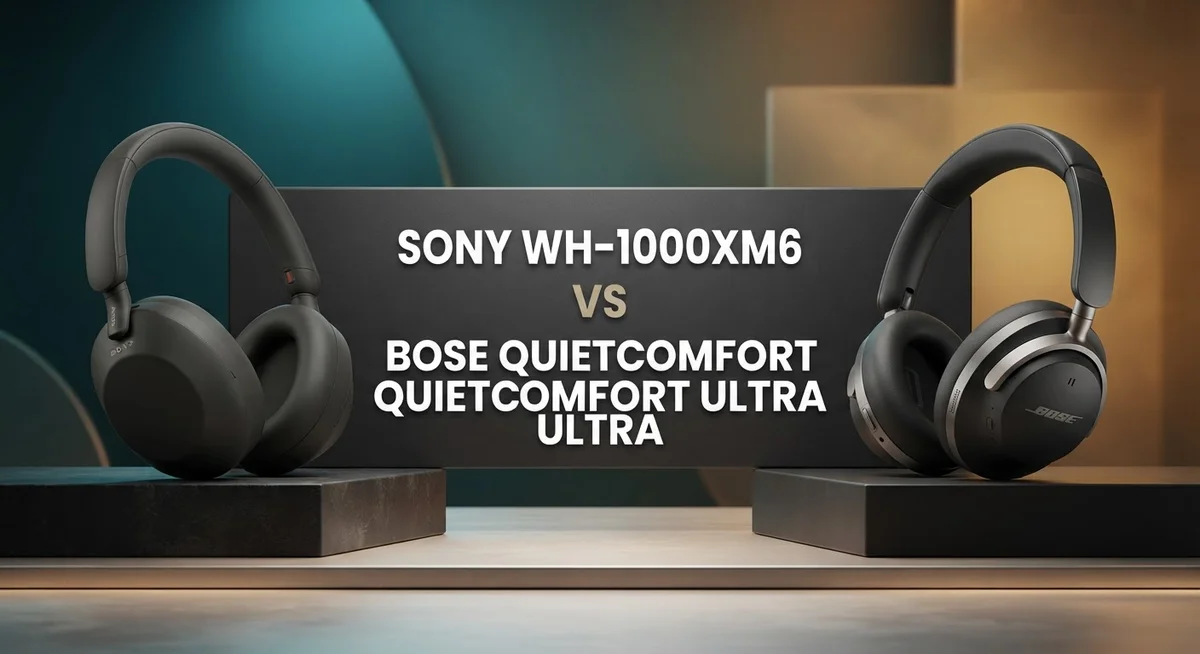
Sony WH-1000XM6 vs Bose QuietComfort Ultra: Complete Headphone Comparison
Picking the right headphones can feel like a big decision. Two names always come up: Sony WH-1000XM6 and Bose QuietComfort Ultra. Both promise great sound and quiet surroundings.
But which one fits your life better? Sony brings LDAC codec support and a smart magnetic case. Its touch controls feel simple and quick.
Bose fights back with slightly better noise isolation. It blocks outside sound in a unique way.
Each pair has strengths. Each pair has small flaws too. Sony’s bass can feel heavy at times. Bose controls are not as easy to learn.
This guide breaks down every detail. We compare comfort, sound quality, battery life, and smart features. You will find clear answers here.
By the end, you will know which headphones truly match your needs. Let’s jump in and explore what makes each pair special.
In a Nutshell
Here is a quick summary to help you decide fast.
-
Sony wins on battery life. You get longer listening time before you need to charge again.
-
The Sony app feels smarter and easier to use. Menus stay simple and controls respond well.
-
Touch controls on the Sony are more intuitive. Swipes and taps just work the way you expect.
-
Bose offers slightly better noise isolation. If silence is your top priority, this matters.
-
Sony’s bass can feel heavy for some listeners. Bass lovers may enjoy this, but others might not.
-
Soft earpads on the Sony cause fit changes over time. Comfort may shift the longer you wear them.
-
Bose controls feel less natural compared to Sony. You may need more practice to master them.
-
Both brands deliver strong performance. Your final pick depends on what you value most: battery life and smart controls, or slightly tighter noise blocking.
Think about your daily habits before choosing. That will guide you to the better fit.
Noise Cancellation Performance
Noise cancellation separates premium headphones from average ones. Both the Sony WH-1000XM6 and Bose QuietComfort Ultra excel here, but they take different approaches.
The Bose QuietComfort Ultra edges ahead with slightly superior noise isolation. It captures ambient sound more effectively and reduces it faster. You will notice this difference in loud environments like airports or busy offices. The isolation feels seamless and natural.
The Sony WH-1000XM6 delivers excellent noise cancellation that ranks among the best available. While marginally behind Bose in raw isolation power, Sony compensates with smarter technology. The headphones adapt to your environment automatically. They learn your listening habits and adjust cancellation strength accordingly.
Real world performance matters more than specs alone. In a subway car, the Bose blocks out mechanical rumbles with precision. On a plane, the Sony’s adaptive system kicks in and handles engine noise smoothly. Both handle wind noise well during outdoor use.
The Sony’s LDAC codec support enhances sound quality when cancellation is active. This means you get clearer audio even while blocking outside noise. Bose focuses purely on isolation without this audio enhancement layer.
One key difference emerges during phone calls. The Bose captures your voice more clearly to others. The Sony performs well but lets slightly more background noise through to the caller. This matters if you take frequent calls in busy spaces.
Battery life affects cancellation performance too. The Sony lasts longer on a single charge, so you maintain strong noise cancellation throughout your day. The Bose requires charging more frequently, though it still delivers solid battery performance.
Consider your environment before deciding. Choose Bose if you spend most time in consistently loud spaces like offices or transit. Pick Sony if you value adaptive technology that shifts between different noise profiles. Both headphones eliminate distractions effectively. Your choice depends on whether you want maximum isolation or intelligent adaptation. Test both if possible to feel the difference yourself.

- THE BEST NOISE CANCELLATION: Powered by advanced processors and an adaptive microphone system, the...
- CO-CREATED WITH MASTERING AUDIO ENGINEERS: Developed in collaboration with world-renowned mastering...

Last update on 2026-09-24 / Affiliate links / Images from Amazon Product Advertising API
Sound Quality and Audio Codecs
The Sony WH-1000XM6 and Bose QuietComfort Ultra both shine when it comes to audio quality, but they take different approaches to how music reaches your ears.
Sony’s LDAC codec support stands out as a major advantage here. This codec lets your music stream at higher bitrates when you use compatible devices. You get more audio data flowing to your headphones, which means richer detail and clearer highs. When you pair the Sony with an Android phone that supports LDAC, the difference becomes noticeable during your favorite songs.
Bose focuses on tuning rather than codec technology. The QuietComfort Ultra emphasizes a balanced sound signature that works well across many genres. Vocals sit forward in the mix, and instruments spread nicely across the soundstage. This approach appeals to listeners who want consistency without tweaking settings.
The Sony’s sound leans warmer overall. Bass frequencies get emphasized, which makes hip hop and electronic music feel punchy. However, this same warmth can overwhelm classical music or acoustic recordings for some ears. The softer earpads on Sony affect how sound reaches your ears too, since fit variations change the bass response slightly.
Bose delivers a more neutral presentation. The QuietComfort Ultra doesn’t color your music as much. This means tracks sound closer to how the artist intended. If you switch between many genres throughout your day, this neutrality prevents fatigue.
Codec support matters less in real world use than many assume. Both headphones connect via Bluetooth, and standard codecs like AAC and SBC work fine. The Sony’s LDAC advantage only kicks in with specific Android devices and compatible apps.
Active noise cancellation also shapes sound quality. When ANC is on, both headphones apply slight filtering to the audio. The Bose’s superior isolation means less outside noise gets through, which can make quieter songs feel more immersive. The Sony’s excellent cancellation delivers similar results with a slightly different character.
Your listening habits should guide this choice. Pick Sony if you enjoy bass forward music and want the LDAC option. Choose Bose if you prefer neutral sound that adapts to any genre.
Design, Build Quality, and Comfort
The Sony WH-1000XM6 features a sleek design with a magnetic case clasp that feels premium in your hands. The headband uses a lightweight aluminum frame wrapped in soft materials. Ear cups rotate flat for easy storage.
Bose QuietComfort Ultra takes a different approach. The design emphasizes simplicity with clean lines and a minimalist aesthetic. Both headphones weigh similarly, so portability feels comparable during travel.
Comfort matters most during long listening sessions. The Sony includes soft memory foam earpads that adapt to your ears. However, these softer materials can shift over time, affecting your fit. Some listeners experience slight movement after weeks of use.
Bose QuietComfort Ultra uses firmer earpads that maintain their shape longer. The padding feels less plush initially, but many users report consistent comfort after a few days. The headband distributes weight evenly across your head.
Build quality separates these two contenders. Sony uses premium plastics combined with metal accents on the headband. The magnetic case clasp adds durability and prevents accidental openings. Overall construction feels solid and resistant to daily wear.
Bose QuietComfort Ultra employs similar materials but with slightly different proportions. The headband feels sturdier, and hinges move smoothly without wobbling. Both models survive drops and rough handling reasonably well.
The Sony case includes an improved design compared to previous generations. It’s compact yet protective, with a soft interior lining. Bose provides a standard case that protects adequately but lacks special features.
Fit consistency varies between users. Sony’s softer earpads work great for people with average ear shapes. Listeners with smaller or larger ears might need adjustment periods. Bose’s firmer design accommodates a wider range of ear sizes more reliably.
Touch controls sit on the Sony’s right ear cup and respond instantly to swipes and taps. Bose uses button controls that require more deliberate presses. Sony’s approach feels more modern and intuitive during use.
Both headphones fold neatly into their cases for travel. The Sony folds slightly more compactly. Neither design adds significant bulk to your bag or backpack.
Top 3 Alternatives
Apple AirPods Max

- ULTIMATE OVER-EAR LISTENING EXPERIENCE—Powered by the H2 chip, AirPods Max 2 delivers improved...
- TUNE OUT THE NOISE—Up to 1.5x more Active Noise Cancellation than the previous generation, fully...
Last update on 2026-09-24 / Affiliate links / Images from Amazon Product Advertising API
Apple AirPods Max deliver spatial audio with dynamic head tracking. You get seamless integration with your Apple devices through instant pairing. The headphones feature active noise cancellation that adapts to your environment in real time.
The design feels premium with an aluminum frame and breathable mesh canopy. Battery life reaches 20 hours on a single charge. You can switch between devices effortlessly thanks to Apple’s ecosystem connectivity. The transparency mode lets you hear your surroundings without removing the headphones.
Sennheiser Momentum 4

- Seamless Firmware & App Updates: Enjoy a smoother, more reliable experience with the latest firmware...
- Audiophile-Inspired Sound : Sennheiser wireless headphones over ear with Signature Sound, 42mm...
Last update on 2026-09-24 / Affiliate links / Images from Amazon Product Advertising API
Sennheiser Momentum 4 headphones offer exceptional battery endurance with up to 60 hours of playtime. The adaptive noise cancellation adjusts based on your listening environment automatically. You get personalized sound through the Sennheiser app with customizable EQ settings.
The build quality feels solid with premium materials throughout. Comfort comes from well-padded ear cups designed for extended listening sessions. The headphones support multiple connection methods including Bluetooth and wired audio. Wind noise reduction technology keeps your calls clear outdoors.
Bowers Wilkins Px8
No products found.
Bowers Wilkins Px8 headphones showcase premium sound engineering with dynamic drivers tuned for accuracy. The active noise cancellation performs exceptionally well across frequency ranges. You get gesture controls on the ear cups for intuitive navigation.
Build quality stands out with aluminum and stainless steel construction. Comfort features include adjustable headbands and cushioned ear pads. Battery life reaches 30 hours with noise cancellation enabled. The headphones connect via Bluetooth 5.3 for stable wireless performance. Call quality improves through advanced microphone technology that isolates your voice from background noise.
Battery Life and Charging
Battery life separates these two headphones in meaningful ways. The Sony WH-1000XM6 delivers up to 12 hours of continuous playback on a single charge. This means you can use them through a full workday without needing to plug in.
The Bose QuietComfort Ultra offers around 6 hours of battery life. This difference matters if you travel frequently or work long shifts away from power sources.
Charging speed also plays a role in daily convenience. The Sony supports fast charging through its USB-C port. You get roughly 3 hours of playback from just 10 minutes of charging. This quick top-up feature helps when you forget to charge overnight.
The Bose QuietComfort Ultra charges via USB-C as well. However, the charging speed doesn’t match Sony’s quick charge capability. You’ll need more time to reach a meaningful battery percentage.
Real world battery performance depends on your noise cancellation settings. Using active noise cancellation drains the battery faster on both models. If you disable ANC, you can extend playtime significantly on the Sony. The Bose shows similar battery drain patterns with ANC active versus inactive.
The included charging cases matter too. The Sony’s case holds additional charges and protects your headphones during travel. The Bose case also provides extra battery capacity. Both cases use USB-C for recharging, keeping your cable needs simple.
For frequent travelers, the Sony’s longer battery life becomes a major advantage. You won’t stress about finding a charger mid-journey. The Bose requires more frequent charging if you use it heavily throughout the day.
Consider your typical usage patterns when weighing battery performance. If you listen for 8 hours daily, the Sony handles this easily. The Bose requires at least one midday charge. Neither headphone dies instantly, but the Sony gives you more flexibility and fewer charging interruptions overall.
Controls and App Experience
The Sony WH-1000XM6 and Bose QuietComfort Ultra take different approaches to how you interact with your headphones. Sony’s touch controls feel more responsive and intuitive when you swipe or tap the earcup. You can play, pause, skip tracks, and adjust volume with simple gestures that register quickly.
Bose’s button-based controls work well, but they require more deliberate presses. Some users find this less convenient during workouts or when wearing gloves. The Sony system learns your preferences faster through repeated use.
The Sony app stands out as a clear winner here. The interface is clean and organized, making it easy to customize sound profiles, adjust noise cancellation levels, and access firmware updates. You get quick access to LDAC codec settings, which matter if you care about high-resolution audio streaming.
Bose’s app functions adequately but feels less polished. Navigation takes an extra step or two to reach common settings. The app does let you control ANC intensity, but the experience feels clunky compared to Sony’s offering.
Both headphones connect seamlessly via Bluetooth to your phone or computer. Sony supports multipoint connection, letting you switch between two devices without manual reconnection. Bose offers this feature too, though the switching process feels slightly slower.
Voice assistant integration differs between the two. Sony works smoothly with Google Assistant and Alexa. Bose integrates well with voice assistants but requires a button press to activate, whereas Sony’s touch controls trigger voice commands more naturally.
App updates matter more than you might think. Sony regularly pushes improvements that enhance functionality and fix bugs. Bose updates less frequently, which means you might experience fewer refinements over time.
If you spend time customizing your audio experience, Sony’s superior app and touch controls make a real difference. You’ll adjust settings more often and appreciate the streamlined process. For users who prefer simplicity and rarely change settings, Bose’s button controls work fine. The choice depends on how much control you want over your listening experience.
Pros and Cons
Pros
- Sony delivers noticeably longer battery life for extended listening sessions without recharging
- Sony’s touch controls respond intuitively to your gestures and feel more natural than button presses
- Sony includes LDAC codec support for higher quality wireless audio streaming
- Bose offers marginally superior noise isolation that blocks out slightly more ambient sound
- Sony’s premium magnetic case clasp feels solid and keeps your headphones secure during travel
Cons
- Sony’s bass response can overwhelm vocals and mids, especially if you prefer balanced sound
- Sony’s softer earpads shift position during wear, causing inconsistent fit for some users
- Bose’s button controls require more deliberate presses and feel less responsive than touch surfaces
- Bose’s app lacks the polish and customization depth that Sony’s software provides
Who Should Buy It
Choose the Sony WH-1000XM6 if you prioritize seamless daily convenience and customization options. You’ll appreciate the longer battery life that powers through multiple days of listening. The intuitive touch controls respond naturally to your gestures without requiring deliberate presses. Sony’s superior app lets you fine-tune sound profiles, EQ settings, and noise cancellation levels with ease.
The Sony model suits you if you stream high-quality audio. LDAC codec support delivers richer wireless sound compared to standard Bluetooth compression. The magnetic case clasp feels premium and keeps your headphones secure during commutes or travel.
Pick the Bose QuietComfort Ultra if maximum noise blocking matters most to your daily life. Bose offers marginally better noise isolation performance that silences slightly more ambient sound. This advantage shines in loud environments like airplanes, offices, or busy streets where every decibel of isolation counts.
Bose works well for users who prefer straightforward button controls. The interface feels less complex and doesn’t require learning gesture commands. If you rarely adjust settings after initial setup, Bose’s simpler approach keeps things simple.
Choose Bose if you value consistent fit and comfort. The firmer earpads maintain their position during extended wear, unlike Sony’s softer design that can shift around.
Consider the Sony option if you’re a frequent traveler or remote worker who needs all day battery performance without hunting for charging cables. The app ecosystem makes a real difference when you customize audio regularly.
Go with Bose if you work in loud environments and want the absolute best passive noise isolation without compromises. Button controls won’t frustrate you, and you’ll appreciate the straightforward interface.
Both headphones deliver excellent sound quality and effective noise cancellation. Your choice depends on whether you value customization and battery longevity (Sony) or maximum isolation and simplicity (Bose). Think about your typical listening environment and how much you enjoy tweaking audio settings to find your perfect match.
Final Verdict
Choosing between these two headphones comes down to your daily habits. Both models perform well, but each shines in different situations.
The Sony WH-1000XM6 fits people who want a smart, connected experience. It works best for users who like fine tuning their sound and enjoy a smooth app experience.
The Bose QuietComfort Ultra fits people who want simplicity. It suits users who want to put the headphones on and forget about settings.
Think about where you use headphones most. If you travel often or move between different environments, Sony gives you more flexibility. If you mostly work in one noisy space, Bose keeps things simple and effective.
Your listening style also matters here. Music lovers who care about audio detail may lean toward Sony. People who just want quiet focus time may prefer Bose.
Neither headphone is a bad choice. Both brands have refined their flagship models over several years. You are choosing between two strong options, not picking a winner and a loser.
Comfort preferences can also guide your decision. Some users like a snug fit that stays put. Others prefer a lighter feel, even if it shifts slightly during use.
Consider how you like to control your device too. Touch gestures feel modern and quick. Physical buttons feel certain and predictable, especially in your pocket or bag.
If you still feel unsure, think about your daily routine one more time. Ask yourself what frustrates you most in current headphones. That answer often points to the better fit.
Both headphones represent excellent engineering. You really can’t go wrong with either pick.
In the end, this decision is personal. Your habits, environment, and comfort needs matter more than any spec sheet.
Pick the one that matches how you actually live and work each day.
Frequently Asked Questions
Which headphones have better battery life?
The Sony WH-1000XM6 delivers longer battery performance. You can listen for extended periods without needing to charge. This makes Sony the better choice if you travel frequently or work away from power outlets all day.
Do these headphones feel comfortable during long listening sessions?
Both models prioritize comfort, but differently. The Bose QuietComfort Ultra maintains a consistent fit because the earpads stay in place. The Sony WH-1000XM6 has softer earpads that may shift during wear, so fit varies from person to person. Your ear shape matters here.
Which app experience is easier to use?
Sony’s app offers more customization and intuitive features. You can adjust sound settings, check battery status, and update firmware easily. The Bose app feels more straightforward but gives you fewer options to tweak. Choose Sony if you like having control over your audio experience.
Can I stream high quality audio on both?
The Sony WH-1000XM6 supports LDAC codec, which means you get higher quality wireless audio if your source device supports it. The Bose QuietComfort Ultra does not have this feature. This matters only if you use streaming services that offer lossless audio.
Which one blocks more noise?
The Bose QuietComfort Ultra edges out slightly better noise isolation performance. It blocks ambient sound more effectively, making it ideal for loud offices or commutes. The Sony model handles noise well too, but Bose wins this specific category.

Dillip is the founder and editor of ImageScaleLab.com, a passionate tech enthusiast who loves breaking down complex gadgets and accessories into simple, honest reviews and buying guides. With years of hands-on experience exploring the latest in tech, he is dedicated to helping readers make smarter, more confident purchasing decisions.


