
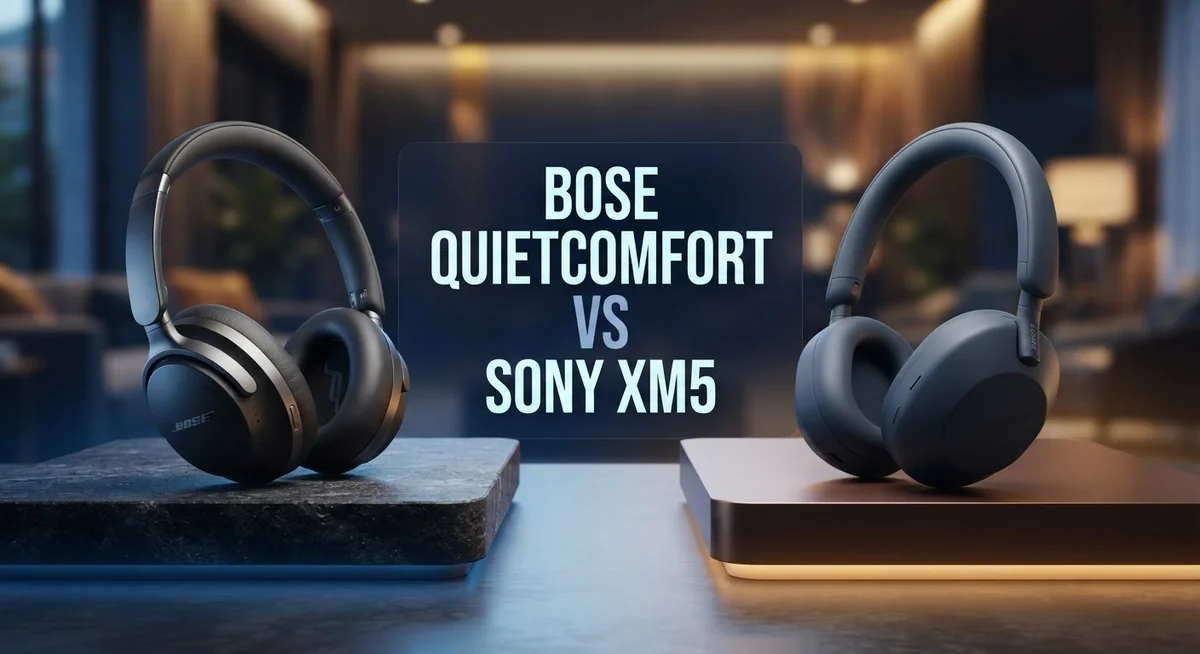
Bose QuietComfort vs Sony WH-1000XM5: Which Noise-Canceling Headphones Win
Picking the right headphones can feel tricky. Two names always come up: Bose QuietComfort and Sony XM5. Both promise silence, comfort, and great sound.
But which one fits your life better? That’s what we’re here to find out.
The Sony XM5 brings superior noise cancellation and a lighter fit. It also packs a longer battery life for busy days.
The Bose QC Ultra counters with punchier bass and richer sound quality. Its larger ear cups offer a cozy, snug feel.
Each headphone shines in its own way. Some users want crisp audio detail. Others crave deep, powerful bass.
This guide breaks down every feature side by side. We will cover comfort, sound, battery life, and more.
By the end, you will know exactly which headphone suits your ears best. Let’s jump right in and explore the details.
In a Nutshell
Here’s a quick summary to help you decide fast.
-
Sony XM5 wins for travel and daily commutes. It offers best in class noise cancellation. You also get a lighter fit for long wear sessions.
-
Bose QC Ultra wins for music lovers. It delivers punchier bass and fuller sound. The larger ear cups add extra comfort too.
-
Battery life favors Sony XM5. It lasts longer between charges. This makes it great for frequent flyers.
-
Bose QC Ultra includes Snapdragon Sound support. It also supports aptX Lossless for high quality audio streaming.
-
Sony offers dual device pairing. This lets you switch between your laptop and phone easily. Bose currently skips this feature.
-
Comfort depends on your preference. Sony fits lighter on your head. Bose feels bigger but plush.
-
Both headphones have real weaknesses. Sony’s midrange sounds recessed without EQ tweaks. Bose lacks an IP rating for dust or water resistance.
Think about your main use case first. That will point you toward the right pick.
Noise Cancellation and Sound Quality
The noise cancellation battle between these two headphones reveals important differences. The Sony XM5 delivers superior active noise cancellation that blocks out more ambient sound. You’ll notice the difference on flights, trains, and busy streets. The technology adapts quickly to changing noise around you.
The Bose QC Ultra takes a different approach. Its noise cancellation feels more natural and less aggressive. Some listeners prefer this because it doesn’t create that “pressurized” sensation. Both systems work well, but Sony edges ahead in raw cancellation power.
Sound quality separates these headphones in meaningful ways. The Sony XM5 offers a balanced profile that works for most music genres. However, the midrange sits slightly recessed. This means vocals and instruments in the middle frequencies feel pushed back. You can fix this with EQ adjustments in the app, but it’s not perfect out of the box.
The Bose QC Ultra delivers punchier bass that music lovers notice immediately. The low end feels more present and energetic. The overall sound signature feels warmer and more engaging for casual listening. Audiophiles often prefer Bose’s approach to frequency balance.
A key advantage for Bose is its passthrough mode. When you enable it, outside sounds come through clearly. You can hear announcements, conversations, and traffic without removing your headphones. The Sony XM5 has passthrough too, but Bose’s implementation feels more natural and less filtered.
Build quality matters for long term use. The Bose QC Ultra features larger ear cups that some people find more comfortable. The Sony XM5 weighs less and feels lighter during extended wear. Headband comfort varies by head shape, so try both if possible.
Both headphones excel at isolation and sound reproduction. Your choice depends on what matters most to you. Do you want maximum noise blocking or a warmer sound? Do you prefer lightweight comfort or larger ear cups? These questions help guide your decision better than specs alone.

- PREMIUM NOISE CANCELLATION: Two processors control 8 microphones for unprecedented noise...
- MAGNIFICENT SOUND: Engineered to perfection with the new Integrated Processor V1.

Last update on 2026-11-09 / Affiliate links / Images from Amazon Product Advertising API
Design, Comfort, and Build Quality
When you hold the Sony XM5, you notice the weight first. These headphones feel light in your hands. The headband sits comfortably on most head shapes. However, some users report that the headband can feel tight after extended wear. The ear cups seal well without squeezing too hard.
The Bose QC Ultra takes a different approach to comfort. The ear cups are larger and provide more surface area for your ears. This design reduces pressure points during long listening sessions. The headband padding feels substantial and distributes weight evenly. Many people find this fit more relaxing for all day wear.
Build quality separates these two headphones in important ways. The Sony XM5 uses premium plastics and aluminum that feel solid. The hinges fold smoothly without creaking. The cable connections are secure and reliable. Overall construction inspires confidence for years of daily use.
The Bose QC Ultra emphasizes durability with its design choices. The materials feel more robust and less prone to damage. The headband mechanism is reinforced at stress points. The overall build suggests this headphone can handle rough treatment better. Neither headphone has an IP rating for water resistance, so both need protection from sweat and rain.
Portability matters if you travel frequently. The Sony XM5 packs down smaller due to its lighter weight. The compact design fits easily into bags and backpacks. The Bose QC Ultra is bulkier and takes up more space when folded.
Your choice depends on what feels right for your head and ears. The Sony XM5 wins if you prefer a lighter headphone that travels well. The Bose QC Ultra wins if you want maximum comfort during stationary listening. Both headphones feel premium and built to last. Test them in person if possible, since comfort varies from person to person. Your ears will tell you which one belongs on your head.
Battery Life and Connectivity
The Sony XM5 dominates with 30 hours of battery life. You get roughly four days of listening before you need to charge. Bose hasn’t released the same battery specs for the QC Ultra, so Sony takes this round clearly.
Connectivity shows real differences between these two. The Sony XM5 supports dual device pairing. This means you can connect to your phone and laptop at the same time. Switching between them happens instantly. Bose doesn’t offer this feature on the QC Ultra.
The Bose QC Ultra includes Snapdragon Sound technology. This unlocks aptX Lossless support for compatible devices. You get higher quality audio streaming if your phone supports it. Sony uses standard Bluetooth codecs instead.
Fast charging matters for busy people. The Sony XM5 charges quickly when you’re in a rush. You can grab 10 minutes of charge time for a few hours of listening. The Bose QC Ultra also supports quick charging, though specific times vary.
Bluetooth stability differs slightly between models. The Sony XM5 maintains solid connection across different devices. The Bose QC Ultra’s Snapdragon Sound can occasionally require manual reconnection with older devices.
Real world battery performance depends on your usage. If you use noise cancellation constantly, both models last shorter. With ANC off, you stretch battery life further. The Sony XM5 still pulls ahead here with its extra hours.
Connectivity range feels similar on both headphones. You can move around your home without dropouts. Walls and distance affect both equally.
Here’s what matters most: choose Sony if you need all day battery and multi device switching. Pick Bose if you want premium audio codecs and don’t mind charging more often. Your listening habits determine which battery life suits you best. Heavy travelers need Sony’s longer endurance. Home listeners can manage either option comfortably.
Top 3 Alternatives
Sennheiser Momentum 4

- Seamless Firmware & App Updates: Enjoy a smoother, more reliable experience with the latest firmware...
- Audiophile-Inspired Sound : Sennheiser wireless headphones over ear with Signature Sound, 42mm...
Last update on 2026-11-09 / Affiliate links / Images from Amazon Product Advertising API
The Sennheiser Momentum 4 offers excellent sound quality with deep bass and clear mids. These headphones feature active noise cancellation that works well in most environments. The fit feels comfortable during long listening sessions, and the build quality feels solid and premium.
Battery life stands out as a major strength here. You get around 60 hours of listening time on a single charge. The wireless connection stays stable, and you can pair multiple devices without hassle. The sound signature appeals to people who enjoy rich, warm audio profiles.
Apple AirPods Max

- ULTIMATE OVER-EAR LISTENING EXPERIENCE—Powered by the H2 chip, AirPods Max 2 delivers improved...
- TUNE OUT THE NOISE—Up to 1.5x more Active Noise Cancellation than the previous generation, fully...
Last update on 2026-11-09 / Affiliate links / Images from Amazon Product Advertising API
Apple AirPods Max bring seamless integration if you use Apple devices. The spatial audio feature creates an immersive listening experience for compatible content. The design looks sleek and modern, though some find the headband less comfortable than competitors.
Sound quality delivers crisp highs and balanced mids. Active noise cancellation performs strongly in noisy spaces. Battery life reaches around 20 hours, which works well for daily use. The touch controls feel intuitive once you learn the gestures. These headphones work best within the Apple ecosystem.
JBL Tour Pro 2

- Smart Case for seamless experience: Control the earbuds' settings, manage calls and playback...
- True Adaptive Noise Cancelling with Smart Ambient: Enjoy the soundtrack of your life no matter where...
Last update on 2026-11-09 / Affiliate links / Images from Amazon Product Advertising API
The JBL Tour Pro 2 combines excellent noise cancellation with a lightweight design. You’ll appreciate the comfortable fit during extended wear. The audio delivers punchy bass and clear vocals, making them great for music lovers.
Smart ambient modes let you hear your surroundings when needed. The app provides useful customization options for sound tuning. Battery performance gives you around 8 hours per charge, with the case extending total listening time significantly. The build quality feels durable and reliable. These headphones work across different devices without compatibility issues.
Passthrough Mode and Ambient Awareness
When you switch between noise cancellation and ambient sound, passthrough mode becomes your best friend. The Bose QC Ultra delivers a clearer passthrough experience that lets you hear conversations naturally. You get crisp dialogue without the artificial quality that some headphones create.
The Sony XM5 offers passthrough too, but it sounds slightly processed. Your voice and surrounding sounds come through, yet they feel filtered compared to the Bose. If you frequently pause your music to chat with people nearby, the Bose advantage matters more.
Ambient awareness features work differently on each model. The Sony XM5 uses its Speak to Chat technology, which automatically pauses music when you start talking. This hands free approach works well during quick conversations at checkout counters or drive throughs. You don’t need to touch anything.
The Bose QC Ultra takes a manual approach instead. You press a button to activate passthrough mode and hear your surroundings clearly. This gives you direct control over when ambient sound enters your ears. Some users prefer this method because you choose the exact moment to switch modes.
Real world testing shows the Bose passthrough sounds more natural and uncolored. Voices remain warm and full bodied. Background noise comes through without excessive processing. The Sony version works fine for basic awareness, but the sound quality drops noticeably.
If you work in retail, hospitality, or any customer facing role, passthrough mode matters daily. You’ll switch between listening to music and hearing customers frequently. The Bose QC Ultra handles these transitions more smoothly with its superior audio quality during passthrough.
For casual users who rarely need ambient sound, both options work acceptably. You might activate passthrough once or twice per day. The difference becomes less important in this scenario.
Consider your environment too. Loud offices need powerful passthrough that cuts through noise. Quiet spaces let you hear subtle details. The Bose excels in both situations with its cleaner audio reproduction during ambient mode.
Ease of Use and Smart Features
The Sony XM5 shines when it comes to multi device pairing. You can connect to two devices at once and switch between them seamlessly. This feature works great if you juggle a phone, laptop, and tablet throughout your day.
The Bose QC Ultra takes a simpler approach here. It connects to one device at a time, though pairing itself happens quickly and reliably. If you mainly use one primary device, this won’t feel limiting.
Sony’s Speak to Chat feature deserves attention. The headphones detect when you start talking and automatically pause your music while lowering noise cancellation. This feels natural in conversations and saves you from fumbling with controls. The Bose QC Ultra doesn’t have this exact feature, so you’ll manually adjust settings when needed.
Touch controls differ between the two models. The Sony XM5 uses intuitive swipes and taps on the ear cup. The Bose QC Ultra offers physical buttons that some people find easier to operate without looking. Your preference depends on whether you like precision touch surfaces or tactile feedback.
App functionality matters for customization. The Sony Headphones Connect app gives you extensive control over sound profiles, ANC levels, and gesture mapping. The Bose Music app provides solid controls too, though fewer adjustment options overall. If you enjoy tweaking audio settings, Sony offers more flexibility.
Voice assistant integration works smoothly on both. You can activate Google Assistant, Siri, or Alexa with a single button press. Both headphones respond quickly to voice commands for calls and music control.
Firmware updates happen automatically on both models. Sony pushes updates slightly more frequently, adding new features and improvements over time. The Bose QC Ultra receives updates regularly but at a slower pace.
The Sony XM5 edges ahead for users who want advanced smart features and device switching. The Bose QC Ultra appeals to those preferring straightforward controls and physical buttons. Your daily routine determines which approach fits better into your life.
Pros and Cons
Pros
- Sony XM5 delivers superior active noise cancellation that blocks more ambient sound in real world use
- Bose QC Ultra produces punchier bass and sounds more dynamic without needing EQ adjustments
- Sony XM5 feels lighter on your head and stays comfortable during long listening sessions
- Bose QC Ultra’s passthrough mode sounds natural and uncolored, perfect for customer facing work
- Sony XM5 gives you 30 hours of battery life, keeping you powered through multiple days
Cons
- Sony XM5 has a recessed midrange that makes vocals sound distant until you adjust the EQ
- Bose QC Ultra lacks an IP rating, so water resistance isn’t guaranteed for gym or outdoor use
- Sony XM5’s headband causes discomfort for some users after extended wear sessions
- Bose QC Ultra doesn’t support dual device pairing, so you can’t switch between phone and laptop seamlessly
Who Should Buy It
Choose the Sony XM5 if you travel frequently and need seamless connectivity. The dual device pairing lets you switch between your phone and laptop instantly. You’ll appreciate the 30 hour battery life that powers you through multiple days without charging. Speak to Chat automatically pauses your music when you talk, making it perfect for quick conversations without removing your headphones.
Pick the Sony XM5 if you spend hours wearing headphones daily. The lighter weight and ergonomic design keep your ears and head comfortable during extended sessions. Superior active noise cancellation blocks more ambient sound in real world environments like planes, offices, and coffee shops. The balanced sound signature works well across most music genres without requiring constant EQ tweaking.
Go with the Bose QC Ultra if sound quality is your top priority without adjustments. The punchier bass and dynamic sound signature appeal to listeners who want impact straight out of the box. You won’t need to fiddle with EQ settings to enjoy your music. The natural sounding passthrough mode becomes invaluable if you work in customer facing roles where you need to hear conversations clearly.
Choose the Bose QC Ultra if you prefer larger ear cups and a different fit profile. Some people find the bigger design more comfortable than Sony’s approach. The excellent sound quality and robust build appeal to audiophiles who care about craftsmanship.
Neither headphone is perfect for everyone. Sony wins for frequent travelers and multi device users. Bose wins for people who want excellent sound without customization and prefer larger ear cups.
Consider your daily routine carefully. Do you switch between devices constantly? Does your work require hearing ambient sound clearly? Do you travel on planes regularly? Do you spend 8+ hours wearing headphones? Your answers determine which model fits your lifestyle better. Both deliver exceptional noise cancellation and sound quality. The right choice depends on what matters most to your specific situation.
Final Verdict
Final Verdict
Both headphones deliver excellent results, but your choice depends on daily habits. Think about how you use headphones beyond just sound and comfort.
The Sony XM5 suits people who value smart features. Its advanced codec support and app ecosystem make it a strong pick for Android users chasing high resolution audio.
The Bose QC Ultra appeals to listeners who want a simpler, more premium feel. Snapdragon Sound integration gives Android users access to aptX Lossless, a feature Sony does not offer here.
Build quality also plays a role. Bose leans on soft, cushioned materials that feel plush from day one. Sony’s design feels lighter but slightly less premium to the touch.
Case design differs too. Bose’s carrying case feels sturdier and more protective for travel. Sony’s case is smaller and easier to slip into a bag.
If you care about long term durability, Bose headphones often feel more solid in daily handling. Sony prioritizes lightness over structural rigidity.
Think about your listening habits too. If you enjoy podcasts or calls often, Bose’s mic clarity performs well in quiet rooms. Sony handles calls decently but shines more during music playback.
For frequent upgraders, Sony’s ecosystem apps offer better firmware flexibility. Bose keeps things straightforward, which suits people who dislike constant app tinkering.
Neither headphone disappoints in real world use. Your final decision should match your lifestyle, not just specs on paper.
Sony XM5 fits users who want smart connectivity and long battery life. Bose QC Ultra fits users who want a plush fit and natural sound without adjustments.
Whichever you pick, both models represent the best of their brands. Choose based on how you listen, travel, and work each day. That single factor matters more than any spec sheet comparison.
Frequently Asked Questions
Which headphone has better noise cancellation in noisy environments?
The Sony XM5 blocks more ambient sound overall. It excels in airports, trains, and busy offices. The Bose QC Ultra comes close but doesn’t quite match Sony’s ANC strength. Sony wins if you work in loud spaces or commute daily.
Can I switch between my phone and laptop easily?
Yes, but only the Sony XM5 offers dual device pairing. You can connect to two devices at once and switch seamlessly. The Bose QC Ultra requires manual reconnection each time. This matters if you jump between work and personal devices constantly.
Which one sounds better without adjusting settings?
The Bose QC Ultra sounds better straight out of the box. It delivers punchy bass and dynamic audio without needing EQ tweaks. The Sony XM5 has a recessed midrange, so vocals sound distant until you adjust the app. Pick Bose if you want great sound immediately.
How long do the batteries last?
The Sony XM5 lasts 30 hours on a single charge. The Bose QC Ultra provides solid battery life but falls short of Sony’s endurance. Sony keeps you listening through multiple days without charging.
Which headphone feels more durable?
The Bose QC Ultra feels more solid and premium during daily use. It has larger ear cups and a sturdier build overall. The Sony XM5 is lighter but feels less robust. Bose wins for long term durability if you handle them roughly.

Dillip is the founder and editor of ImageScaleLab.com, a passionate tech enthusiast who loves breaking down complex gadgets and accessories into simple, honest reviews and buying guides. With years of hands-on experience exploring the latest in tech, he is dedicated to helping readers make smarter, more confident purchasing decisions.


