Sony RX100 VII vs Canon G7X Mark III: Compact Camera Comparison
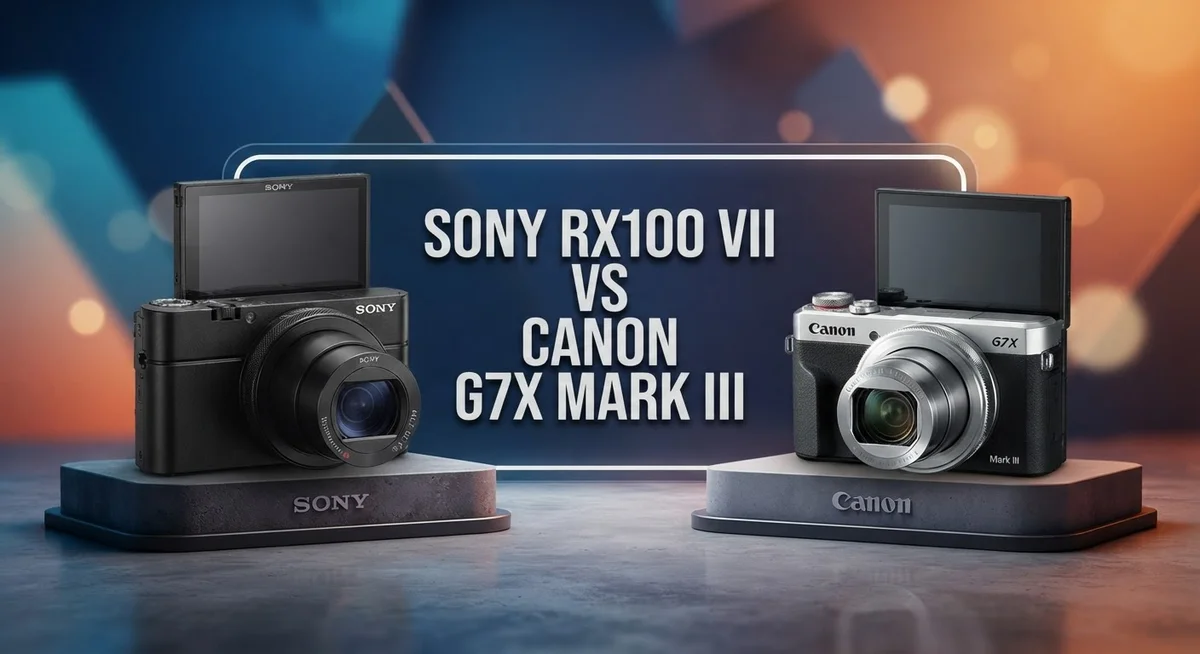
Picking a compact camera can feel tricky. Two models often top the list: the Sony RX100 VII and the Canon G7X Mark III.
Both cameras pack pro level features into a small body. They fit easily in your pocket or bag. Yet they serve slightly different needs.
The Sony RX100 VII shines with fast autofocus and a longer zoom range. It captures sharp, detailed shots even in tricky lighting.
The Canon G7X Mark III wins hearts with its flip screen and warm color tones. Vloggers and casual shooters love its simple charm.
So which one fits your style? This guide breaks down every key difference. You will learn about autofocus speed, video quality, lens performance, and handling.
By the end, you will know exactly which camera matches your creative needs. Let us jump into the details.
In a Nutshell
-
Sony RX100 VII packs a pop-up EVF, giving you a clear view in bright light. The Canon G7X Mark III skips this feature entirely.
-
Video lovers will notice the Sony shoots full-sensor 4K with no crop. The Canon also films 4K but shows heavier noise in low light.
-
The Canon includes a built-in ND filter. This helps you control exposure outdoors without extra gear.
-
Sony’s lens stays sharper across its zoom range. The Canon lens opens wider at f/1.8, letting in more light for tricky shots.
-
If you shoot distant subjects, the Sony reaches further with its 200mm zoom. The Canon stops shorter but stays steady in low light.
-
Both cameras suit different shooters. Pick the Sony for speed and reach. Pick the Canon for brightness and simplicity.
Each camera brings something special to the table. Your choice depends on what you value most: reach and speed or brightness and ease.
Lens and Zoom Range
The lens and zoom range is where these two cameras show their biggest personality differences.
Both cameras start with the same focal length at the wide end: 24mm. This gives you plenty of room to capture landscapes and group shots without stepping back. The Sony RX100 VII extends much further though. It reaches 200mm when fully zoomed, while the Canon G7X Mark III tops out at 100mm. That extra zoom on the Sony means you can frame distant subjects tighter without moving closer.
The aperture ratings tell another story. At the wide end, both open to f/1.8, which is genuinely fast for a compact camera. This lets in lots of light for handheld shooting in dim conditions. As you zoom in, the Sony reaches f/2.8 while the Canon stays at f/2.8 as well. The Sony lens performs sharper across its entire zoom range, especially when you push toward that 200mm telephoto end. The Canon’s glass is no slouch, but the Sony’s optical design gives it an edge for distant subjects.
Here’s a practical difference: the Canon includes a built-in ND filter. This accessory reduces light entering the sensor, which lets you use slower shutter speeds in bright sun. The Sony doesn’t have this feature, so you would need to buy a separate filter if you want that control.
The Sony’s longer zoom range makes it the winner if you shoot wildlife, sports, or anything requiring you to reach out and grab distant details. You get more flexibility without swapping lenses or cropping in post production.
The Canon’s brighter maximum aperture at the telephoto end (f/2.8) and its built-in ND filter appeal to video creators who want smooth motion blur and quick light control. Neither lens feels like a compromise, but they serve different shooting styles.
If zoom range matters most to your workflow, the Sony’s extra 100mm of reach is a genuine advantage. If you prioritize light control and video convenience, the Canon’s ND filter and consistent brightness shine through.

- 20.1 Megapixel 1.0” stacked CMOS sensor and DIGIC 8 Image processor.
- 4.2x optical zoom Lens (24-100mm f/1.8-2.8) with optical image Stabilizer.
Last update on 2026-11-09 / Affiliate links / Images from Amazon Product Advertising API
Video and Image Quality
Video and image quality separate these two cameras in meaningful ways. Let’s explore where each one excels.
Sony’s 4K video captures the full sensor without cropping. This means you get wider angles and more detail in every frame. The autofocus tracks subjects smoothly during video recording, which matters if you film moving scenes or vlog while walking.
Canon’s video uses aggressive noise reduction. This creates cleaner footage in dim light, but it can soften fine details. The built-in ND filter gives you a real advantage here. You can shoot at slower shutter speeds even in bright daylight without overexposing your video. Sony shooters need to buy a separate filter to achieve the same effect.
For still photos, both cameras produce sharp, detailed images. Sony’s lens stays sharper from edge to edge, especially at longer focal lengths. The extra zoom reach means you can frame distant subjects without stepping closer.
Canon’s color science leans warm and flattering. Skin tones look natural and appealing straight from the camera. Many portrait and vlog creators prefer this out-of-the-box look. Sony’s colors feel more neutral, which gives you more flexibility in post-production editing.
Low light performance shows another difference. Sony’s superior autofocus helps you lock focus quickly when light fades. Canon’s noise reduction keeps images clean, though it trades some texture for smoothness. Both cameras handle ISO well, but Sony edges ahead with cleaner high-ISO shots.
The Sony’s pop-up EVF lets you see exposure and focus before you press the shutter. This helps you nail the shot in bright sunlight where LCD screens wash out. Canon relies on its LCD screen and flip mechanism, which works well for vlogging but offers less feedback in harsh light.
If you prioritize zoom range and video flexibility, Sony delivers. If you want flattering colors, easy video filtering, and a flip screen for content creation, Canon wins. Your shooting style determines which quality advantage matters most to you.
Design and Usability
When you hold the Sony RX100 VII, you immediately notice its compact build. The camera feels solid and well balanced in your hands. Its pop-up electronic viewfinder sits flush against the body until you need it.
The Canon G7X Mark III takes a different approach. It skips the viewfinder entirely and relies on its 3-inch LCD screen. This screen flips 180 degrees upward, making it perfect for vlogging and selfies.
Handling each camera reveals practical differences. The Sony’s viewfinder helps you frame shots in bright sunlight where LCD screens wash out. You get a clear, real-time preview of your exposure before you shoot. The Canon forces you to squint at the rear screen or use live view mode on an external monitor.
For video creators, the Canon’s flip screen is a genuine game changer. You can see yourself while recording without external gear. Vloggers and content makers appreciate this built-in convenience. The Sony lacks this feature, so you’ll need an external monitor if you want to see your face during recording.
Both cameras fit easily into jacket pockets and camera bags. Neither feels bulky or cumbersome. The Sony weighs slightly more due to its viewfinder mechanism, but the difference is minimal in real use.
Button placement and menu systems differ between the two. The Sony groups controls logically around the lens barrel and back panel. The Canon spreads its buttons across the right side of the body. Your preference here depends on how your hands naturally rest on the camera.
The Sony’s compact design makes it travel friendly for photographers who hike and explore. The Canon appeals to vloggers who need quick screen access and self-facing capabilities. Both cameras feel premium and durable, though the Sony’s metal construction edges ahead slightly.
Ergonomics matter when you shoot for hours. The Sony’s grip feels slightly more secure for telephoto shooting. The Canon’s lighter weight reduces hand fatigue during extended vlogging sessions. Neither camera causes discomfort during typical use.
Top 3 Alternatives
Panasonic Lumix LX100

- Legendary LUMIX LX Series with manual controls Designed to Inspire Creativity
- Superior light capture with large, multi aspect micro four thirds sensor
Last update on 2026-11-09 / Affiliate links / Images from Amazon Product Advertising API
The Panasonic Lumix LX100 offers a fixed 24-75mm lens that covers most shooting situations. You get a large 1-inch sensor that captures excellent detail in various lighting conditions. The camera features a manual focus ring and aperture ring for direct control. Its electronic viewfinder provides a clear view of your scene before you shoot.
The body feels compact and portable. You can easily slip it into a bag or backpack. The 4K video capability lets you record smooth footage. The camera performs well in low light thanks to its capable sensor. Battery life gets you through a full day of shooting.
Ricoh GR III

- Optimized for Street Photography: The Ricoh GR IIIx Urban Edition boasts a 26.1mm lens, offering a...
- Advanced Sensor and Processing Power: Equipped with a 24.2MP APS-C CMOS sensor and GR Engine 6, the...
Last update on 2026-11-09 / Affiliate links / Images from Amazon Product Advertising API
The Ricoh GR III is a pocket-sized powerhouse with a fixed 28mm lens. This camera weighs just 227 grams, making it perfect for travel. The APS-C sensor delivers sharp, vibrant images with excellent color rendering. You get a macro mode that focuses as close as 10 centimeters.
Build quality feels solid and durable. The camera handles rain and dust without complaint. Its fast autofocus locks onto subjects quickly. The hybrid viewfinder option (sold separately) enhances your shooting experience. Street photographers love this camera for its speed and simplicity.
Fujifilm X100V

- Great photography every day, everywhere: X100V features a newly designed, incorporated 23 millimeter...
- Designed for quality and speed: From fleeting holiday moments and family celebrations to...
Last update on 2026-11-09 / Affiliate links / Images from Amazon Product Advertising API
The Fujifilm X100V combines a fixed 35mm lens with a premium build. Its X-Trans sensor produces distinctive, film-like colors right out of the box. The camera features both an optical and electronic viewfinder. You can switch between them instantly while shooting.
The hybrid viewfinder system is genuinely useful. Autofocus is fast and accurate. Video capabilities include 4K recording at 30fps. The body feels substantial and premium. Weather sealing protects against dust and moisture. This camera appeals to photographers who value image quality and classic design.
Autofocus and Performance
Autofocus speed and accuracy matter when you’re shooting fast moving subjects. The Sony RX100 VII leads here with its superior autofocus system. It uses phase detection across the sensor, which means it locks onto subjects quickly and stays locked during continuous shooting.
The Canon G7X Mark III uses contrast detection autofocus. It works well in most situations, but it’s slower when tracking moving subjects. If you shoot sports, wildlife, or active scenes, you’ll notice the Sony’s advantage.
Sony’s autofocus tracks subjects more reliably in video mode too. When you pan across a scene or follow someone walking, the focus stays smooth and predictable. Canon’s autofocus can hunt a bit during video, especially in lower light conditions.
Continuous autofocus performance shows clear differences between these two cameras. The Sony maintains focus lock even when subjects move toward or away from you. The Canon requires more manual focus adjustments in challenging conditions.
Low light autofocus performance favors the Sony. Its phase detection system works down to very dim light levels. The Canon struggles more when you’re shooting in dim interiors or evening light.
Eye autofocus is another Sony strength. Point the camera at a person, and it automatically detects and focuses on their eyes. This feature works in both photo and video modes. Canon doesn’t offer this capability, so you focus manually or use standard face detection.
Burst shooting speed connects to autofocus performance. The Sony captures up to 11 frames per second while maintaining focus. The Canon shoots at 8 frames per second. For action photographers, this difference matters when you need to capture the perfect moment.
Performance-wise, the Sony handles challenging autofocus situations more confidently. If you shoot fast moving subjects, video with dynamic scenes, or frequently work in changing light, the Sony’s autofocus system gives you more control and reliability.
The Canon’s autofocus works fine for travel photography, street scenes, and everyday shooting. You just need to be more intentional about focus in complex situations.
Viewfinder and Screen Experience
The viewfinder and screen experience shapes how you frame and compose shots. This is where these two cameras take very different approaches.
The Sony RX100 VII features a pop-up electronic viewfinder (EVF). You pull it up when you need it, and it disappears when you don’t. The EVF shows you exactly what the sensor sees before you take the shot. You can preview exposure changes, focus peaking, and histogram data in real time. This becomes invaluable in bright sunlight when the rear screen washes out. The viewfinder lets you stabilize the camera against your face for sharper handheld shots too.
The Canon G7X Mark III skips the viewfinder entirely. Instead, it relies on the rear LCD screen. However, this screen flips 180 degrees upward. This flip screen is perfect for vlogging and self portraits. You can see yourself while recording or composing selfies. The screen rotates smoothly and locks into multiple angles. For content creators who film themselves, this feature alone changes the shooting experience.
Both screens offer high resolution and good color accuracy. The Sony’s screen is slightly sharper with more pixels. The Canon’s flip mechanism adds flexibility that the Sony simply cannot match. If you shoot traditional photography, the Sony’s EVF gives you more control and precision.
Brightness matters too. The Sony’s EVF performs better in harsh daylight because it’s an electronic display. The Canon’s LCD screen can struggle in direct sunlight, forcing you to shield it with your hand. For outdoor work, the Sony wins this round.
The choice depends on your shooting style. Do you film content and need to see yourself? The Canon’s flip screen is a game changer. Do you shoot stills and want precise framing control? The Sony’s EVF gives you that advantage. Neither screen is bad. They simply serve different photographers and different creative needs.
Pros and Cons
Pros
- Sony RX100 VII: Extended 24–200mm zoom range gives you flexibility from wide landscapes to distant subjects without changing lenses
- Sony RX100 VII: Full sensor 4K video with no crop means you capture more detail and creative control in your footage
- Sony RX100 VII: Superior autofocus system with eye tracking makes it reliable for fast action and challenging lighting situations
- Canon G7X Mark III: Brighter f/1.8 lens opening captures more light in dim environments and creates beautiful background blur
- Canon G7X Mark III: Built in ND filter lets you shoot smooth video and control exposure without buying extra accessories
Cons
- Sony RX100 VII: Pop up EVF adds complexity and one more thing that can potentially malfunction over time
- Canon G7X Mark III: No electronic viewfinder means you rely only on the rear screen, which gets harder to see in bright sunlight
- Canon G7X Mark III: Contrast detection autofocus struggles more with fast moving subjects and low light scenes compared to Sony’s system
- Canon G7X Mark III: Limited 24–100mm zoom range forces you to stand closer or crop your shots when you need more reach
Who Should Buy It
Content creators and vloggers benefit most from the Canon G7X Mark III. The 180 degree flip screen lets you see yourself while recording. You frame your face perfectly without guessing. The built in ND filter gives you smooth video control without extra gear.
Professional photographers shooting fast action prefer the Sony RX100 VII. The eye autofocus tracks moving subjects reliably. You capture decisive moments without missing focus. The extended 24–200mm zoom range eliminates the need to change positions constantly.
Travel photographers who want simplicity should consider the Canon. It has fewer buttons and menus to learn. The contrast detection autofocus works well for landscapes and street scenes. You pack light and focus on enjoying your trip rather than mastering camera settings.
Hybrid shooters mixing photo and video work better with the Sony. The full sensor 4K video captures more detail than cropped footage. The pop up EVF helps you compose precisely in bright sunlight. You get professional quality results for both stills and motion.
Low light enthusiasts need the Sony’s superior autofocus. It locks onto subjects in dim restaurants, concerts, and evening scenes. The eye tracking stays locked even when conditions get challenging. You rarely experience focus hunting or missed shots.
Budget conscious buyers who prioritize screen flexibility choose the Canon. The flip screen handles overhead and waist level angles. You shoot creative compositions without an EVF. The camera teaches you fundamental photography principles through its simpler interface.
Safari and wildlife photographers appreciate the Sony’s longer reach. The 200mm telephoto end brings distant animals closer. You stay further back and avoid disturbing wildlife. The autofocus keeps pace with moving creatures in unpredictable light.
Social media focused creators gravitate toward the Canon. The flip screen makes selfie recording intuitive. The brighter f/1.8 lens flatters skin tones on camera. You produce content quickly without complex settings adjustments.
Choose based on your primary use case. If you record yourself or shoot video often, the Canon’s flip screen saves you time. If you chase fast action or need longer zoom range, the Sony delivers superior performance. Both cameras excel at their strengths.
Final Verdict
Both cameras deliver excellent image quality. Your final choice depends on what matters most to your shooting style and daily habits.
The Sony RX100 VII shines for users who need speed and precision. Its autofocus tracks moving subjects with ease. Sports, wildlife, and fast paced events become easier to capture.
The Canon G7X Mark III wins for creators who prioritize simplicity. Its flip screen and intuitive controls make solo shooting smooth. Beginners often find Canon’s menu system easier to learn.
Battery life favors the Canon slightly in real world use. You get a few more shots per charge during long outings. This makes a difference during full day shoots without backup batteries.
Size and grip feel similar between both cameras. Neither model feels bulky in your hand. Both slip easily into a jacket pocket or small bag.
Storage compatibility works well on both cameras with standard SD cards. Neither requires special or expensive memory formats. This keeps your existing camera gear useful.
Menu navigation on the Sony can feel complex at first. Canon’s interface stays simpler and more beginner friendly. New users often adapt faster with Canon.
If you shoot fast action, wildlife, or professional video work, the Sony RX100 VII fits your needs. Its longer reach and sharper autofocus give you an edge in demanding situations.
If you focus on vlogging, everyday photography, or casual content creation, the Canon G7X Mark III serves you well. Its flip screen and warm color output support creators who value ease and connection with their audience.
Both cameras remain excellent choices for different types of photographers. Think about your main shooting scenario first. Then match that need to the camera built for it.
Your decision should reflect how you shoot, not just what specs look impressive on paper. Pick the tool that fits your creative workflow best.
Frequently Asked Questions
Which camera has better autofocus for moving subjects?
The Sony RX100 VII wins here. It uses a faster autofocus system with eye tracking that locks onto people and animals quickly. The Canon G7X Mark III focuses well for everyday shots, but it struggles when your subject moves fast or changes position suddenly. If you shoot sports, kids, or wildlife, the Sony’s autofocus gives you more keeper shots.
Can I flip the screen on both cameras?
Only the Canon G7X Mark III has a flip screen. It rotates 180 degrees, which makes vlogging and selfie content much easier. The Sony has a pop up viewfinder instead, which you use to frame shots but cannot flip for self facing recordings. The Canon’s screen is a major advantage if you record yourself regularly.
What’s the zoom difference between these two?
The Sony RX100 VII reaches 24–200mm, while the Canon G7X Mark III stops at 24–100mm. Sony gives you twice the telephoto reach, so distant subjects appear larger and closer. The Canon feels more compact because of this, but you’ll need to move closer to frame tight shots. For travel and wildlife, the Sony’s longer zoom saves you steps.
Which one shoots better 4K video?
The Sony RX100 VII records 4K without cropping the sensor, meaning you capture the full width of the lens. The Canon also shoots 4K but uses a crop, which narrows your field of view. Sony’s approach gives you more creative control and wider angles. Both produce sharp, clean footage in good light.
Does one have built in filters or tools?
The Canon G7X Mark III includes a built in ND filter. This lets you control exposure and create smooth motion video without buying separate filters. The Sony has no built in ND filter, so you need to purchase one separately if you want this feature. The Canon saves you money and gear weight here.

Dillip is the founder and editor of ImageScaleLab.com, a passionate tech enthusiast who loves breaking down complex gadgets and accessories into simple, honest reviews and buying guides. With years of hands-on experience exploring the latest in tech, he is dedicated to helping readers make smarter, more confident purchasing decisions.