
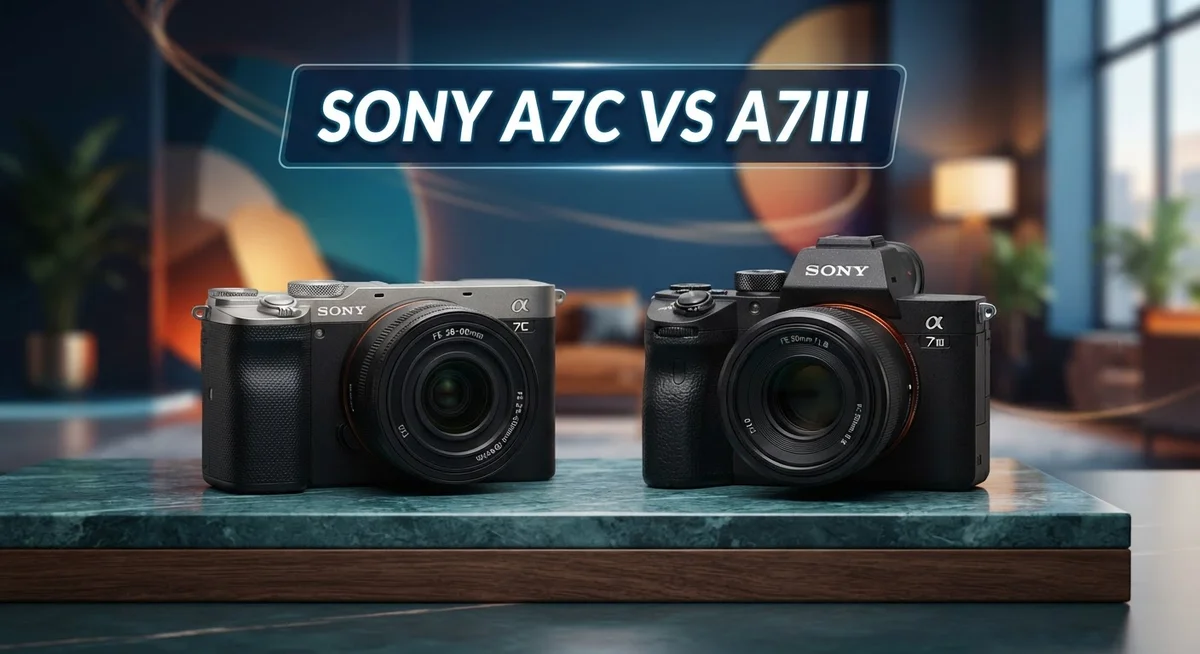
Sony A7C vs A7III: Complete Comparison Guide for Photographers
Choosing between the Sony A7C and Sony A7III can feel tricky. Both cameras share the same 24MP sensor and Bionz X processor. But they offer very different shooting experiences.
The A7C stands out with its compact body. It also brings improved autofocus and a deeper buffer for continuous shooting.
The A7III holds its ground too. It has a larger grip, a better viewfinder, and dual card slots for extra storage flexibility.
So which one fits your style better? If you want a lightweight travel companion, the A7C shines. If you prefer a sturdy grip and proven low light performance, the A7III delivers.
This guide breaks down every key difference. You will learn how autofocus, ergonomics, and video features compare side by side. Let us help you pick the right camera for your next shoot.
In a Nutshell
Here is a quick summary to help you decide fast.
- Both cameras share the same 24MP sensor and Bionz X processor. You get identical image quality in most situations.
- The A7C uses updated autofocus algorithms. It tracks subjects more smoothly than the A7III.
- The A7C also has a deeper buffer. You can shoot longer bursts without slowdown.
- The A7III wins on ergonomics. Its larger grip feels more secure during long shoots.
- Viewfinder quality favors the A7III. It shows a sharper, more detailed image.
- Need dual card slots? The A7III has you covered. The A7C only offers a single slot.
- The A7III also includes a front dial. This gives you quicker manual control.
- Low light shooters will appreciate the A7III‘s strong performance in dim conditions.
- The A7C‘s LCD screen shows better color accuracy, helpful for reviewing shots on the go.
Both cameras deliver reliable performance. Your choice depends on whether you prioritize portability or handling comfort.
Sensor and Image Quality
Both cameras pack identical 24MP BSI CMOS sensors and Bionz X processors, so the image quality baseline feels very similar. However, the differences emerge in how each camera handles real world shooting situations.
The A7C delivers superior autofocus performance thanks to its updated algorithms. You’ll notice faster subject tracking and more reliable eye detection when shooting portraits or fast moving scenes. The deeper continuous buffer on the A7C lets you fire more shots in quick succession before the camera slows down, which matters when capturing decisive moments.
The A7III shines in low light conditions. Its sensor excels at high ISO performance, producing cleaner images when you’re shooting in dim venues or during evening events. If you frequently work without external lighting, this camera gives you an edge.
Let’s talk about what you see on screen. The A7C’s LCD shows better color accuracy, making it easier to judge exposure and white balance when reviewing shots on the go. This matters if you rely on your screen to confirm critical details before moving to the next shot. The A7III’s larger viewfinder provides a brighter, clearer view of your scene before you press the shutter. Some photographers prefer this for composing their shots.
Both cameras shoot 4K video at 8 bits with 10 fps continuous shooting. The 5 axis stabilization on each body handles camera shake effectively, though the A7III’s larger grip makes handheld video feel more stable for some users.
Here’s the practical reality: if you prioritize autofocus speed and buffer depth, the A7C wins. If you need maximum low light capability and prefer a larger viewfinder, the A7III stands stronger. Neither camera produces noticeably better or worse image quality at normal ISOs. Your choice depends on which features match your actual shooting style, not on raw sensor specs.
No products found.
Autofocus and Performance
When you press the shutter button, autofocus speed matters. The A7C features updated autofocus algorithms that lock onto subjects faster than the A7III’s older system. This means quicker focus acquisition, especially when you’re shooting moving subjects or working in challenging light.
The A7C’s autofocus system uses more advanced processing power. You’ll notice snappier tracking when filming video or capturing fast action. The A7III’s autofocus still performs well, but it can’t match the A7C’s responsiveness in real world shooting scenarios.
Buffer depth determines how many shots you capture before the camera slows down. The A7C offers a deeper continuous buffer, letting you fire more frames in rapid succession. This advantage matters when you shoot bursts of 10 fps. The A7III fills its buffer faster, which can interrupt your shooting rhythm during critical moments.
Both cameras share identical 24MP sensors and Bionz X processors, so raw processing power feels comparable. The real difference comes from how each camera’s autofocus system uses that processing. The A7C’s updated algorithms make smarter decisions about focus point selection and tracking.
For video work, the A7C’s autofocus improvements shine. Smooth focus transitions feel more natural, and subject tracking stays locked better. The A7III handles video autofocus adequately, but the A7C delivers noticeably smoother results.
The A7III excels in low light autofocus performance. Its larger viewfinder and superior optics help the focus system see better in dim conditions. If you shoot frequently in shadows or indoors without flash, the A7III’s autofocus reliability becomes valuable.
Speed versus reliability represents the core difference here. The A7C wins on raw autofocus speed and continuous shooting capacity. The A7III wins on autofocus consistency in low light situations. Consider your typical shooting environment. Do you need lightning fast focus and deep buffers? The A7C delivers. Do you work mostly in dim conditions and value autofocus certainty? The A7III serves you better.
Design and Ergonomics
The way a camera feels in your hands shapes your entire shooting experience. The A7C prioritizes portability with its significantly smaller body, making it ideal for photographers who move between locations frequently. You get a compact design without sacrificing core features.
However, the A7C comes with a trade off. Its smaller grip can feel cramped during extended shooting sessions, especially if you have larger hands. Some users need time to adjust to the tighter fit.
The A7III takes the opposite approach with its larger, more spacious grip. Your fingers rest naturally on the body, reducing hand fatigue during long days of shooting. The design feels immediately comfortable for most users.
Beyond grip size, the viewfinder experience differs significantly. The A7III delivers a superior viewfinder with better magnification and clarity. You see more detail when composing shots, which matters for precise framing.
The A7C’s viewfinder feels smaller and less immersive by comparison. Some photographers find this limiting, while others adapt quickly.
Control layouts reveal another distinction. The A7III includes a front dial, giving you quick access to exposure compensation without diving into menus. This dedicated control speeds up your workflow.
The A7C omits this front dial, requiring you to use rear controls instead. It’s not a deal breaker, just a different approach to camera operation.
Storage options also reflect different design philosophies. The A7III features dual memory card slots, letting you back up files automatically or extend your shooting capacity. This redundancy protects your work.
The A7C uses a single card slot, which simplifies the body design but removes that safety net.
Build quality feels solid on both cameras. You get the same Bionz X processor and 24MP sensor in each body. The real differences come down to how Sony packaged these components.
Choose the A7C if you value portability and can adapt to a smaller grip. Pick the A7III if ergonomics and control layout matter most to your shooting style. Both cameras handle professional work reliably.
Top 3 Alternatives
Canon EOS R6

- Canon USA Warranty. Items Included: Canon EOS R6 Mark II Mirrorless Camera,Canon RF 24-105mm f...
- Advanced Full-Frame Performance: Capture next-level detail and dynamic range with the Canon EOS R...
Last update on 2026-11-05 / Affiliate links / Images from Amazon Product Advertising API
The Canon EOS R6 is a full-frame mirrorless camera that competes well against the Sony A7C and A7III. It features a 20-megapixel sensor with excellent autofocus performance. The camera shoots 4K video at high frame rates, making it great for content creators.
The R6 has in-body image stabilization that works across all lenses. This feature helps you shoot sharper images in low light. The battery life is solid, giving you more shooting time per charge compared to some competitors.
Nikon Z6 II

- Mirrorless versatility on a whole new level. 24.5MP BSI resolution that excels in low light. 14 FPS...
- Full frame. Full pixel readout. Full featured 4K UHD Video. Top of the line video performance with...

Last update on 2026-11-05 / Affiliate links / Images from Amazon Product Advertising API
The Nikon Z6 II offers a 24.2-megapixel sensor with strong autofocus capabilities. It performs well in both photography and videography. The camera has dual SD card slots, which is helpful for backing up your files during shoots.
This model includes in-body stabilization and weather sealing. You get reliable performance in challenging conditions. The Z6 II also offers good battery endurance, so you can shoot longer without stopping to recharge.
Panasonic Lumix S5

- A LIGHTWEIGHT, POWERFUL HYBRID CAMERA FOR VIBRANT STILL PHOTOGRAPHY AND CINEMATIC VIDEO: Realize...
Last update on 2026-11-05 / Affiliate links / Images from Amazon Product Advertising API
The Panasonic Lumix S5 is a 47.3-megapixel full-frame mirrorless camera with exceptional resolution. It’s ideal if you need high-detail images for printing or cropping. The camera has in-body stabilization and solid autofocus performance.
The S5 offers excellent value with its feature set. It shoots 4K video and includes weather sealing for outdoor use. The compact size makes it easy to carry during long shoots. This camera works well for photographers who prioritize image quality and resolution over other specs.
Video Capabilities and Recording
Both cameras record 4K video with 8 bit color depth and shoot at 10 fps continuously. The real differences emerge in how each camera handles the recording experience itself.
The A7C’s autofocus system makes a meaningful difference during video work. Its updated algorithms track moving subjects more smoothly and respond faster to focus shifts. When you’re filming people, pets, or action sequences, this responsiveness keeps your footage sharp without hunting for focus.
The A7III maintains solid autofocus performance for video, though it uses older processing methods. You’ll still get usable footage in most situations. The difference becomes noticeable when subjects move quickly across the frame or when you need consistent tracking throughout a long take.
Buffer depth affects video recording differently than stills. The A7C’s deeper continuous buffer means it handles sustained recording without dropping frames as quickly. For longer clips or back to back shots, this matters more than you might expect.
Recording ergonomics vary between these cameras. The A7C’s smaller body feels lighter during handheld video work, which some shooters prefer for extended sessions. The A7III’s larger grip provides more stability and control, especially if you use external audio recorders or wireless microphone systems mounted on top.
LCD screen quality influences how you monitor your footage. The A7C’s superior color accuracy helps you judge exposure and white balance in real time. You see what you’re actually recording more faithfully. The A7III’s screen works fine for monitoring, but colors shift slightly depending on viewing angle.
Storage considerations matter for video. The A7C uses one card slot, so you need fast, reliable media to handle continuous 4K recording. The A7III’s dual slots let you split recording between two cards or switch cards without stopping. This dual slot design appeals to videographers shooting long events or multiple takes back to back.
For video focused shooting, the A7C edges ahead with its autofocus speed and buffer depth. The A7III remains capable but works better if you prioritize other features like the larger grip and dual storage options.
Viewfinder and LCD Display
The viewfinder and LCD display represent two areas where these cameras diverge meaningfully. Understanding these differences helps you decide which system suits your shooting style.
The A7C’s viewfinder feels more compact, reflecting its smaller overall body design. This creates a trade off between portability and immersion. You get a camera that fits easily in bags, but the viewing experience becomes less expansive. The eyepiece sits closer to your eye, which some photographers find restrictive during extended shooting sessions.
The A7III delivers a larger, more spacious viewfinder that many photographers prefer. The bigger view helps you frame compositions with greater clarity and comfort. Extended shooting sessions feel less fatiguing when you have more screen real estate to work with. This larger window into your scene makes a real difference during critical focus moments.
LCD display quality separates these cameras in practical ways. The A7C features superior LCD color accuracy, making it excellent for checking exposure and reviewing footage. The screen delivers more faithful color representation, which matters when you need to verify whites and skin tones in the field. The A7III’s LCD performs adequately but doesn’t match the A7C’s precision.
Both cameras offer flip out or tilt functionality, though implementation differs slightly. The A7C’s smaller grip means the LCD feels proportionally larger on the body. The A7III’s bigger frame accommodates a screen that feels more integrated into the overall design.
Brightness and viewing angles matter for outdoor shooting. The A7C’s display handles bright sunlight reasonably well for its size. The A7III’s larger screen provides better visibility in harsh conditions simply through sheer surface area.
For video monitoring, the LCD becomes your primary tool. The A7C’s superior color accuracy helps you nail white balance and exposure during recording. The A7III’s larger screen gives you more space to monitor focus peaking and histogram data.
Your choice depends on priorities. Choose the A7C if you value accurate color feedback and compact dimensions. Pick the A7III if you prefer a larger viewfinder and more comfortable viewing experience during long shoots.
Pros and Cons
Pros
- Compact body design makes it easy to carry for travel and everyday shooting
- Advanced autofocus system with updated algorithms tracks subjects faster and more accurately
- LCD screen delivers superior color accuracy for reviewing your images
- Deeper continuous buffer lets you shoot longer bursts before the camera slows down
- Larger grip on the A7III feels more comfortable during extended shooting sessions
- Bigger viewfinder on the A7III provides a more immersive framing experience
- Front dial on the A7III gives you quick access to exposure adjustments
- Dual card slots on the A7III protect your photos with automatic backup
Cons
- A7C’s smaller grip may feel cramped if you have larger hands
- A7C’s viewfinder feels less spacious than the A7III’s
- A7III’s larger body takes up more space in your camera bag
- A7III uses an older autofocus system that processes information more slowly
Who Should Buy It
The A7C suits you if you prioritize portability and modern autofocus performance. This camera travels light without sacrificing core features. You’ll appreciate the compact body when shooting on the go or carrying your gear all day.
Choose the A7C if video work matters to your workflow. The updated autofocus algorithms track moving subjects faster, making it excellent for vlogging, interviews, or documentary work. The deeper buffer means you capture longer bursts before the camera pauses to write files.
The A7III appeals to photographers who value ergonomics and traditional controls. The larger grip feels more secure during extended shooting sessions, especially if you have bigger hands. The front dial gives you quick one-handed access to exposure adjustments without diving into menus.
Pick the A7III if you shoot events or situations where backup storage matters. The dual memory card slots let you automatically save files to both cards simultaneously. This protects your work if one card fails or corrupts unexpectedly.
The A7III’s viewfinder advantage matters if you spend hours framing shots. The larger, brighter optical view makes it easier to focus manually and compose precisely. This becomes especially valuable in low light or when wearing glasses.
Both cameras deliver the same 24MP resolution and core image quality. The real difference comes down to your shooting style and priorities. The A7C wins for travel and video creators who want a nimble camera with smart autofocus. The A7III suits studio work, events, and photographers who prefer a traditional, comfortable grip.
Consider your typical shooting day. Do you move between locations frequently? The A7C’s size advantage compounds over time. Do you spend hours at one location? The A7III’s ergonomics and viewfinder shine. Neither camera limits your creative potential. Each simply handles different situations better than the other. Your choice depends on matching the camera to how you actually shoot.
Final Verdict
Both cameras deliver excellent image quality. Your final decision comes down to how you shoot and what feels right in your hands.
Street photographers and travel shooters often lean toward the A7C. Its smaller frame slips into bags easily and draws less attention in public settings.
Studio photographers and wedding professionals often prefer the A7III. Dual card slots protect irreplaceable moments, and the sturdy grip helps during long shooting days.
Think about how you hold a camera for hours. Hand size and shooting style matter more than most reviews admit. Smaller hands may find the A7C comfortable right away. Larger hands often want the extra grip surface on the A7III.
Both cameras share the same lens mount. This means your lens collection works on either body without compatibility issues. That flexibility makes switching between systems less risky.
Vloggers and hybrid content creators usually pick the A7C for its size and updated autofocus. Quick subject tracking helps when filming solo without an assistant.
Photojournalists and event shooters often trust the A7III for its familiar layout and backup storage. Missing a shot due to card failure is not an option in that line of work.
Menu systems on both cameras feel nearly identical. If you already own a Sony camera, the learning curve stays minimal either way.
Neither camera is outdated or obsolete. Each one serves a clear purpose depending on your shooting habits and physical comfort preferences.
Ask yourself this simple question: Do you shoot handheld for hours, or do you prioritize a smaller footprint? Your answer points you toward the right camera.
Take time to hold both models if possible. Physical comfort often outweighs specs on paper once you start shooting daily.
Whichever you choose, you get a dependable full frame camera built for creative work.
Frequently Asked Questions
Which camera has better autofocus?
The A7C wins here. Sony updated the autofocus algorithms specifically for the A7C, making it faster and more accurate at tracking moving subjects. The A7III uses an older AF system that still performs well, but the A7C’s newer technology gives you a real edge when you need quick, reliable focus.
Does the A7III really have a better viewfinder?
Yes, it does. The A7III’s viewfinder is noticeably larger and brighter, which makes framing your shots more enjoyable during long shooting sessions. The A7C’s viewfinder is smaller and dimmer by comparison. If you spend hours looking through the viewfinder, the A7III feels more immersive and comfortable.
Can I use the same lenses on both cameras?
Absolutely. Both cameras use Sony’s E mount, so every lens works on either body. You can share lenses between them without any issues or adapters needed.
Which one should I choose for video work?
The A7C edges out the A7III for video creators. Its compact size makes it easier to rig with external mics, monitors, and gimbals. The updated autofocus also tracks moving subjects more smoothly during video recording. Both shoot 8 bit 4K, but the A7C’s modern AF system delivers better results when you’re capturing motion.
Why would I pick the A7III over the A7C?
The A7III shines if you value traditional camera controls and comfort. Its larger grip feels better during extended sessions, and the front dial lets you adjust exposure quickly without diving into menus. The dual memory card slots also give you automatic backup, which matters for professional work and important events.

Dillip is the founder and editor of ImageScaleLab.com, a passionate tech enthusiast who loves breaking down complex gadgets and accessories into simple, honest reviews and buying guides. With years of hands-on experience exploring the latest in tech, he is dedicated to helping readers make smarter, more confident purchasing decisions.


