Sony WH-1000XM4 vs Bose QuietComfort: Complete Headphones Comparison
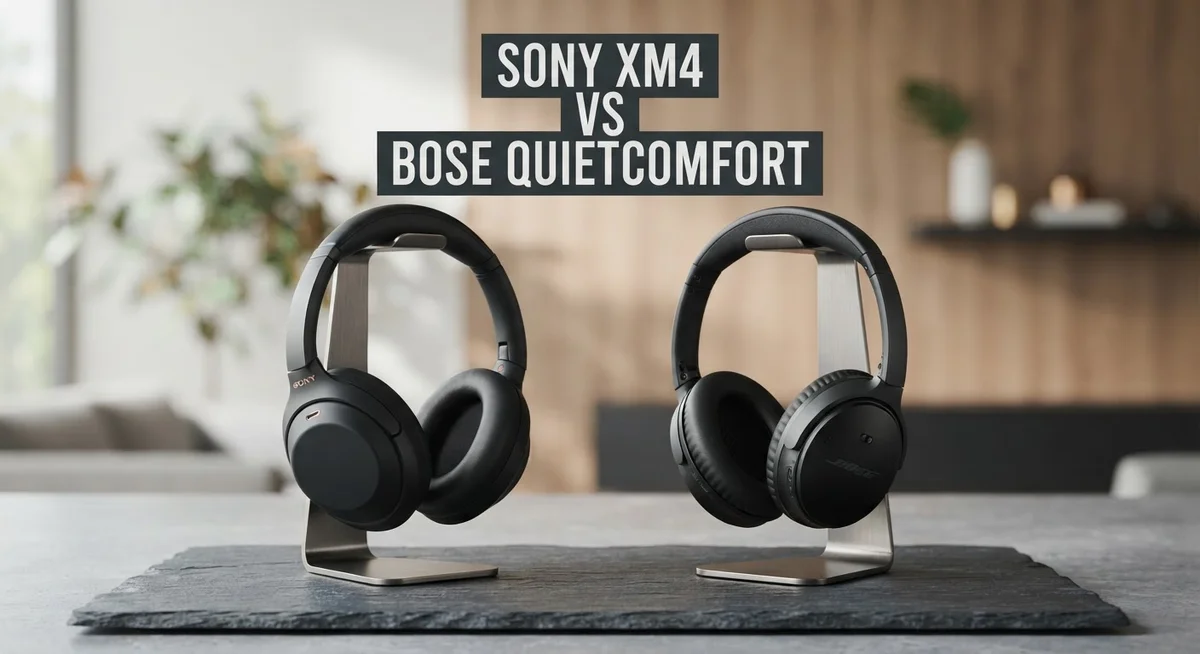
Picking the right headphones can feel tricky. Two names always come up: Sony WH-1000XM4 and Bose QuietComfort. Both promise great sound and top noise cancellation.
But which one fits your daily life better? That’s what we’re here to find out.
The Sony XM4 brings adaptive noise cancellation and a longer battery life. It also handles calls with ease, making it great for work and travel.
The Bose QuietComfort fights back with punchier bass and slightly stronger noise cancelling. Music lovers often praise its sound clarity.
In this guide, we compare comfort, features, and performance side by side. You’ll see where each pair shines and where it falls short.
By the end, you’ll know exactly which headphones match your lifestyle. Let’s break down the details and find your perfect fit.
In a Nutshell
Here’s the quick rundown if you’re short on time.
-
Sony XM4 wins on comfort. You can wear these for hours without ear fatigue. They also pack a longer battery life, so you charge less often.
-
Bose QuietComfort wins on sound. Bass hits harder and vocals sound richer. If music quality matters most, Bose takes this round.
-
Call quality favors Sony. Microphones pick up your voice clearly, even in noisy rooms. Bose lags a bit here.
-
Noise cancelling is close, but Bose edges ahead slightly. Sony counters with adaptive ANC that adjusts to your surroundings automatically.
-
Multipoint connection is a Sony strength. You can pair two devices at once, like your laptop and phone. This makes switching seamless.
-
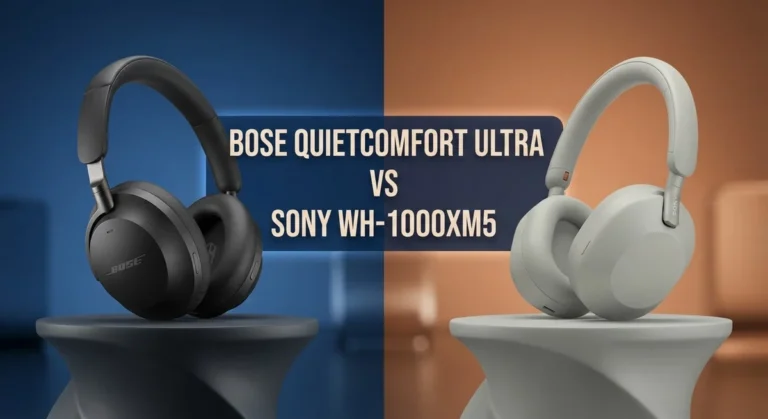
Both models face pressure from newer releases like the XM5, XM6, and Bose QC Ultra. Still, these two remain solid, dependable choices today.
Your final pick depends on what you value most. Choose comfort and battery life with Sony. Choose bass and sound depth with Bose.
Noise Cancellation Technology
Noise cancellation is where these two headphones truly shine. Both models use active noise cancellation (ANC) to block out unwanted sound, but they take slightly different approaches.
The Sony XM4 uses adaptive noise cancellation. This means the headphones adjust to your environment in real time. When you’re on a quiet train, it reduces power. When you’re in a busy airport, it ramps up. This smart system learns from your habits and adapts automatically. You get consistent peace without draining the battery too fast.
The Bose QuietComfort edges out slightly in raw noise cancelling power. It excels at blocking low frequency sounds like airplane engines and traffic rumble. The technology feels more aggressive and immediate. If you fly frequently or work in loud offices, this matters. Bose’s approach is direct and effective without as much adaptation.
Both headphones handle wind noise well. They won’t create that annoying whooshing sound when you walk outside. This is important if you commute or exercise outdoors.
Here’s a key difference: Sony focuses on balance while Bose focuses on strength. Sony’s system works with transparency modes, so you can hear announcements or conversations when needed. Bose’s system is more about pure isolation. Neither approach is “better”—it depends on your daily routine.
Real world testing shows the gap is narrow. In quiet environments, you won’t notice much difference. In loud settings, Bose pulls ahead by a small margin. The difference might be 10 to 15 percent better isolation with Bose.
Both models let you adjust noise cancellation levels through their apps. You can customize how much outside sound reaches your ears. This flexibility helps you find the sweet spot for your needs.
Newer competitors like the XM5 and Bose QC Ultra have pushed noise cancellation further. But the XM4 and current QuietComfort models still perform excellently. Your choice here depends on whether you want smart adaptation or maximum isolation power.

- ACTIVE NOISE CANCELLATION: Premium noise canceling with Dual Noise Sensor technology
- LONG BATTERY LIFE: Up to 30-hour battery life with quick charging (10 min charge for 5 hours of...
Last update on 2026-11-08 / Affiliate links / Images from Amazon Product Advertising API
Sound Quality and Audio Performance
When it comes to audio performance, these two headphones deliver distinct sonic signatures that appeal to different listener preferences.
The Sony XM4 emphasizes a balanced sound profile. Mids and highs come through clearly, making vocals and instruments feel natural. You’ll notice crisp detail across most music genres. The soundstage feels open and spacious. This balance works well if you listen to podcasts, audiobooks, or varied music styles throughout your day.
The Bose QuietComfort prioritizes bass response and warmth. Low frequencies hit harder and deeper. If you enjoy hip hop, electronic music, or bass heavy tracks, this difference becomes obvious. The sound feels more enveloping and immersive. Treble remains controlled without harshness.
Both headphones use high quality drivers and codec support. The Sony XM4 supports LDAC, which transmits more audio data wirelessly. This means better sound quality from compatible devices. Bose uses AAC and aptX codecs, which are solid but less advanced than LDAC.
Call quality matters if you take work calls regularly. The Sony XM4 wins here with superior microphone arrays and noise reduction. Your voice comes through clear and crisp to the other person. The Bose QuietComfort handles calls adequately but doesn’t match Sony’s performance.
The app experience differs too. Sony’s app lets you adjust EQ settings extensively. You can customize bass, mids, and treble to your taste. Bose’s app offers simpler controls but still includes EQ adjustments. Both apps let you toggle noise cancellation levels on the fly.
Real world listening shows the gap between these models is narrower than specs suggest. In quiet rooms, both sound excellent. In noisy environments, the Bose warmth can feel more engaging. The Sony clarity helps you focus on details.
Your choice depends on your listening habits. Choose Sony if you want balanced, detailed sound and excellent call quality. Choose Bose if you prefer warm, bass forward audio. Both deliver premium audio experiences that satisfy most listeners.
Battery Life and Charging
The Sony XM4 delivers 30 hours of battery life, which means you can use them for nearly two weeks without charging. This is a serious advantage for frequent travelers and people who forget to charge devices regularly.
Bose QuietComfort models vary depending on which generation you choose. The standard QC offers solid endurance, though it doesn’t quite match Sony’s 30 hour claim. If battery longevity matters to your daily routine, Sony pulls ahead here.
Quick charging is where Sony shines. You get meaningful playback time after just a short charge session. This feature saves you when you’re in a rush before a flight or commute. Bose also supports fast charging, but Sony’s implementation feels more practical for real life situations.
Multipoint connection changes how you manage battery. Both headphones let you switch between devices, but Sony’s approach is smoother. You can connect to your laptop and phone simultaneously without manual switching. This reduces battery drain from constant reconnection attempts that waste power.
The charging case matters too. Sony’s case charges via USB C, which aligns with modern devices. Bose follows a similar approach depending on the model. Neither case adds dramatic battery extension, but having a case nearby provides peace of mind during the workday.
Real world battery performance depends on your noise cancellation settings. With ANC on at full strength, both models consume more power. Sony maintains its advantage even in this scenario. If you lower ANC levels, both headphones stretch their battery further.
Standby time is another consideration. These headphones hold their charge well when you’re not using them. Sony’s battery management keeps the XM4 ready for weeks between uses.
Temperature affects battery performance on both models. Cold weather reduces effective battery life slightly. Hot environments don’t help either. Both headphones handle normal room temperature conditions perfectly fine.
For people who charge nightly, battery differences feel minimal. For people who charge weekly, Sony’s 30 hour capacity becomes genuinely valuable. Your charging habits should guide this decision.
Top 3 Alternatives
Sennheiser Momentum 4

- Seamless Firmware & App Updates: Enjoy a smoother, more reliable experience with the latest firmware...
- Audiophile-Inspired Sound : Sennheiser wireless headphones over ear with Signature Sound, 42mm...
Last update on 2026-11-08 / Affiliate links / Images from Amazon Product Advertising API
The Sennheiser Momentum 4 offers exceptional battery life that outlasts most competitors. You get up to 60 hours of listening time on a single charge. The sound quality delivers rich, balanced audio with deep bass and clear mids. These headphones feature effective noise cancellation that rivals premium models. The build quality feels solid and premium in your hands. Comfort matters too, and the padded ear cups provide hours of wear without fatigue. The touch controls work smoothly once you learn the gestures.
Apple AirPods Max

- ULTIMATE OVER-EAR LISTENING EXPERIENCE—Powered by the H2 chip, AirPods Max 2 delivers improved...
- TUNE OUT THE NOISE—Up to 1.5x more Active Noise Cancellation than the previous generation, fully...

Last update on 2026-11-08 / Affiliate links / Images from Amazon Product Advertising API
Apple’s AirPods Max brings spatial audio technology to the mainstream market. The seamless integration with Apple devices makes setup instant and effortless. You enjoy automatic switching between your iPhone, iPad, and Mac. The sound profile emphasizes clarity and detail across all frequencies. Active noise cancellation works effectively in loud environments. The digital crown lets you control volume and playback with precision. Battery life reaches around 20 hours, sufficient for most users. The design stands out with its distinctive stainless steel frame and mesh canopy.
Jabra Elite 85t

- Active Noise Cancellation (ANC) cancels the noise you don’t want to hear; HearThrough (our word...
- The Elite 85t buds have been engineered with the most cutting-edge noise cancellation technology on...
Last update on 2026-11-07 / Affiliate links / Images from Amazon Product Advertising API
The Jabra Elite 85t focuses on call quality and connectivity. These earbuds deliver superior microphone performance for video calls and conversations. The AdjustableANC adapts to your environment automatically. Sound reproduction handles both music and podcasts with clarity. The compact design fits securely in your ears during movement and activity. Battery performance gives you around 5.5 hours per charge, with the case providing multiple refills. Customization through the app lets you fine-tune sound profiles to your preference. The build quality withstands daily wear and occasional moisture exposure.
Comfort and Design
The Sony XM4 and Bose QuietComfort take different approaches to how they feel on your head and shoulders. Let’s explore what makes each one unique in this area.
The Sony XM4 features a lightweight design that sits comfortably during long listening sessions. The ear cups rotate and adjust to match your head shape. Many users report wearing them for 8+ hours without discomfort. The headband uses a soft synthetic leather material that doesn’t feel sticky or cheap.
The Bose QuietComfort prioritizes a snug fit over lightweight construction. The ear cups seal more firmly against your ears, which helps with noise isolation. This design choice means they stay put during movement, but some people find them slightly heavier. The padding is plush and absorbs pressure well.
Both headphones weigh around 250 grams, so the difference is minimal. The real distinction comes down to how they distribute weight. Sony spreads it evenly across the headband. Bose concentrates more pressure on the ear cups themselves.
For glasses wearers, the Sony XM4 offers slightly more relief. The wider ear cup opening reduces pressure on the frame. The Bose design creates more contact with glasses stems, which some find bothersome.
Portability matters if you travel frequently. The Sony XM4 folds into a compact carrying case, making it easier to pack in bags. The Bose QuietComfort doesn’t fold as easily, requiring more space in your luggage.
The headband materials also differ. Sony uses a softer touch that feels less rigid. Bose employs a firmer structure that some people prefer for stability. Neither causes headaches during normal use.
Sweat resistance is worth mentioning. Both models handle light perspiration well, though neither is fully waterproof. The Sony XM4 performs slightly better during gym sessions because of its lighter overall design.
Your choice depends on whether you prioritize lightweight comfort or a secure, sealed fit. Try both models if possible to see which design suits your head shape better.
Call Quality and Connectivity
Call quality separates these two headphones in meaningful ways. The Sony XM4 excels at capturing your voice during work calls. Its microphone array picks up speech clearly while filtering background noise effectively. You’ll sound sharp and present to the person on the other end.
The Bose QuietComfort handles calls well too, but the Sony edges ahead in real office environments. When you’re in a busy coffee shop or open office, the Sony’s noise suppression during calls becomes noticeable. Your colleagues hear you better, not the chaos around you.
Connectivity options matter for call quality as well. The Sony XM4 supports multipoint connection, letting you pair two devices at once. You can answer calls from your phone while staying connected to your laptop. Switching happens automatically, which keeps conversations smooth and uninterrupted.
Bose QuietComfort models vary in their multipoint capabilities depending on which generation you own. Newer versions offer this feature, but older models don’t. Check your specific model before assuming you get dual device support.
Bluetooth stability affects how reliably you can take calls. Both headphones use solid Bluetooth 5.0 technology. The Sony XM4 maintains connection strength across different spaces without frequent drops. You won’t experience sudden disconnects during important conversations.
The Bose QuietComfort performs similarly in stable environments. Range is comparable between both models, extending roughly 30 feet in open spaces. Walls and obstacles reduce this range equally for each headphone.
Codec support influences call clarity too. The Sony XM4 supports LDAC, which handles high quality audio streams. This matters less for calls than for music, but it shows the Sony’s technical advantage. Bose prioritizes different codec standards that work well for their ecosystem.
Choose the Sony XM4 if you take frequent work calls and need consistent voice clarity. Pick the Bose QuietComfort if you want equally strong call performance with a different sound character. Both deliver professional call quality that works for remote work and business conversations.
Pros and Cons
Pros
- Sony XM4 delivers superior call quality for work meetings and frequent voice conversations
- Sony XM4 offers extended battery life that lasts nearly two weeks between charges
- Sony XM4 features adaptive noise cancellation that adjusts to your environment automatically
- Bose QuietComfort provides stronger bass response for music lovers who enjoy deeper lows
- Bose QuietComfort delivers slightly superior noise cancelling performance in real world use
Cons
- Sony XM4 faces competition from newer models like the XM5 and XM6 that offer additional features
- Bose QuietComfort models command a higher asking price compared to the Sony XM4
- Sony XM4 may feel less secure if you prefer a snug fit over lightweight comfort during active use
Who Should Buy It
The Sony XM4 works best for people who spend their days on video calls and virtual meetings. If your job requires constant communication through your headphones, the superior call quality makes a real difference. Your colleagues will hear you clearly, and background noise won’t interfere with your voice.
Choose the Sony XM4 if you travel frequently and need headphones that last for days without charging. The 30-hour battery means you can go on a week-long trip with just one or two charge cycles. Travelers appreciate not having to hunt for outlets constantly.
The Bose QuietComfort appeals to music enthusiasts who want deeper, richer bass in every song. If you listen to hip-hop, electronic music, or bass-heavy genres, you’ll notice the difference immediately. The sound signature feels more immersive for casual listening throughout your day.
Pick the Bose QuietComfort if you prioritize noise cancellation above everything else. The slightly superior ANC performance matters most when you’re in loud environments like airports or coffee shops. You get a more sealed, isolated listening experience.
The Sony XM4 suits people who want a well-rounded performer without compromises. You get good battery life, reliable calls, solid noise cancellation, and comfort all in one package. This makes it ideal for professionals who can’t choose just one priority.
The Bose QuietComfort fits those who don’t mind spending more for premium sound quality. If you already own other Bose products, staying within the ecosystem makes sense. The consistent sound signature feels familiar across your devices.
Consider the Sony XM4 if you wear glasses regularly. The lighter pressure on your head means fewer headaches during extended wear. This matters more than you’d think during 8-hour workdays.
Choose the Bose QuietComfort if you want a headphone that feels like a luxury purchase. The build quality and premium materials justify the investment. You’re buying into a brand known for reliability and performance.
Neither headphone disappoints, but your specific needs determine the better choice. Think about whether you prioritize battery life, call quality, sound signature, or noise cancellation. Your daily routine will guide you toward the right decision.
Final Verdict
Choosing between these two headphones comes down to your daily habits. Both models deliver strong performance, but they shine in different areas.
Sony XM4 works well for people who value smart features. Its app offers deep customization, including EQ presets and touch controls that adapt to your preferences.
Bose QuietComfort focuses on simplicity. The app design feels clean and straightforward, making it easy for anyone to adjust settings without a steep learning curve.
Think about how you use headphones daily. If you switch between devices often, software flexibility matters more than raw audio power.
Firmware updates also play a role in long term satisfaction. Sony regularly rolls out updates that add features and fix bugs. Bose tends to release updates less frequently, but each one feels polished and well tested.
Build quality differs slightly between the two. The Sony XM4 folds flat for storage, which helps travelers save space in bags. The Bose QuietComfort has a sturdier headband that some users prefer for durability over time.
Your existing tech ecosystem matters too. If you already use Sony devices like TVs or speakers, the XM4 integrates smoothly through shared apps and features. Bose products often pair well with fitness trackers and smart home systems from other brands.
Consider your listening environment as well. Office workers and remote employees often lean toward the Sony XM4 for its call clarity and lighter feel during long shifts.
Music lovers who spend evenings unwinding with playlists often prefer the Bose QuietComfort for its rich sound signature.
Final thought: neither headphone is a wrong choice. Each one targets a different type of listener with unique daily needs.
Pick the Sony XM4 if you want a smart, adaptable companion for calls and travel. Pick the Bose QuietComfort if deep sound and simple design matter most.
Your lifestyle, not just specs, should guide this final decision.
Frequently Asked Questions
Which headphone has better battery life?
The Sony XM4 wins this round. It delivers 30 hours of battery on a single charge, which means you can go almost a full week without plugging in. The Bose QuietComfort offers solid endurance too, but Sony’s extended runtime makes it the clear choice for frequent travelers and people who hate charging cables.
Does one sound better than the other?
The Bose QuietComfort delivers richer bass response and stronger overall sound quality. If you love deep lows and immersive audio, Bose edges ahead. The Sony XM4 sounds balanced and clean, making it excellent for calls and podcasts. Your choice depends on what you listen to most.
Which one cancels noise better?
The Bose QuietComfort provides slightly superior noise cancelling in real world situations. You’ll notice the difference in busy airports and crowded offices. The Sony XM4 offers adaptive noise cancellation that learns your surroundings, which some users find more intelligent and flexible. Both perform exceptionally well for blocking out distractions.
Can I connect both headphones to multiple devices at once?
Yes. The Sony XM4 includes multipoint connection, allowing you to pair it with two devices simultaneously. You can jump between your laptop and phone seamlessly. The Bose QuietComfort requires manual switching between devices. If you juggle multiple gadgets throughout your day, Sony’s multipoint feature saves time and frustration.
Which headphone suits me better?
Choose the Sony XM4 if you make frequent video calls, travel often, or need all day battery. Pick the Bose QuietComfort if you prioritize sound quality and don’t mind the extra setup time when switching devices.

Dillip is the founder and editor of ImageScaleLab.com, a passionate tech enthusiast who loves breaking down complex gadgets and accessories into simple, honest reviews and buying guides. With years of hands-on experience exploring the latest in tech, he is dedicated to helping readers make smarter, more confident purchasing decisions.