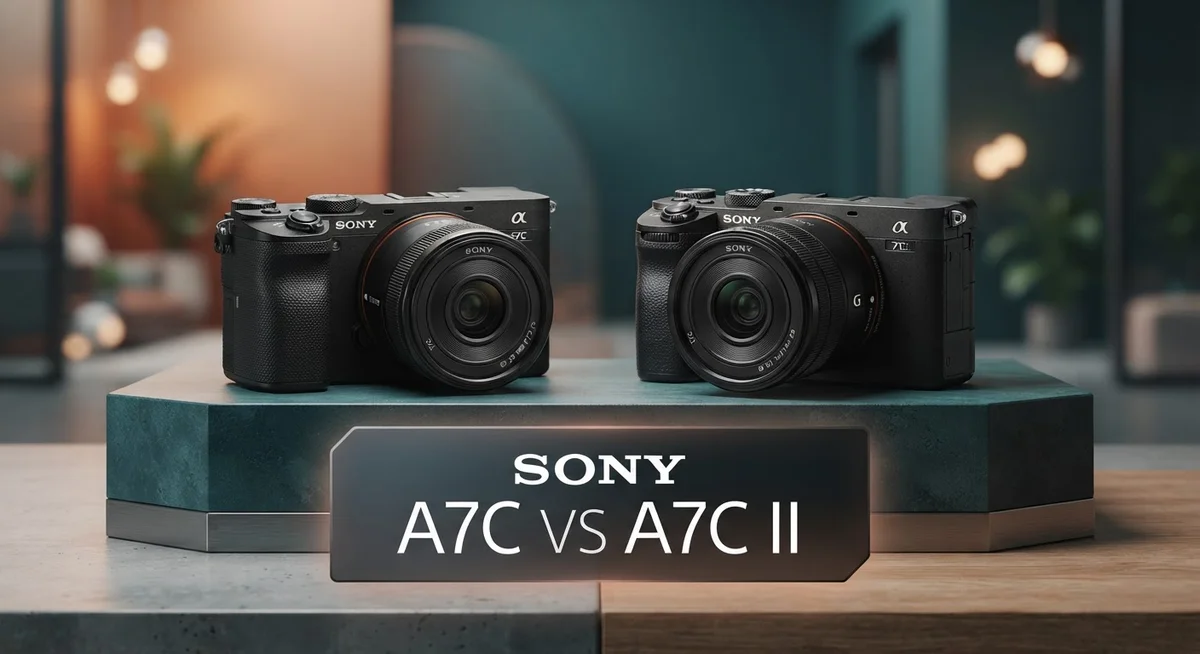
Sony A7C vs A7C II: Full-Frame Mirrorless Camera Comparison
Choosing between the Sony A7C and the A7C II can feel tricky. Both cameras pack full frame power into a small body. But key upgrades set them apart.
The A7C II brings a 33MP sensor and a faster BIONZ XR processor. It also adds AI powered autofocus for sharper subject tracking. These changes make a real difference for photographers and video creators alike.
Stabilization gets better too. The A7C II offers improved IBIS, helping you capture steady shots even without a tripod. Plus, it supports smooth 4K 60p video with full pixel readout.
Still, the original A7C holds its own with a simpler, reliable design.
In this comparison, we break down every feature side by side. You will see exactly which camera fits your shooting style best. Let’s explore what makes each model shine.
In a Nutshell
Here is the quick summary of what sets these two cameras apart.
-
The A7C II packs AI powered autofocus. It tracks eyes and subjects with more precision than the original model.
-
In body stabilization gets a nice boost on the A7C II. Your shots stay sharper even in tricky handheld situations.
-
Video shooters will like the 4K 60p mode on the A7C II. It uses full pixel readout, so there is no binning loss.
-
The A7C II adds dual card slots. This gives you backup storage and more flexible file management.
-
Some trade offs exist though. The A7C II has a smaller EVF with lower magnification and a lower resolution rear screen.
-
Shutter speed on the A7C II tops out at 1/4000s electronically. It does not reach 1/8000s like some rivals.
-
The A7C II also has limited bulb timer options compared to other cameras in its class.
Both cameras remain compact and lightweight. Your final pick depends on how much you value newer autofocus tech versus a simpler original design.
Sensor and Image Quality
The sensor and image quality differences between these two cameras reveal important distinctions for photographers. The A7C II features a 33MP full-frame Exmor R CMOS sensor, while the original A7C uses a 24.2MP sensor. This higher resolution gives you more detail and flexibility when cropping or printing larger images.
Processing power matters too. The A7C II uses the BIONZ XR processor, which handles image data faster and more efficiently than the A7C’s processor. This means better color accuracy, reduced noise, and quicker file writing to your memory cards.
Low light performance shows real improvements on the A7C II. The newer processor excels at managing ISO sensitivity. You can push higher ISO values without seeing as much grain in your shots. Dynamic range also expands, giving you better detail in both shadows and highlights.
Color science gets a subtle upgrade too. The A7C II’s sensor and processor combination produces more refined skin tones and richer color gradients. Video creators will notice smoother color transitions in 4K footage.
The A7C II’s enhanced in-body stabilization affects image quality indirectly. Sharper handheld shots mean fewer blurry images, especially in lower light or with longer lenses. You can use slower shutter speeds without camera shake ruining your photos.
One trade-off exists though. The A7C II’s electronic shutter tops out at 1/4000s. In bright sunlight with fast lenses and high ISO, you might need to use an ND filter to avoid overexposure. The original A7C’s mechanical shutter reaches faster speeds, offering more flexibility in these situations.
Both cameras deliver excellent image quality for their size class. The A7C II simply pushes further with higher resolution, better processing, and improved low light capability. If you need maximum detail, faster autofocus, and cleaner high ISO images, the A7C II wins. If you prefer proven reliability and don’t need the extra megapixels, the original A7C still produces stunning photos and videos.

- Bundle Items Include: Sony a7C II Mirrorless Camera with 28-60mm Lens (Black), 64GB Memory Card...
- Capture high-resolution full-frame imagery with the Sony Alpha a7C II featuring a 33MP Exmor R CMOS...
Last update on 2026-11-05 / Affiliate links / Images from Amazon Product Advertising API
Autofocus and Subject Tracking
The autofocus systems on these two cameras show meaningful differences that matter for real shooting situations. The A7C II uses an AI powered autofocus processor that tracks subjects with impressive accuracy. This system recognizes eyes, faces, and bodies automatically. Eye tracking gets noticeably better compared to the original A7C.
The original A7C has a solid autofocus system, but it lacks the AI intelligence. You get fast focusing, yet it doesn’t predict subject movement as effectively. The A7C II’s processor learns what you’re tracking and adjusts faster.
Subject tracking performance separates these cameras most clearly. The A7C II locks onto moving subjects and stays locked. This matters for video work, sports, and wildlife shooting. The camera keeps your subject sharp even when they move unpredictably. The A7C requires more manual focus adjustments during dynamic movement.
For video creators, the A7C II’s tracking shines during handheld shots. The camera maintains focus while your subject moves around the frame. The original A7C can drift slightly during complex movements. Both cameras handle static subjects well, but the A7C II excels when things get active.
Eye detection works on both models, yet the A7C II’s version feels snappier. It detects eyes faster and maintains lock more reliably. If you shoot portraits or interviews, this difference becomes obvious quickly.
The touch interface on the A7C II also helps autofocus work better. You can tap to focus and track simultaneously. This responsiveness makes manual adjustments feel natural when needed. The original A7C’s interface works fine but feels less intuitive for focus control.
Real world impact: The A7C II wins for unpredictable subjects and fast paced work. Video shooters and sports photographers benefit most. If you mostly photograph still subjects or landscapes, both cameras perform equally well. The AI processor doesn’t add complexity to your workflow. It simply works in the background, making focus faster and more reliable.
Video Performance and Stabilization
Video performance separates these two cameras in meaningful ways. The A7C II captures 4K footage at 60 frames per second using full pixel readout. This means no pixel binning occurs. The original A7C maxes out at 4K 30p, which limits fast action work.
Stabilization plays a huge role in video quality. The A7C II features enhanced in-body image stabilization (IBIS). This upgrade helps handheld video feel smoother and more professional. The original A7C has solid stabilization, but the A7C II’s system proves noticeably stronger during movement.
Autofocus tracking matters for video creators. The A7C II uses an AI autofocus processor that follows subjects more intelligently. Eye tracking works better too. When you film moving people or animals, the A7C II keeps focus locked on the subject. The original A7C struggles more with unpredictable motion.
Real world shooting reveals the differences clearly. If you shoot handheld video with fast moving subjects, the A7C II excels. The combination of better IBIS and AI tracking keeps your footage clean and sharp. The original A7C works fine for slower, more controlled scenes.
The touch interface on the A7C II also improves video work. You can tap the screen to shift focus during recording. This responsiveness helps you adjust focus quickly without menu diving.
Frame rates and resolution matter too. The 4K 60p option opens doors for slow motion in post production. You can slow footage to 24p or 30p and maintain smooth motion. The A7C II’s full pixel readout means video quality stays high without compromises.
One trade-off exists with the A7C II. Maximum electronic shutter speed sits at 1/4000 seconds. This can limit your options in very bright conditions when shooting high frame rates. The original A7C shares this limitation.
For video creators who need reliable tracking and smooth stabilization, the A7C II delivers clear advantages. Casual video shooters may find the original A7C sufficient. Your specific needs determine which camera serves you better.
Top 3 Alternatives
Canon EOS R6

- FULL-FRAME CMOS SENSOR: 24.2 effective megapixels (approx.) lets you capture sharp, detailed images...
- DIGIC X IMAGE PROCESSOR: Enhances digital camera performance and processes, including image...

Last update on 2026-11-05 / Affiliate links / Images from Amazon Product Advertising API
The Canon EOS R6 offers professional-grade performance for photographers who want full-frame quality. This camera delivers excellent autofocus with 1053 AF points covering nearly the entire frame. You get 4K video recording at 60fps, which works great for content creators.
The battery life lasts longer than many competitors. Its weather sealing protects your gear in tough conditions. The build quality feels solid and reliable for daily use.
Nikon Z6 III

- Bundle Includes: Nikon Z6 III Mirrorless Camera with 24-120mm lens + Camera Bag + 128GB Memory Card
- 24.5MP PARTIALLY STACKED FULL FRAME SENSOR: The Nikon Z6 III features a newly developed 24.5MP...
Last update on 2026-11-05 / Affiliate links / Images from Amazon Product Advertising API
Nikon’s Z6 III brings impressive autofocus speed with 100% subject coverage. The camera features 8K video recording capability, giving you more flexibility in post-production. Its compact size makes it easy to carry without sacrificing performance.
The autofocus tracks moving subjects smoothly. You’ll appreciate the intuitive menu system that doesn’t require extensive learning. The sensor delivers clean images even at higher ISO levels, which helps in low-light situations.
Panasonic Lumix S5

- A LIGHTWEIGHT, POWERFUL HYBRID CAMERA FOR VIBRANT STILL PHOTOGRAPHY AND CINEMATIC VIDEO: Realize...
Last update on 2026-11-05 / Affiliate links / Images from Amazon Product Advertising API
Panasonic’s Lumix S5 stands out as an excellent value option for serious photographers. This full-frame camera includes in-body image stabilization that works across all lenses. The 47.3-megapixel sensor captures incredible detail in your shots.
The camera’s video features include 4K recording with professional codecs. Its compact and lightweight design appeals to travel photographers. The autofocus system performs reliably across different shooting scenarios. Panasonic’s color science produces natural-looking images straight from the camera, reducing editing time for many users.
Design, Build, and Ergonomics
The A7C II brings noticeable refinements to the camera’s physical design. Both models share the same compact footprint that makes them ideal for travel and everyday shooting. However, the A7C II feels slightly more refined in hand with improved button placement and a more responsive control layout.
The grip design on the A7C II offers marginally better ergonomics. Your fingers rest more naturally during extended shooting sessions. The original A7C has a functional grip, but the newer model’s contours feel more deliberate and comfortable for different hand sizes.
Build quality remains excellent on both cameras. Sony uses magnesium alloy construction on the A7C II, making it durable without adding weight. The camera body weighs just over one pound, which keeps it feather light for mirrorless standards. Weather sealing on the A7C II includes dust and moisture resistance, protecting your investment during challenging conditions.
The rear screen differs between these two models. The A7C II features a lower resolution display compared to some competitors, but it remains bright and usable in sunlight. The original A7C has an even smaller screen, which can feel cramped when reviewing images or adjusting settings. The A7C II’s touch interface responds faster and makes menu navigation smoother.
The electronic viewfinder on both cameras is compact due to the body’s size constraints. The A7C II’s EVF shows lower magnification than full sized models, yet it provides a clear view for composition and focus checking. If you’re coming from a larger camera, this takes minor adjustment. The original A7C has an even smaller viewfinder, making the A7C II a meaningful step up for eye level shooting.
One practical detail matters here: the A7C II adds a second card slot. This feature gives you backup storage and faster workflow options during important shoots. The original A7C has only one slot, which limits your redundancy options.
Both cameras maintain the same compact philosophy. The A7C II simply executes this concept with more attention to handling comfort and modern shooting needs. For photographers who value portability without sacrificing functionality, these refinements add up.
Viewfinder and Display Quality
The viewfinder and display quality show real differences between these two compact full frame cameras. The A7C II features a smaller electronic viewfinder with lower magnification compared to what you might find on larger Sony bodies. This is a direct trade off for the compact design both cameras share.
The rear screen resolution also differs between the two models. The A7C II has a lower resolution rear display, which means less detail when you zoom in to check focus or review images. The original A7C actually offers a higher resolution screen, making it slightly better for precise focus checking during playback.
What matters most depends on your shooting style. If you rely heavily on the viewfinder for composition and focus confirmation, you’ll notice the size limitation on both cameras. The smaller magnification means you see less detail in the frame, especially when tracking moving subjects or checking critical focus during video work.
The touch interface on the A7C II compensates for some of these limitations. You can tap to focus and adjust settings without taking your eye away from the viewfinder. This responsive touch control helps you work faster, even with the smaller screen real estate.
For video creators, the compact viewfinder setup actually works fine during handheld shooting. You’re not staring intensely at focus details anyway. Instead, you’re monitoring composition and subject movement. The A7C II’s improved autofocus processor handles the precision work for you, so the smaller magnification becomes less of a concern.
If you shoot stills and need to zoom in frequently to verify sharpness, the higher resolution rear screen on the original A7C gives you an advantage. You’ll see more pixel level detail when reviewing your shots. However, if you trust your autofocus system and prefer a more compact overall package, the A7C II’s display setup works just fine for most shooting situations.
Pros and Cons
Pros
- AI autofocus processor tracks subjects with impressive accuracy, especially for eyes and moving targets
- 4K 60p recording opens creative options for slow motion work in post production
- Improved in-body stabilization (IBIS) delivers noticeably smoother handheld video
- Dual card slots provide backup storage and workflow flexibility
- Compact full-frame body stays light and portable for all-day shooting
Cons
- Electronic viewfinder has lower magnification, making detail verification harder during playback
- Rear screen resolution is lower than some competitors, affecting focus peaking clarity
- Maximum shutter speed tops out at 1/4000s electronic, limiting fast film stock use in bright daylight
- Bulb timer functionality is limited compared to other full-frame cameras on the market
Who Should Buy It
The A7C II suits photographers who prioritize autofocus performance above all else. If you shoot fast-moving subjects like wildlife or sports, the AI processor tracks eyes and bodies with real precision.
Content creators benefit most from the 4K 60p capability. You can shoot at higher frame rates, then slow footage down in editing for cinematic slow motion effects. The improved IBIS means handheld video looks smooth without extra stabilization gear.
Travel photographers appreciate the compact size on both models. The A7C II keeps the same lightweight design, so your camera bag stays light during long days exploring new locations. The second card slot adds peace of mind during important trips.
Professional videographers working on client projects gain workflow advantages from dual card slots. One card records while you back up footage to the other simultaneously. This setup prevents data loss and speeds up your post production process.
Hybrid shooters who mix stills and video find the A7C II’s touch interface responsive and intuitive. You can tap to focus quickly while recording, or swipe through menus during setup. This responsiveness matters when you’re switching between photo and video modes frequently.
The original A7C remains ideal if you shoot mostly stills in controlled lighting. You don’t need 4K 60p, and the single card slot works fine for photography workflows. The smaller EVF doesn’t impact still image capture quality.
Budget conscious photographers should compare both cameras carefully. The original A7C still delivers excellent image quality and autofocus performance. You gain different features with the newer model, not necessarily better photos in all situations.
Photographers who check focus by zooming into the rear screen during playback may find the lower resolution frustrating. If you verify sharpness this way regularly, test the A7C II’s screen in person before committing.
Daylight photographers shooting fast film stock face limitations with the 1/4000s max shutter speed. You’ll need to use neutral density filters more often than with cameras offering 1/8000s. This matters if you shoot fast film regularly in bright conditions.
The A7C II serves photographers ready for modern AI autofocus and higher frame rate video. The original A7C works perfectly if those features don’t match your current shooting needs.
Final Verdict
Choosing between these two cameras comes down to your creative priorities. Both models share a similar body and lens compatibility. This means your existing glass works perfectly on either camera.
Build quality remains consistent across both generations. Sony kept the same weather sealing and physical durability. You will not sacrifice reliability by picking the smaller sensor camera.
Battery life stays comparable between both versions too. Neither model offers a significant edge in this department. Pack extra batteries regardless of which camera you choose.
If you already own the original A7C, upgrading depends on your workflow needs. Photographers who rarely push autofocus limits may not notice a dramatic difference in daily shooting. Your investment in lenses and accessories carries over smoothly either way.
New buyers entering the Sony ecosystem should think about long term use. The A7C II offers a more future proof feature set for evolving content demands. This makes it a smarter entry point for beginners building a long term kit.
Consider your subject matter before deciding. Wildlife and sports shooters benefit most from faster tracking accuracy. Portrait and landscape photographers might find both cameras equally capable.
Think about how you deliver final projects too. Clients expecting high frame rate footage will push you toward the newer model. Simple deliverables in standard frame rates work fine on either camera.
Neither camera fails as a tool. Both remain solid choices in Sony’s full frame lineup. Your specific shooting habits should guide the final decision, not just spec sheets.
Test both cameras in person if possible. Handle the grip, check menu response, and shoot a few frames. This hands on approach reveals more than any comparison chart. Trust your own experience over generic recommendations when making this final call.
Frequently Asked Questions
Does the A7C II have better autofocus than the original A7C?
Yes, the A7C II brings a significant upgrade. It uses an AI autofocus processor that tracks subjects with much better accuracy. Eye tracking works noticeably smoother, especially when your subject moves around the frame. The original A7C uses a solid autofocus system, but the AI processor in the II makes a real difference for fast moving action.
Can I shoot 4K 60fps on both cameras?
Only the A7C II shoots 4K at 60 frames per second. This uses full pixel readout with no binning, so you get clean, detailed footage. The original A7C maxes out at 4K 30fps. If you create video content that needs higher frame rates, the A7C II is the clear choice.
Which camera has better stabilization for handheld video?
The A7C II features improved in body stabilization compared to the original. Both cameras have IBIS, but the newer version delivers noticeably smoother handheld footage. You’ll notice the difference most when shooting without a tripod or gimbal.
What are the main drawbacks of the A7C II?
The smaller electronic viewfinder has lower magnification, making it harder to check fine details during playback. The rear screen resolution is also lower than some competing cameras, which affects focus peaking clarity. The maximum shutter speed tops out at 1/4000s electronic, so bright daylight shooting with fast film stock requires neutral density filters.
Should I upgrade from the original A7C to the II?
That depends on your workflow. If autofocus performance matters most to you, the upgrade makes sense. Video creators shooting 4K 60fps will see real benefits. Stills photographers in controlled lighting may find the original A7C still meets their needs perfectly.

Dillip is the founder and editor of ImageScaleLab.com, a passionate tech enthusiast who loves breaking down complex gadgets and accessories into simple, honest reviews and buying guides. With years of hands-on experience exploring the latest in tech, he is dedicated to helping readers make smarter, more confident purchasing decisions.