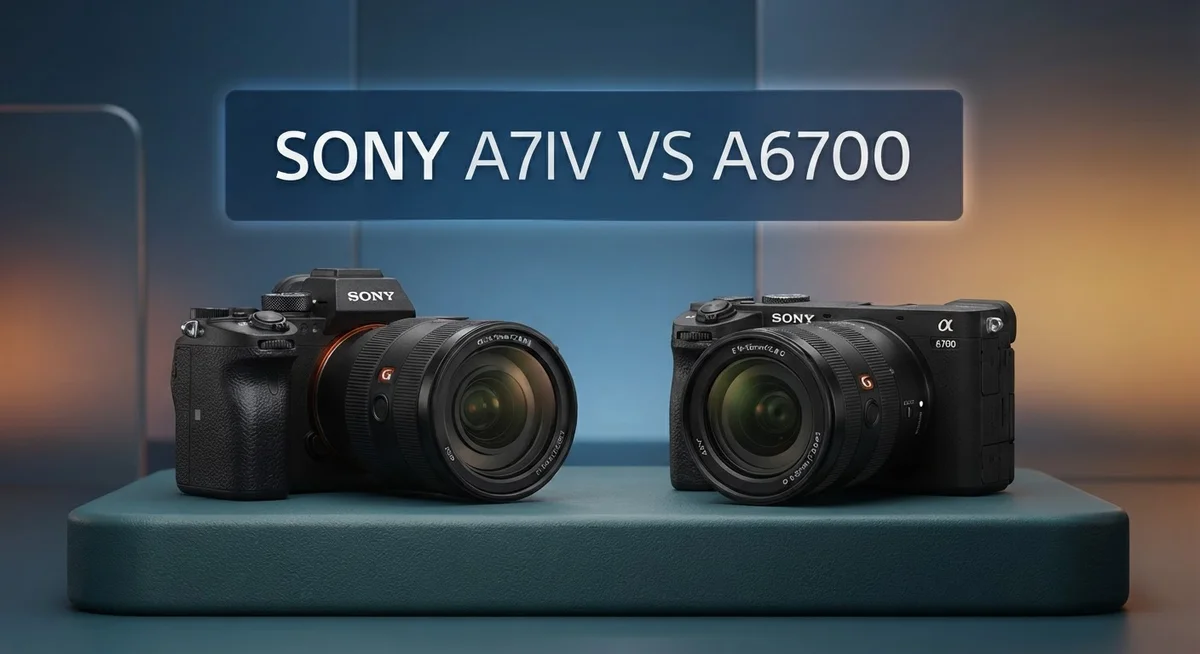
Sony A7IV vs A6700: Full-Frame vs APS-C Mirrorless Camera Comparison
Choosing between the Sony A7IV and A6700 feels tricky. Both cameras pack amazing features. But they serve different needs.
The A7IV brings a full frame sensor to the table. It shines in low light. It also gives you that dreamy bokeh photographers love.
The A6700 takes a different path. It uses an APS-C sensor in a compact body. You get weather resistance and sharp detail capture too.
This guide breaks down both cameras clearly. We compare sensors, size, and performance side by side. You will see where each camera truly excels.
Whether you shoot portraits or travel light, this comparison helps you decide. Let’s explore what makes each camera special. Your perfect match is waiting below.
In a Nutshell
Here’s the quick rundown on both cameras:
• The A7IV shines in low light. Its full frame sensor gives you smoother images in dark settings.
• The A6700 packs a compact body. You get a lighter camera that’s easy to carry all day.
• Weather resistance is a strong point for the A6700. It handles tough shooting conditions well.
• The A6700 offers focus bracketing and a bulb timer. These features help with creative shots like landscapes and light trails.
• Its object recognition processor improves subject tracking. Wildlife and sports shooters benefit from this.
• The A7IV still holds an edge for bokeh and wide angle shots. Full frame sensors naturally create that blurred background look.
• If detail capture matters most, the A6700’s higher resolution helps. Cropping images stays sharp and clean.
Both cameras serve different needs. Think about what you shoot most before picking one.
Sensor Size and Resolution: Full-Frame vs APS-C
The sensor size difference between these two cameras shapes everything about how they perform. The A7IV uses a full-frame sensor, while the A6700 relies on an APS-C sensor. This single distinction affects resolution, light sensitivity, and creative options in meaningful ways.
Full-frame sensors are physically larger. They capture more light per pixel, which gives the A7IV a real advantage in dim environments. When you shoot at high ISOs, the A7IV produces cleaner images with less noise. This matters if you photograph indoors, at night, or during golden hour without a tripod.
The A6700 takes a different approach. Its APS-C sensor is smaller, but Sony packed it with 33 megapixels of resolution. The A7IV offers 61 megapixels, but here’s the key: the A6700’s tighter pixel density means you get exceptional detail capture. You can crop aggressively in post-production and still maintain usable image quality. Landscape photographers and those who like flexibility in framing often prefer this.
Sensor size also affects depth of field. Full-frame sensors produce shallower depth of field at the same aperture and focal length. If you love that dreamy bokeh effect for portraits, the A7IV delivers it more naturally. The A6700 can match it, but you’ll need longer focal lengths or wider apertures to get there.
Wide-angle photography favors full-frame too. A 35mm lens on the A7IV feels genuinely wide. The same lens on the A6700 acts more like a 52.5mm due to the crop factor. If you shoot architecture or landscapes with wide lenses, the A7IV gives you that expansive field of view right out of the box.
Low-light performance clearly favors the A7IV. The larger sensor and bigger pixels handle shadow detail better. However, the A6700 isn’t weak here. It performs respectably in moderate low-light situations. You’ll just need to push ISO higher or use slower shutter speeds than the A7IV would require.
Both sensors excel at their intended purposes. The choice depends on your shooting style and priorities.

- 26.0MP APS-C format Exmor R back-illuminated CMOS sensor
- BIONZ XR processing power for exceptional image quality

Last update on 2026-11-09 / Affiliate links / Images from Amazon Product Advertising API
Image Quality and Low-Light Performance
The A7IV and A6700 handle light differently due to their sensor designs. The A7IV’s full-frame sensor captures more light per pixel, making it superior in dim environments. The A6700’s smaller APS-C sensor struggles slightly when darkness increases, but it still performs well for most shooting situations.
Low-light capability depends on how much light reaches the sensor. Larger sensors gather more photons from each scene. The A7IV pulls ahead here with its full-frame advantage. You’ll notice cleaner images at high ISO values with the A7IV. The A6700 produces acceptable results but shows more noise as ISO climbs higher.
The A7IV reaches better dynamic range in shadows. This means you recover more detail from dark areas during editing. The A6700 still captures good shadow detail, just not quite at the same level. For night photography or indoor events, the A7IV wins this round.
High-resolution sensors bring their own benefits. The A6700 packs 26 megapixels into its APS-C frame. This density lets you crop images aggressively without losing quality. The A7IV offers 61 megapixels on full-frame, giving you even more flexibility. Both cameras excel at detail capture, but they approach it differently.
The A6700’s newer processor helps manage noise better than you’d expect. Sony’s latest algorithms reduce grain while keeping sharpness intact. The A7IV uses older processing but benefits from its sensor’s inherent light-gathering power. Neither camera disappoints when shooting in daylight.
Practical shooting scenarios reveal the real difference. Shoot a concert with the A7IV and expect cleaner results. Use the A6700 at the same event and you’ll need faster lenses or higher ISO tolerance. Travel photographers appreciate the A6700’s compact size despite its low-light trade-off. Studio photographers often prefer the A7IV’s full-frame reliability.
Both cameras deliver excellent image quality in normal lighting. The choice comes down to your typical shooting environment. Prioritize low-light work? The A7IV serves you better. Need portability with solid performance? The A6700 fits your workflow.
Design, Portability, and Build Quality
The A7IV and A6700 take completely different approaches to camera design. The A7IV uses a larger, heavier body built around its full-frame sensor. The A6700 embraces a compact philosophy, weighing roughly 500 grams with its APS-C frame.
Holding these cameras reveals the real difference. The A7IV feels substantial in your hands. Its grip accommodates larger hands comfortably. The A6700 sits lighter and more nimble. You’ll notice the size gap immediately when packing for travel or all-day shooting sessions.
Build quality matters for both cameras. The A7IV features a magnesium alloy chassis that feels premium. Its weather sealing protects against dust and moisture. The A6700 matches this durability with its own weather resistant construction. Sony built both cameras to survive professional use.
Portability heavily favors the A6700. This camera excels for photographers who move constantly. Street photographers, travel shooters, and hybrid workers appreciate its smaller footprint. The A7IV demands more space in your bag. Its weight adds up during long shooting days, especially when you stack lenses on top.
The button layout differs between these models. The A7IV spreads controls across a wider body. The A6700 concentrates everything more tightly. Neither design is objectively better. Your hand size and shooting style determine which feels more intuitive.
Ergonomics reveal another split. The A7IV’s larger grip lets you rest your hand naturally. The A6700 requires slightly more conscious hand positioning. Photographers with smaller hands often prefer the A6700’s design. Those with larger hands may find the A7IV more comfortable for extended sessions.
Both cameras include articulating screens. The A6700’s compact body makes this screen feel more useful for tight spaces. The A7IV’s larger back panel means the screen moves with more room to spare.
The choice here depends on your lifestyle. Choose the A7IV if you work from a studio or stationary position. Choose the A6700 if you value mobility and lightweight gear. Neither camera sacrifices durability for its design philosophy. Sony built both to last through years of professional work.
Top 3 Alternatives
Canon EOS R6

- FULL-FRAME CMOS SENSOR: 24.2 effective megapixels (approx.) lets you capture sharp, detailed images...
- DIGIC X IMAGE PROCESSOR: Enhances digital camera performance and processes, including image...
Last update on 2026-11-09 / Affiliate links / Images from Amazon Product Advertising API
The Canon EOS R6 brings full-frame performance to photographers who want reliability and speed. This camera excels at autofocus with 1053 AF points covering almost the entire frame. You get 4K video at 60fps, which beats many competitors in this category.
The R6 handles low light situations beautifully thanks to its 20MP sensor and advanced processing. Battery life runs long, keeping you shooting through full days. The weather sealing protects your gear in harsh conditions.
Nikon Z6 III

- VIDEO - 6K/60p Internal N-RAW video recording + oversampled 4K UHD, 4K/120p, Full HD/240p slow...
- BEST IN CLASS EVF - Max brightness of 4000 nits gives a clear, vibrant view even in very bright...
Last update on 2026-11-08 / Affiliate links / Images from Amazon Product Advertising API
Nikon’s Z6 III offers impressive autofocus performance with AI-powered subject detection. The camera tracks people, animals, and vehicles automatically, making it ideal for dynamic shooting situations. You’ll appreciate the 24.2MP resolution paired with strong video capabilities.
This model delivers excellent color science straight from the sensor. The compact body feels comfortable in your hands during extended shoots. Native Z-mount lenses provide excellent optical quality, and the system keeps growing with new options regularly.
Panasonic Lumix S5

- A LIGHTWEIGHT, POWERFUL HYBRID CAMERA FOR VIBRANT STILL PHOTOGRAPHY AND CINEMATIC VIDEO: Realize...
Last update on 2026-11-08 / Affiliate links / Images from Amazon Product Advertising API
The Panasonic Lumix S5 stands out as a lightweight full-frame option that doesn’t compromise on features. This camera weighs less than competitors while maintaining solid build quality. The 24.2MP sensor captures sharp images with accurate color reproduction.
Video performance includes 4K recording with professional codec options. The articulating screen helps with creative angles and low-angle shots. Panasonic’s autofocus system works smoothly across the frame, making it dependable for both photography and video work. The L-mount alliance gives you access to lenses from multiple manufacturers, expanding your creative possibilities.
Autofocus, Tracking, and Advanced Features
The autofocus systems in these cameras represent a generational leap. The A7IV uses Sony’s older AF technology, while the A6700 brings cutting-edge innovations that matter for fast-moving subjects.
The A6700 dominates in tracking capability. It features an advanced object recognition processor that locks onto people, animals, and vehicles with impressive accuracy. This processor learns what you’re shooting and adapts in real time. The A7IV can track subjects, but it relies on older algorithms that require more manual input from you.
Real-world tracking shows the difference clearly. When you’re photographing a running dog or a moving athlete, the A6700 stays locked on target with minimal intervention. The A7IV needs you to help guide focus, especially in complex scenes with multiple subjects competing for attention.
The A6700 also includes focus bracketing, a feature the A7IV lacks entirely. This tool captures multiple images at different focus distances automatically. You stack them later to create images with extreme depth of field. Photographers doing macro work or product shots love this feature.
Another advantage belongs to the A6700: its bulb timer function. This lets you hold the shutter open for long exposures without constant button pressure. Night sky photographers and light painting enthusiasts find this incredibly useful.
Both cameras offer eye-tracking and face-tracking modes. The A7IV’s versions work adequately for portraits and close-ups. The A6700’s versions feel snappier and more responsive, thanks to its newer processor architecture.
The A7IV still performs well in standard autofocus situations. It focuses quickly and accurately for everyday shooting. But if you need reliable tracking of moving subjects or advanced focus features, the A6700 pulls ahead significantly.
Your choice depends on your shooting style. Static subjects and landscapes don’t reveal much difference between these systems. Fast action, wildlife, or video work shows where the A6700’s modern autofocus really shines. The A7IV remains competent, but it’s working with older technology that shows its age in demanding situations.
Video Capabilities and Frame Rates
The A7IV and A6700 both capture video, but they approach frame rates and motion handling quite differently due to their sensor designs and release dates.
The A7IV shoots 4K video at up to 60fps with full-frame coverage. You get smooth motion in most situations. It also handles 1080p at 120fps, which gives you slow-motion options for creative projects. The full-frame sensor means you capture a wider field of view in video mode, similar to cinema cameras.
The A6700 pushes further with more aggressive frame rate options. It records 4K at up to 120fps, making it superior for fast-action content. This newer processor handles the higher data rates without overheating issues that plagued earlier models. You also get 1080p at up to 240fps for extreme slow-motion work.
Frame rate selection matters for your workflow. If you shoot documentaries or run-and-gun content, the A6700’s 120fps 4K gives you flexibility in post-production. You can slow footage down without losing quality. The A7IV works well for standard 24fps or 60fps projects where you need that full-frame width.
Rolling shutter differs between them too. The A6700’s newer sensor design handles panning and fast motion with less distortion. The A7IV shows more wobble during quick camera movements, though it remains acceptable for most work.
Heat management separates these cameras in extended shoots. The A6700 handles long recording sessions without thermal shutdowns. The A7IV can throttle performance during sustained 4K 60fps recording in warm conditions.
Both cameras offer professional codecs for color grading. The A6700 includes S-Log3, matching the A7IV’s capabilities. You get similar dynamic range in your footage, though the A7IV’s full-frame sensor captures slightly more information in the corners.
Your video choice depends on frame rate needs. Choose the A6700 if you want 120fps 4K and extreme slow-motion. Pick the A7IV if you prioritize wide-angle coverage and standard frame rates. Both deliver cinema-quality results in their respective strengths.
Pros and Cons
Pros
- Full-frame sensor gives the A7IV superior low-light performance and beautiful bokeh separation
- A7IV excels at wide-angle photography with its larger sensor coverage
- A6700 weighs around 500g and fits easily into camera bags for travel
- A6700 includes weather-resistant construction for outdoor and adventure shooting
- A6700 offers focus bracketing and bulb timer functions the A7IV simply doesn’t have
- A6700’s newer processor handles noise better than older full-frame competitors
- A6700 delivers exceptional detail capture with its high-resolution sensor
Cons
- A7IV uses older technology compared to the 2023 A6700 release
- A6700’s APS-C sensor struggles in low-light situations versus full-frame options
- A7IV is significantly larger and heavier for photographers who prioritize portability
- A6700’s smaller sensor limits wide-angle shooting flexibility without crop concerns
Who Should Buy It
The A7IV suits photographers who prioritize low-light excellence and full-frame versatility. You’ll appreciate its larger sensor for wide-angle shots and its superior bokeh separation. This camera works best if you shoot in dim environments and want professional background blur.
Choose the A7IV if you already own full-frame lenses. Switching systems costs money and time. Your existing glass will work perfectly on this body, making it a logical upgrade path.
The A6700 belongs in the hands of travel photographers and adventurers. Its compact 500g body slips into bags without effort. Weather-resistant construction means you can shoot in rain, dust, and challenging outdoor conditions without worry.
Pick the A6700 if you need cutting-edge autofocus performance. The newer processor tracks moving subjects with remarkable accuracy. Focus bracketing and bulb timer functions give you creative options the A7IV cannot match. These features matter for macro work, product photography, and artistic long exposures.
The A6700 appeals to content creators who shoot video frequently. Its aggressive frame rate options and improved heat management let you record longer without thermal shutdown. Professional codecs on both cameras work well, but the A6700’s newer design handles extended sessions better.
Consider the A6700 if you shoot primarily in daylight or controlled lighting. Its high-resolution APS-C sensor captures exceptional detail. You’ll appreciate the noise handling from its newer processor, even if it doesn’t match full-frame low-light capability.
Choose based on your shooting environment and priorities. Urban photographers, studio workers, and hybrid content creators often prefer the A7IV. Outdoor enthusiasts, travel photographers, and those needing compact gear gravitate toward the A6700.
Both cameras deliver professional results. The A7IV represents mature full-frame technology with proven performance. The A6700 brings fresh innovation and modern conveniences. Your lifestyle and shooting style should guide your decision, not camera specifications alone.
Final Verdict
Picking between these two cameras comes down to your long term goals. Both models perform well, but they serve different photography journeys.
If you plan to build a full-frame lens collection, the A7IV makes more sense. Full-frame lenses stay useful as you grow your skills and add gear over time.
The A6700 works better if you want a lighter system that stays simple. APS-C lenses cost less to expand and give you a smaller kit overall.
Think about where you see yourself in five years. Full-frame systems often become the standard choice for serious hobbyists and semi-professionals.
APS-C systems like the A6700 suit photographers who want quality results without carrying extra weight or complexity. Your growth path matters here.
Consider your existing gear too. If you already own Sony E-mount lenses from either system, that investment guides your next step.
Switching sensor formats later means buying new lenses. Starting with the right system now saves you money and hassle down the road.
Both cameras handle everyday shooting with confidence. Neither one will hold you back if you learn its strengths and shoot within them.
The A7IV rewards patience and technical skill. It shines in portrait work, low light events, and situations where image quality matters most.
The A6700 rewards flexibility and speed. It fits well for people who move often, travel light, or shoot a mix of photos and video.
Neither camera is the wrong choice. Your shooting habits and future plans should guide your final decision.
Ask yourself what you shoot most often. Then match that answer to the camera built for that purpose.
If you value sensor size and image depth, go with the A7IV. If you value portability and modern features, choose the A6700.
Either camera will serve you well for years. Pick the one that fits your workflow, not just your wishlist.
Frequently Asked Questions
Which camera performs better in low light situations?
The A7IV wins here. Its full-frame sensor captures more light than the A6700’s APS-C sensor. This means cleaner images at high ISO settings and less noise in dim environments. If you shoot concerts, indoor events, or nighttime photography, the A7IV gives you an advantage.
The A6700 still performs well in daylight and controlled lighting. Its newer processor handles noise better than older cameras. But it can’t match the A7IV’s natural low-light capabilities.
Should I choose the A6700 if I already own Sony lenses?
Check what lenses you currently own. If you have full-frame E-mount lenses, the A7IV uses them without any issues. The A6700 also accepts full-frame lenses, but they may feel overspecced for an APS-C body.
If your collection includes APS-C lenses, the A6700 pairs perfectly with them. Switching between sensor formats later means buying new glass. Think about your long-term lens investment before deciding.
Can the A6700 replace a full-frame camera for professional work?
Yes, absolutely. The A6700 delivers professional results for most shooting styles. Its high resolution captures exceptional detail. The autofocus performance is cutting-edge. Video creators love its features.
However, full-frame excels at specific tasks. Wide-angle work benefits from the A7IV’s sensor size. Portraits gain from superior bokeh. If your work demands these strengths, the A7IV becomes the better choice.
What makes the A6700 ideal for travel photographers?
Portability matters. The A6700 weighs around 500g and fits easily into camera bags. Weather resistance protects your gear during outdoor adventures. Focus bracketing and bulb timer functions expand your creative options without extra equipment.
The compact system keeps you moving fast. You carry less weight while capturing professional images. This combination appeals to photographers who refuse to compromise on quality or mobility.

Dillip is the founder and editor of ImageScaleLab.com, a passionate tech enthusiast who loves breaking down complex gadgets and accessories into simple, honest reviews and buying guides. With years of hands-on experience exploring the latest in tech, he is dedicated to helping readers make smarter, more confident purchasing decisions.