
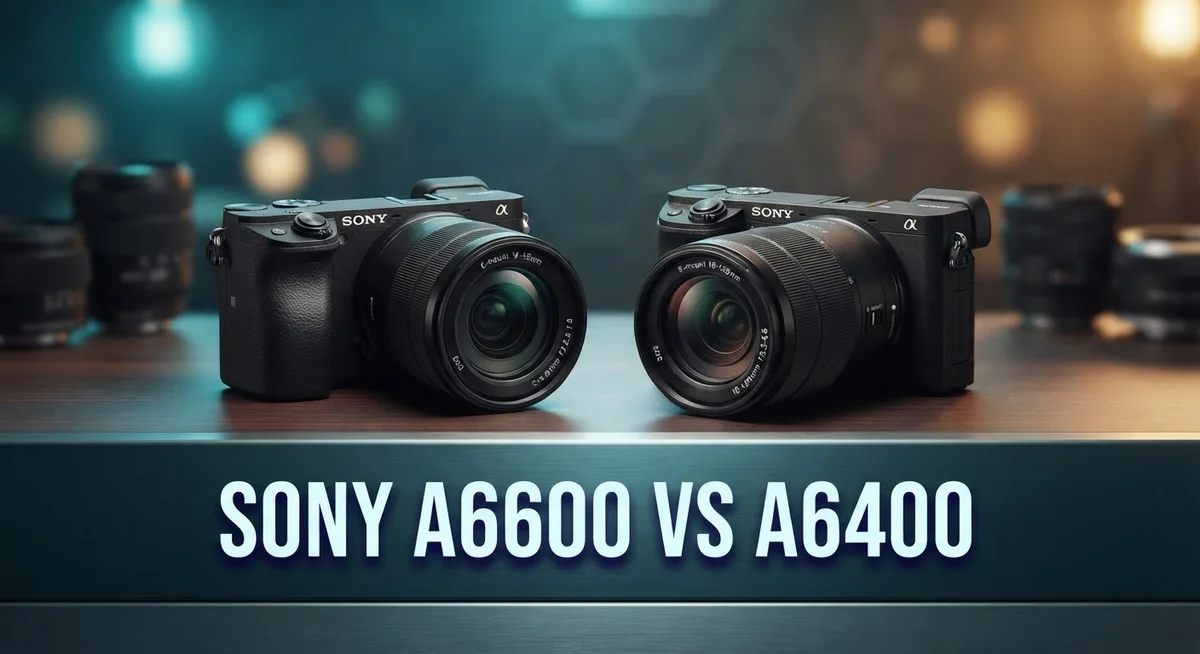
Sony A6600 vs A6400: Complete Comparison Guide for Mirrorless Camera Buyers
Choosing between the Sony A6600 and A6400 can feel tricky. Both cameras share a lot in common. But small differences make a big impact on your shooting experience.
Each camera packs a 24MP APS-C sensor. Both use the reliable BIONZ X processor. They also share fast Real-time Eye AF for sharp portraits.
The real difference lies in the details. The A6600 brings in-body image stabilization and extra custom modes. The A6400 stays lighter and simpler, perfect for vlogging or everyday shooting.
So which one fits your style? Do you need steady shots without a gimbal? Or do you prefer a compact body for travel and casual filming?
This guide breaks down every feature. You will learn exactly which camera suits your creative goals best.
In a Nutshell
Here is the quick breakdown you need before diving deeper.
-
Sensor and processor stay identical. Both cameras use the same 24MP APS-C sensor and BIONZ X processor. Image quality feels nearly the same in daylight.
-
Stabilization sets them apart. The A6600 includes in-body image stabilization. The A6400 relies on lens stabilization instead.
-
Screen and autofocus match closely. Both models offer a 180° tiltable touchscreen. Real-time Eye AF works well on both bodies.
-
Custom controls differ slightly. The A6600 adds two custom modes on its dial. This helps you switch settings fast during shoots.
-
Body size changes the feel. The A6400 stays lighter and more compact. The A6600 feels bulkier due to its bigger battery and grip.
-
Best use cases split naturally. A6400 suits vloggers and beginners who want simple handling. A6600 suits shooters who need steadier footage without extra gear.
Each camera brings something different to the table. Your shooting style decides which one wins.
Sensor and Image Quality
Both cameras deliver the same 24MP APS-C CMOS sensor paired with the BIONZ X processor. This means image quality sits at identical levels for color accuracy, dynamic range, and detail capture across most shooting situations.
The real separation emerges in stabilization. The A6600 features in-body image stabilization (IBIS). This keeps your footage smooth even without a gimbal or tripod. The A6400 lacks this feature, so you depend on lens stabilization or external tools for steady video and stills.
For autofocus performance, both cameras excel. They share the same Real-time Eye AF system that locks onto faces and eyes instantly. This makes them equally strong for portrait work, video interviews, and fast-moving subjects. The touchscreen on each model tilts 180 degrees, so framing from awkward angles stays simple.
Where image quality truly diverges is in low light and motion scenarios. The A6600’s IBIS reduces blur from camera shake, giving you cleaner images at slower shutter speeds. This matters most during video work or handheld shooting in dim conditions. The A4600 requires faster lenses or higher ISO to compensate, which can introduce more noise.
Both cameras shoot 4K video and produce sharp, detailed footage. Color science remains consistent between them. The BIONZ X processor handles noise reduction and processing identically on each body.
The A6600 adds two custom modes on its mode dial. This lets you save and recall specific settings quickly. The A4600 offers fewer quick access slots, requiring more menu diving to switch between shooting styles.
For stills in daylight and controlled lighting, you won’t see meaningful differences between these cameras. Image quality stays excellent on both. The advantage shifts to the A6600 when you shoot handheld video, work in dim light, or need that extra stabilization insurance. The A4600 remains a capable image maker for photographers who don’t need IBIS and prefer a lighter setup.

- SONY USA AUTHORIZED - Includes Full SONY USA WARRANTY, Camera Package Includes Camera Body ,Lens...
- Sony Alpha a6400 Mirrorless Digital Camera with 16-50mm Lense -24.2MP APS-C Exmor CMOS Sensor, BIONZ...
Last update on 2026-11-09 / Affiliate links / Images from Amazon Product Advertising API
Autofocus and Video Performance
Both cameras deliver Real-time Eye AF, which locks onto your subject’s eyes instantly. This feature works beautifully for portrait work and keeps your focus sharp during movement. You get the same autofocus speed and accuracy on either model.
The A6600 includes in-body image stabilization (IBIS). This means your footage stays smooth even without a tripod or gimbal. The A6400 relies on lens-based stabilization instead, so you need to pair it with a stabilized lens for the same effect.
For video shooting, both cameras record 4K footage with excellent detail. The stabilization difference becomes obvious when you’re moving while filming. The A6600 glides through handheld shots, while the A6400 needs steady hands or external support to avoid shake.
Eye AF works wonderfully for video too. When you’re recording yourself or tracking a moving subject, the camera keeps focus locked on the eyes. This removes the guesswork from vlogging and interview setups. Both models perform identically here.
The A6400 shines for vloggers because of its 180 degree tiltable screen. You can frame yourself easily while recording. However, without built-in stabilization, you’ll want to invest in a gimbal or stabilized lens for smooth results.
The A6600 targets serious video creators who shoot handheld regularly. The IBIS makes a massive difference when you’re moving through scenes or shooting dynamic content. You get professional-grade stabilization built into the body itself.
Autofocus speed matches between both models. You won’t notice any lag or hunting when switching between subjects. The processors handle tracking smoothly during video recording.
For slow motion and frame rates, both cameras offer the same capabilities. You can shoot high frame rate 4K if your memory card and project needs allow it.
Choose the A6400 if you’ll use stabilized lenses or a gimbal anyway. Pick the A6600 if you want stabilization included without extra gear. Your shooting style determines which stabilization method works best for your workflow.
Stabilization and Handling
In-body image stabilization (IBIS) represents the biggest handling difference between these two cameras. The A6600 includes IBIS, which means the sensor itself moves to compensate for camera shake. The A6400 lacks this feature entirely, so you depend on lens-based stabilization instead.
What does this mean for your daily shooting? The A6600 lets you shoot handheld at slower shutter speeds without blur. You can film smooth video even when walking or moving the camera. The A6400 requires steadier hands or a tripod for the same results.
For video creators, this matters significantly. The A6600 produces noticeably smoother footage when you’re recording yourself or tracking subjects. The A6400 works fine for stationary shots, but handheld movement shows more jitter. If you plan to vlog while moving around, the A6600 handles this task much better.
Body weight and size affect how each camera feels in your hands. The A6400 stays lighter and more compact, making it easier to hold for extended periods. The A6600 adds stabilization hardware, so it weighs slightly more. Neither camera feels heavy, but the A6400 wins for portability.
Grip comfort differs too. Both cameras have similar ergonomic designs, but the A6600’s extra weight distributes differently. Some users find the A6600 more balanced when holding it steady. Others prefer the A6400’s nimble feel for quick movement between shots.
The 180 degree tiltable touchscreen on both models helps with handling. You can flip the screen to face yourself for vlogging without twisting your arm. This feature works equally well on each camera.
Real-time Eye AF on both cameras improves handling during video work. You focus less on technical settings and more on composition. The camera tracks your subject automatically, which reduces fatigue during long shoots.
For photographers who shoot mostly stills in good light, handling differences matter less. For video creators or anyone shooting in challenging conditions, the A6600’s stabilization becomes essential. Choose based on your primary use case and shooting style.
Top 3 Alternatives
Canon EOS R6

- FULL-FRAME CMOS SENSOR: 24.2 effective megapixels (approx.) lets you capture sharp, detailed images...
- DIGIC X IMAGE PROCESSOR: Enhances digital camera performance and processes, including image...

Last update on 2026-11-09 / Affiliate links / Images from Amazon Product Advertising API
The Canon EOS R6 stands as a powerful alternative for photographers who want full-frame performance. This camera delivers excellent autofocus with 1053 AF points. You get 4K video recording at up to 60fps, which beats many competitors in this range.
The R6 offers weather sealing that protects your gear in tough conditions. Battery life extends to approximately 320 shots per charge. The ergonomic design feels comfortable during long shooting sessions.
Nikon Z6 II

- Mirrorless versatility on a whole new level. 24.5MP BSI resolution that excels in low light. 14 FPS...
- Full frame. Full pixel readout. Full featured 4K UHD Video. Top of the line video performance with...
Last update on 2026-11-09 / Affiliate links / Images from Amazon Product Advertising API
Nikon’s Z6 II brings reliable performance to serious photographers. This full-frame mirrorless camera features 273 autofocus points that cover most of the frame. You can shoot 4K video smoothly, and the buffer capacity handles continuous shooting well.
The Z6 II excels at low-light photography with its strong high-ISO performance. Dual SD card slots give you backup storage options during important shoots. The compact body makes it portable without sacrificing build quality.
Fujifilm X-T4

- Putting Stability in Your Hands: A huge part of creating great photos or videos is making sure you...
- Performance You Can Rely On: For any serious image maker, having a tool that can be relied upon to...
Last update on 2026-11-09 / Affiliate links / Images from Amazon Product Advertising API
The Fujifilm X-T4 uses an APS-C sensor like the Sony models you’re comparing. This camera produces stunning colors straight from the sensor thanks to Fujifilm’s film simulation modes. You’ll appreciate the mechanical shutter that operates silently.
The X-T4 offers excellent video capabilities with 4K recording at 60fps. The flip-down LCD screen helps with creative framing. Dual SD card slots ensure you never run out of storage space during shoots. The retro design appeals to photographers who enjoy classic camera aesthetics.
Design and Ergonomics
The A6600 and A6400 feel noticeably different when you hold them. The A6600 weighs slightly more due to its in-body stabilization system, but this extra mass distributes evenly across the body. You’ll notice the difference during extended shooting sessions.
Grip design on both cameras is comfortable. The A6400 feels more compact and nimble in your hands. The A6600 offers a fractionally deeper grip that some shooters prefer for stability. Neither camera feels cramped or awkward.
The mode dial on the A6600 includes two custom memory slots. This means you can save your preferred settings and switch between them instantly. The A6400 lacks this feature, so you’ll adjust settings manually each time you change shooting styles.
Button layout is nearly identical on both models. Your fingers find the controls naturally on either camera. Menus operate the same way too. If you’ve used one, the other feels immediately familiar.
The touchscreen on the A6400 tilts 180 degrees, making it perfect for vlogging and selfie content. You can see yourself clearly while recording. The A6600 also has a tilting screen with the same 180 degree range. Both screens are responsive and easy to tap during shooting.
In-body image stabilization on the A6600 changes how you handle the camera during video work. You can shoot handheld at slower shutter speeds without visible shake. The A6400 relies on lens stabilization, so your choice of glass matters more. This impacts your shooting flexibility significantly.
Weight distribution favors the A6600 for long handheld sessions. The stabilization system actually helps reduce fatigue because you don’t need to hold the camera as rigidly. The A6400 demands more attention to your technique and positioning.
Both cameras sit comfortably on a tripod or gimbal. Neither one feels unbalanced or awkward when mounted. For stationary work, the handling differences disappear entirely. Your choice depends on whether you shoot handheld frequently and whether you value quick custom mode switching.
Use Case Suitability
The A6400 and A6600 serve different shooter profiles based on their core strengths.
Choose the A6400 if you prioritize portability and vlogging. This camera excels when you need a lightweight setup for content creation. The 180 degree tiltable screen makes selfie shots and talking-to-camera moments effortless. Beginners appreciate its straightforward menu system and compact body. Street photographers and travel shooters benefit from the smaller form factor. Social media creators find the A6400’s quick autofocus perfect for fast-paced content.
The A6600 works best for professional work and demanding handheld shooting. Photographers who shoot in varied lighting conditions gain significant advantages from in-body image stabilization. Filmmakers recording documentaries or narrative content appreciate the IBIS feature, which eliminates the need for expensive stabilizing lenses. The custom modes on the dial speed up your workflow when switching between preset configurations. Hybrid shooters who mix stills and video find the A6600’s feature set more complete.
Real world scenarios matter here. If you shoot mostly outdoors in bright sunlight with fast lenses, the A6400 delivers excellent results. The absence of IBIS becomes less relevant when you use f/2.8 glass or faster. However, if you shoot in dimly lit venues, studios, or handheld video at variable frame rates, the A6600 becomes essential.
Wedding photographers might lean toward the A6600 for indoor receptions where IBIS prevents motion blur during handheld shots. Event videographers benefit from the stabilization when moving between locations. Travel vloggers actually prefer the A6400 because weight matters during long days of walking and filming.
The deciding factor comes down to your shooting environment and style. Ask yourself: Do you need stabilization, or do you value portability? Will you shoot mostly stills or mixed content? Does your lens collection already include stabilized optics? The A6400 answers the call for creators prioritizing simplicity and mobility. The A6600 serves professionals who demand advanced features and maximum creative control in challenging situations.
Pros and Cons
Pros
- A6400: Compact size makes it ideal for travel and vlogging, Real-time Eye AF locks onto faces instantly, 180 degree tiltable screen perfect for content creators
- A6600: In-body image stabilization eliminates camera shake during handheld video, Custom memory modes on the dial speed up your workflow, Professional build quality handles demanding shooting sessions
Cons
- A6400: No in-body stabilization means you depend on lens quality for smooth footage, Fewer pro controls limit advanced customization options
- A6600: Larger body and weight require more effort during extended handheld work, Demands more from your camera bag and support gear
Who Should Buy It
The A6400 suits vloggers and content creators who move around constantly. This camera’s 180 degree touchscreen flips toward you for selfies and talking-to-camera moments. You get instant face detection with Real-time Eye AF. The compact body fits into backpacks without weighing you down. If you travel light and shoot mostly video, this camera matches your workflow.
The A6600 appeals to professional photographers and videographers. You need in-body image stabilization for handheld work in dim venues like weddings or indoor events. The custom memory modes on the dial let you switch between preset settings instantly. This camera handles demanding shooting sessions where you can’t rely on external stabilization gear.
Choose the A6400 if you already own quality lenses with built-in stabilization. You shoot in daylight or controlled settings. Your priority is keeping your gear bag light. You want a camera that feels nimble in your hands during long shooting days.
Pick the A6600 if you shoot in varied lighting conditions without knowing what you’ll encounter. You work in low light regularly. You need smooth video footage without adding external stabilizers to your setup. You shoot professional assignments where reliability matters more than portability.
Event photographers lean toward the A6600. Indoor receptions, dimly lit ceremonies, and unpredictable lighting scenarios become easier to handle. The stabilization prevents motion blur when you can’t use a tripod. You move between locations frequently and need consistent results.
Travel photographers often prefer the A6400. You hike to remote locations and want minimal gear. You shoot mostly during golden hour or bright daylight. Your lenses already have stabilization built in. You value the compact size over advanced stabilization features.
Both cameras share the same 24MP sensor and BIONZ X processor. The core difference is your shooting environment and style. Ask yourself: Do you work indoors or outdoors? Do you need stabilization, or can your lenses handle it? Your answer determines which camera serves you better.
Final Verdict
Your final choice depends on what you shoot most often. The A6400 works well for creators who value a lighter setup. The A6600 fits shooters who need extra stability during long sessions.
Think about your growth as a photographer or videographer. If you plan to shoot professionally soon, the A6600 gives you room to grow. Its features support more demanding projects down the line.
Beginners often start with simpler needs. The A6400 covers most everyday situations well. It handles portraits, travel shots, and casual video without trouble.
Consider your existing gear too. If you already own stabilized lenses, the A6400 becomes a smart pick. You get similar smooth footage without extra bulk.
Serious hobbyists often outgrow basic setups fast. The A6600 supports this growth with its added controls. You won’t feel limited as your skills improve.
Both cameras share the same core image quality. Your final decision should focus on handling and features, not sensor performance. Neither camera lets you down here.
Ask yourself how you shoot most days. Quick, casual shooting favors the A6400. Extended, professional sessions favor the A6600.
Your shooting style matters more than specs on paper. Test both cameras if possible before deciding. Feel how each one sits in your hands.
Neither camera is a wrong choice. Each serves its purpose well. The right pick simply matches your specific shooting habits.
Take stock of your typical projects. Count how often you shoot handheld video versus quick photos. This simple check often reveals your best option quickly.
In the end, trust your daily shooting needs first. Let those needs guide you past specs and marketing claims. This approach leads to lasting satisfaction with your choice.
Frequently Asked Questions
Which camera performs better in low light situations?
Both cameras use the same 24MP sensor and BIONZ X processor, so their low light performance is nearly identical. The real difference appears when you add stabilization into the mix. The A6600’s in-body image stabilization (IBIS) helps you shoot at slower shutter speeds without blur. This matters when your lens lacks its own stabilization.
The A6400 forces you to rely on lens-based stabilization or faster shutter speeds. If your lenses already have stabilization built in, this gap narrows significantly.
Can the A6400 handle professional video work?
Yes, but with limits. The A6400 captures 4K video and offers solid autofocus. However, it lacks the A6600’s custom memory modes, which professionals use to switch between presets instantly.
The A6400 works well for content creators and semi-professional projects. Serious video professionals typically prefer the A6600 because of its IBIS and quick access to saved settings through the dial.
Does the A6400’s tiltable screen make it better for vlogging?
The 180 degree tiltable touchscreen on the A6400 is excellent for vlogging. You can frame yourself easily and tap to focus on your face. This feature alone makes the A6400 highly appealing for self-recorded content.
The A6600 has a standard screen without the tilt function. Vloggers and content creators who film themselves often find the A6400 more convenient for this specific use.
Which camera is easier to carry all day?
The A6400 wins here. It’s more compact and lighter, making it ideal for travel and all day shooting sessions. Your shoulders will thank you after eight hours of walking.
The A6600 is larger and heavier. Extended handheld work requires more physical effort, and your camera bag needs extra space.

Dillip is the founder and editor of ImageScaleLab.com, a passionate tech enthusiast who loves breaking down complex gadgets and accessories into simple, honest reviews and buying guides. With years of hands-on experience exploring the latest in tech, he is dedicated to helping readers make smarter, more confident purchasing decisions.


