Sony A6600 vs A6700: Complete Comparison Guide for Mirrorless Photographers
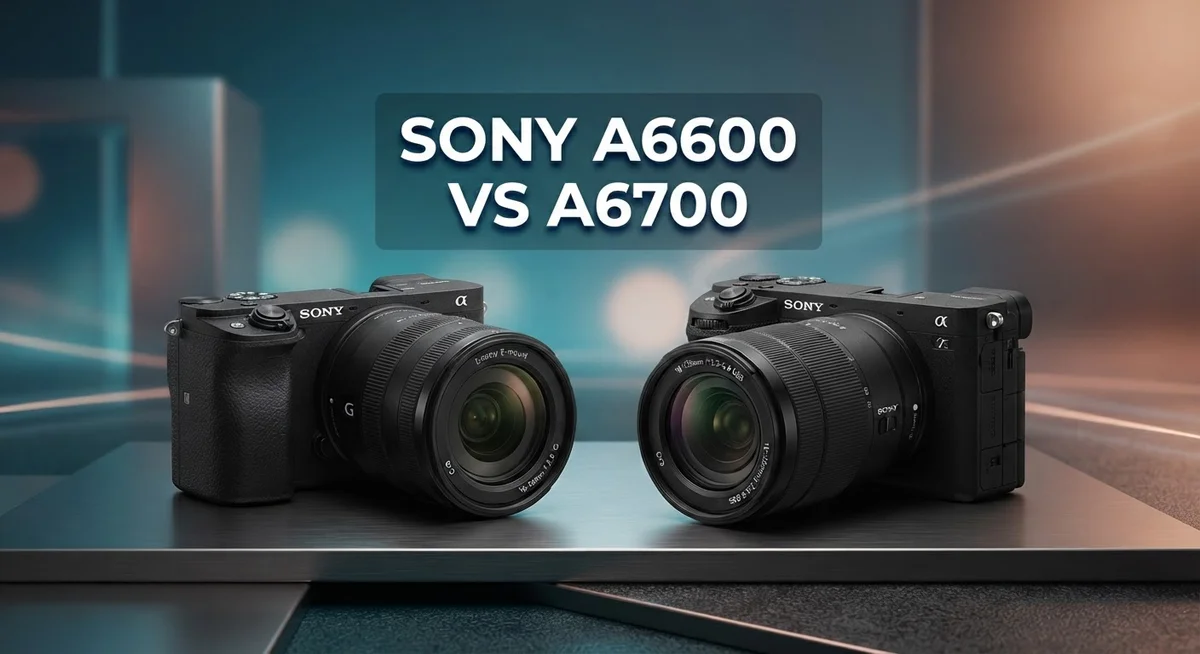
Choosing between the Sony A6600 and A6700 feels tricky. Both cameras pack serious power into a small body. But they serve different needs.
The A6700 brings newer tech to the table. It offers a 759 point AI autofocus system. This helps you track subjects with amazing accuracy.
You also get 4K 120p video recording. The screen flips out for easy vlogging too.
The A6600 still holds its own. It gives you longer battery life per charge. This means more shooting time between breaks.
So which camera fits your style better? Do you need cutting edge autofocus and video? Or do you value battery endurance more?
Let’s break down every feature. You will find the perfect match for your photography journey below.
In a Nutshell
Here is a quick snapshot to help you decide fast.
-
Shutter Speed: The A6700 hits a top speed of 1/8000, while the A6600 maxes out at 1/4000. Fast action shooters will notice this gap.
-
Autofocus Power: The A6700 uses a 759-point AI system for tracking subjects. This makes it sharper for wildlife, sports, or fast moving scenes.
-
Battery Numbers: The A6600 delivers 720 shots per charge. The A6700 offers 550 shots, so plan your spare batteries if you pick the newer model.
-
Screen Design: The A6700 comes with an articulating screen. This helps vloggers and content creators frame shots easily.
-
Image Quality: The A6700 edges ahead with better overall image output, thanks to its newer sensor and processing engine.
-
Market Rivals: Both cameras compete with Canon and Fujifilm APS-C models. Full frame options like the Sony A7III also sit nearby for buyers wanting more.
Pick based on what matters most to your shooting style.
Sensor, Autofocus, and Image Quality
The sensor and autofocus systems separate these two cameras significantly. Both cameras use APS-C sensors, but the A6700 delivers superior image quality thanks to its newer processing engine and enhanced color science. You’ll notice sharper details and better color accuracy when comparing shots side by side.
The A6700’s autofocus system stands out dramatically. It features a 759-point AI autofocus network that tracks subjects with impressive precision. The system learns movement patterns and predicts where your subject goes next. This means faster lock-on times and fewer missed shots during action sequences. The A6600 uses an older autofocus design that works well for most situations, but it lacks the AI intelligence of its newer sibling.
Shutter speed differences matter for specific shooting scenarios. The A6700 reaches 1/8000 of a second, while the A6600 tops out at 1/4000. This means the A6700 handles bright sunlight better when you want to shoot with wide apertures. You can use faster film speeds or wider f-stops without overexposing your images. Both cameras offer 30-second minimum shutter speeds for long exposures.
The A6700’s autofocus advantage extends to video work. Its AI system tracks moving subjects smoothly across the frame. You get more consistent focus pulls during dynamic shots. The A6600 struggles with complex tracking scenarios in video mode.
Image stabilization performs similarly on both models. They share the same in-body stabilization technology, so handheld shooting feels nearly identical. Low light performance remains comparable between the two cameras at lower ISO values.
If you shoot fast-moving subjects like sports or wildlife, the A6700’s autofocus system justifies the upgrade. For portrait work and stationary subjects, the A6600 captures excellent images. The newer sensor in the A6700 produces slightly cleaner files at high ISO settings, giving you more flexibility in post-processing.
Consider your typical shooting scenarios. Fast autofocus benefits action photographers. Static subject shooters find both cameras equally capable for image quality.

- Bundle Items Include: 1 x Sony Alpha a6700 Mirrorless Camera, 26 MP Sensor, 4K Video, and Vlog...
- The Sony a6700 Mirrorless Camera seamlessly integrates Sony's Cinema Line innovations with the...
Last update on 2026-11-08 / Affiliate links / Images from Amazon Product Advertising API
Shutter Speed and Video Capabilities
The shutter speed difference between these two cameras matters more than you might think. The A6700 reaches 1/8000 of a second, while the A6600 stops at 1/4000. This means the newer model lets in half the light at the same settings.
When do you need this speed? Bright daylight shooting with fast lenses becomes easier on the A6700. You can use wider apertures without overexposing your images. Fast film simulation or high ISO work also benefits from the extra shutter speed range.
The A6600 still handles most situations well. You’ll rarely hit its 1/4000 limit unless you shoot fast primes in direct sunlight. Both cameras share the same minimum shutter speed of 30 seconds for long exposures.
Video capabilities show a bigger gap between these models. The A6700 shoots 4K at 120 frames per second in 10 bit color, giving you smooth slow motion with excellent color depth. The A6600 maxes out at 4K 30p, which feels dated by today’s standards.
For content creators, the A6700’s video specs feel like a major step forward. You get professional-grade frame rates and color information that works beautifully in post production. The A6600 still produces quality video, but it lacks the flexibility of higher frame rates.
Both cameras record full HD at up to 240 frames per second. This feature lets you create dramatic slow motion clips on either model. The codec support remains strong on both, with options for different workflow needs.
Battery life takes an interesting turn here. The A6600 delivers 720 shots per charge, while the A6700 manages 550 shots. Faster processors and the articulating screen drain the A6700’s battery quicker. Both use the same NP-FZ100 battery type, so you can share spares between cameras.
If you shoot video regularly or work in bright conditions, the A6700’s advantages stack up quickly. The shutter speed and frame rate options open new creative possibilities. The A6600 remains solid for photographers who prioritize battery endurance and traditional frame rates.
Battery Life and Ergonomics
Battery performance tells a different story between these two cameras. The A6600 excels with 720 CIPA shots per charge, while the A6700 manages 550 shots. That’s a meaningful gap if you shoot all day without access to power banks.
Both cameras use the same NP-FZ100 battery, so you can swap batteries between them. This matters if you already own A6600 gear. The difference comes down to power consumption. The A6700’s faster processor and advanced autofocus system drain the battery quicker.
Real world shooting changes these numbers. If you use the articulating screen on the A6700, battery drain increases. Video recording also pulls more power on the newer model. Photographers who shoot stills primarily will notice the battery gap more than videographers will.
The A6600 becomes the obvious choice for extended outdoor sessions. Bring one extra battery and you’ll shoot for hours without worry. The A6700 demands more frequent charging or a larger battery supply.
Ergonomics favor the A6700 in most ways. The articulating screen lets you shoot from awkward angles. The faster autofocus system means less hand fatigue during tracking. Your hands feel the difference during long sessions.
The A6600 keeps things simple. Its fixed screen works fine for traditional shooting positions. The camera feels slightly lighter, which some photographers prefer. Ergonomics here depend on your typical shooting style.
Hand grip quality matches between both models. Button placement feels natural on each camera. The A6700’s menu system runs faster, so you spend less time navigating settings. This small advantage adds up during fast paced shoots.
Consider your typical day. Do you shoot for 8 hours straight? The A6600’s battery advantage matters. Do you charge between sessions? Both cameras work fine. Do you need an articulating screen for creative angles? The A6700 wins. Do you prefer simplicity and weight savings? The A6600 appeals more.
Battery endurance and ergonomic comfort work together. The A6600 rewards long shooting days. The A6700 rewards flexible positioning and faster operation. Neither camera feels uncomfortable to hold or use.
Top 3 Alternatives
Canon EOS R6

- FULL-FRAME CMOS SENSOR: 24.2 effective megapixels (approx.) lets you capture sharp, detailed images...
- DIGIC X IMAGE PROCESSOR: Enhances digital camera performance and processes, including image...

Last update on 2026-11-08 / Affiliate links / Images from Amazon Product Advertising API
The Canon EOS R6 brings full-frame power to photographers who want more than what APS-C sensors offer. This camera excels at autofocus performance with 1,053 AF points that track subjects across the entire frame. You get 4K 60fps video and 6K internal recording options, making it a strong choice for content creators.
The R6 handles low-light situations beautifully thanks to its larger sensor. Battery life stretches longer than compact mirrorless models. The build quality feels premium with weather sealing that protects against dust and moisture.
Nikon Z6 III

- VIDEO - 6K/60p Internal N-RAW video recording + oversampled 4K UHD, 4K/120p, Full HD/240p slow...
- BEST IN CLASS EVF - Max brightness of 4000 nits gives a clear, vibrant view even in very bright...
Last update on 2026-11-08 / Affiliate links / Images from Amazon Product Advertising API
Nikon’s Z6 III stands out with exceptional autofocus speed and accuracy. The camera delivers 8K video recording, which future-proofs your content library. You’ll appreciate the 100,000-pixel metering system that ensures proper exposure in tricky lighting.
The Z6 III offers reliable performance for both stills and video work. Its ergonomics feel natural in hand, and the menu system responds quickly. The camera supports fast continuous shooting at 14fps, keeping up with fast-moving subjects.
Fujifilm X-T5

- Fujifilm X-T5 Mirrorless Digital Camera with XF 16-80mm f/4 R OIS WR Lens (USA Warranty)
- SanDisk 64GB Extreme PRO SDXC Memory Card, Vivitar SD Card Reader
Last update on 2026-11-08 / Affiliate links / Images from Amazon Product Advertising API
Fujifilm’s X-T5 brings retro design with modern performance. This APS-C camera features the company’s film simulation modes, which add creative color grading without post-processing. The viewfinder experience feels immersive and responsive.
You get solid autofocus with 425 focus points across the frame. Video capabilities include 6.2K recording, though not as extensive as full-frame competitors. The X-T5 appeals to photographers who value image aesthetics and compact size over maximum resolution specs.
Design and Build Quality
The A6600 and A6700 both feature compact APS-C bodies built for serious photographers. Sony designed both cameras with durable magnesium alloy frames that resist weather and dust. You’ll notice the A6700 feels slightly more refined in hand.
The grip quality remains consistent between both models. Sony kept the hand feel familiar so existing A6600 users transition smoothly. Your fingers rest comfortably during long shooting sessions on either camera.
Button layout differs subtly between the two. The A6700 adds a dedicated AF mode button, giving you faster access to autofocus settings. The A6600 requires menu diving for the same adjustments. This matters when you switch between subjects quickly.
Weight distribution favors the A6700 slightly. It sits more balanced when you attach heavier lenses. The A6600 feels nimble for travel, while the A6700 feels more substantial and professional.
Screen placement changed meaningfully. The A6700 features an articulating rear screen that tilts and rotates. This lets you shoot from awkward angles or at waist level without contorting yourself. The A6600 keeps a fixed screen, which some photographers prefer for stability and durability.
Build quality speaks volumes about both cameras. Neither feels cheap or plasticky. Sony used premium materials throughout. The A6700’s construction feels marginally more robust, though both survive serious use.
Weather sealing protects both bodies against light rain and dust. You can work confidently in challenging conditions. Neither camera handles full submersion, so avoid dunking them in water.
The viewfinder experience differs between models. The A6700’s electronic viewfinder shows faster refresh rates and smoother panning. The A6600’s viewfinder performs well but feels slightly less responsive. For fast-action shooting, this distinction becomes noticeable.
Portability leans toward the A6600. It weighs slightly less and takes up marginally less space in your bag. The A6700 adds features that increase its footprint just a bit. For hiking or travel, this small difference accumulates over a full day.
Both cameras mount lenses identically using Sony’s E-mount system. Your existing lens collection works on either body without adapters or issues.
Real-World Performance for Content Creators
When you’re out shooting content, the real differences between these cameras show up fast. The A6700 handles fast-moving subjects with its 759-point AI autofocus system, which tracks people and animals with impressive accuracy. The A6600 uses a solid autofocus setup, but it struggles when your subject moves unpredictably across the frame.
Shutter speed matters more than specs suggest. The A6700 reaches 1/8000 of a second, while the A6600 tops out at 1/4000. In bright daylight with fast lenses, this gap becomes obvious. You can shoot at wider apertures on the A6700 without overexposing your images.
Video separates these cameras significantly. The A6700 shoots 4K at 120 frames per second in 10-bit quality. The A6600 maxes out at standard 4K specs. For creators who edit in post-production, the A6700’s extra color information makes grading easier.
Battery life tells an interesting story. The A6600 delivers 720 shots per charge, while the A6700 manages 550. Real world shooting confirms this gap. If you’re filming outdoors all day, the A6600 keeps running longer. Both cameras use the same NP-FZ100 battery, so you can swap extras between them.
The articulating screen on the A6700 changes your workflow. You can angle it toward your face for vlogging or flip it away for interviews. The A6600 uses a fixed screen, which limits your shooting angles.
Build quality matches between both models. Weather sealing protects against light rain and dust on each camera. The grip feels comfortable on both, though weight distribution favors the A6700 slightly.
Choose the A6600 if you prioritize battery endurance and shoot mostly static subjects. Pick the A6700 if you need fast autofocus, advanced video features, and an articulating screen. Your typical shooting scenarios should guide this decision.
Pros and Cons
Pros
- A6600: Delivers 720 CIPA battery life for full day shooting without swapping power
- A6600: Uses the same NP-FZ100 battery as A6700, so accessories transfer between models
- A6700: Shoots at 1/8000 max shutter speed versus A6600’s 1/4000, giving you more control in bright light
- A6700: Features 759 point AI autofocus that tracks subjects with impressive accuracy
- A6700: Records 4K video at 120 frames per second in 10-bit color for professional grade footage
- A6700: Includes an articulating screen that flips and rotates for creative angles
Cons
- A6600: Limited to 1/4000 shutter speed, which restricts shooting in very bright conditions
- A6600: Older autofocus system struggles with fast moving subjects compared to newer models
- A6700: Battery life drops to 550 CIPA, requiring more frequent charging during long sessions
- A6700: Demands more power for advanced features, making battery management essential for extended work
Who Should Buy It
The A6600 suits hybrid shooters who blend stills with occasional video work. You get solid autofocus performance and exceptional battery endurance. This camera shines when you shoot landscapes, portraits, and events where you need your battery to last all day without swaps.
Pick the A6600 if you work primarily with stationary subjects or slower-paced photography. The slower shutter speed rarely becomes an issue indoors or on cloudy days. Your lens collection works perfectly with this body, and you’ll appreciate the lighter weight during long shooting sessions.
The A6700 targets content creators and fast-paced professionals. You need the 1/8000 shutter speed when shooting in bright sunlight with fast lenses wide open. The advanced 759-point AI autofocus tracks moving subjects with impressive accuracy. This matters enormously if you shoot sports, wildlife, or dynamic video content.
Choose the A6700 if you demand 4K 120p 10-bit video capabilities. Professional colorists and streaming creators need this quality standard. The articulating screen transforms your workflow when filming vlogs, tutorials, or creative angles that fixed screens cannot reach.
The A6600 remains ideal if you prioritize simplicity and reliability. You won’t feel limited by the specs in everyday shooting. Battery changes happen less frequently, keeping your workflow uninterrupted during full day assignments.
The A6700 appeals to photographers who push technical boundaries. You’ll utilize faster shutter speeds in challenging light conditions. The autofocus system keeps pace with unpredictable subject movement. Video quality reaches professional broadcast standards.
Consider your typical shooting day honestly. Do you chase moving subjects or work with planned compositions? Does your work require professional video output? Will you shoot outdoors in bright conditions regularly? The A6600 answers these questions with “no” or “rarely.” The A6700 answers with “yes” or “constantly.”
Both cameras mount lenses identically using Sony’s E-mount system. Your existing glass works on either body without adapters. The real difference lies in how each camera handles speed, autofocus intelligence, and video demands. Match the camera to your actual workflow, not hypothetical future needs.
Final Verdict
Both cameras earn their place in Sony’s lineup. Your final choice depends on what you shoot most often and where you see your skills heading.
The A6600 still holds up well for photographers who value simplicity. It handles portraits, events, and travel photography with confidence. If your work rarely pushes technical limits, this camera won’t hold you back.
The A6700 pulls ahead for anyone chasing growth. Its autofocus system and video capabilities open doors that the A6600 simply can’t reach. Creators who plan to scale their content will appreciate this headroom.
Think about where you want to be in two years. Cameras age based on how demanding your projects become, not just how many photos you take today.
If you’re comparing these models against competitors, keep perspective. Canon and Fujifilm offer similar APS-C options in this same class. Sony’s full frame models like the A7III and A7C also sit nearby for photographers wanting a sensor upgrade instead of a feature upgrade.
That context matters. The A6600 and A6700 aren’t competing only with each other. They’re competing with an entire ecosystem of choices at similar levels.
For most casual shooters and hobbyists, the A6600 delivers everything needed without added complexity. It’s a dependable tool that won’t overwhelm you with settings you’ll never use.
For serious creators, freelancers, and anyone building a video first workflow, the A6700 justifies its upgrades. The autofocus alone can save hours of missed shots and wasted footage.
There’s no wrong answer here. Both cameras represent solid engineering from Sony. Your shooting style, not the spec sheet alone, should guide this decision.
Pick based on your next twelve months of projects. That’s the clearest way to choose the camera that will actually serve you well.
Frequently Asked Questions
Which camera handles fast-moving subjects better?
The A6700 wins here. Its 759-point AI autofocus system tracks moving subjects with speed and accuracy. The A6600 uses a simpler autofocus design that works fine for still scenes but struggles with fast action.
If you shoot sports, wildlife, or active children, the A6700 keeps focus locked on your subject. The A6600 requires more manual focus adjustments in these situations.
Can I use the same batteries and lenses on both cameras?
Yes to both. Both cameras use the NP-FZ100 battery, so your chargers and spare batteries work on either model. Both mount Sony E-mount lenses identically.
Your lens collection transfers between them without any adapters or compatibility issues. This makes upgrading simple if you already own A6600 gear.
Which camera is better for video work?
The A6700 dominates video. It records 4K at 120 frames per second in 10-bit color, giving you professional-grade footage and smooth slow-motion options.
The A6700 also includes an articulating screen that rotates and flips. This matters for vlogging, live streaming, and creative shooting angles. The A6600 has a fixed screen.
The A6600 handles basic video but caps out at lower frame rates and bit depths. Choose the A6700 if video is central to your work.
Does the A6600 still work well for photography?
Absolutely. The A6600 remains a solid stills camera. Its slower 1/4000 shutter speed limits shooting in very bright sunlight, but most indoor and overcast conditions pose no problem.
The A6600 excels for portraits, landscapes, and studio work. Its reliable autofocus handles stationary and predictable subjects perfectly. Battery life also stretches further, letting you shoot longer between charges.

Dillip is the founder and editor of ImageScaleLab.com, a passionate tech enthusiast who loves breaking down complex gadgets and accessories into simple, honest reviews and buying guides. With years of hands-on experience exploring the latest in tech, he is dedicated to helping readers make smarter, more confident purchasing decisions.