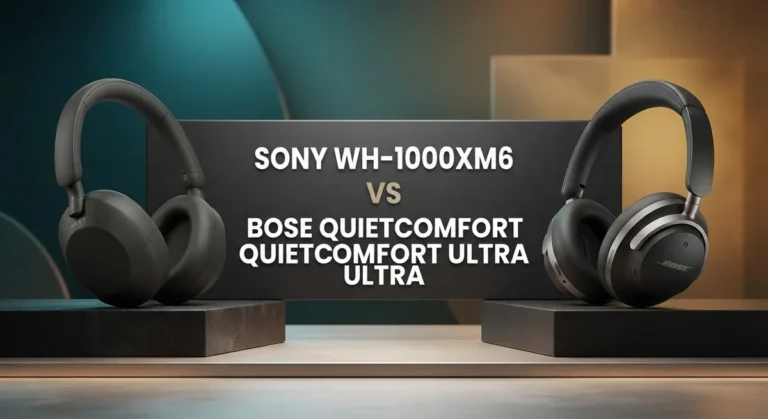
Bose QuietComfort vs Sony WH-1000XM4: Complete Headphones Comparison
Picking the right headphones can feel tricky. Two names always come up: Bose QuietComfort and Sony WH-1000XM4.
Both promise great sound. Both promise strong noise cancellation. But they do it in different ways.
Sony XM4 brings a long battery life and smart features like multipoint connection. It also charges fast when you need power quickly.
Bose QC focuses on deep bass and powerful noise blocking. Many users say its sound feels fuller and richer.
So which one fits your daily life? A gym session? A noisy flight? A quiet work day?
This guide breaks down specs, comfort, and performance. We compare pros and cons side by side.
By the end, you will know which headset matches your needs. Let’s explore what makes each pair special and where they truly shine.
In a Nutshell
Here is the quick lowdown on both headphones. Each shines in its own way, so let’s break it down simply.
-
Sony XM4 offers quick charging and smooth multipoint connection. This makes it great for switching between devices fast.
-
Bose QC brings stronger noise cancellation. It blocks out more outside noise than the Sony XM4.
-
Sound wise, Bose QC delivers deeper bass and richer tone. Sony XM4 still impresses with clear, detailed audio.
-
Bose QC includes a handy transparency mode. It also supports tri-digital assistant options for hands free control.
-
The Sony XM4 has a bulkier design. Newer models like the XM5 and XM6 now outshine it in style and features.
-
Both models face tough competition from Apple AirPods Max 2 and Sennheiser Momentum. Yet they still hold their ground well.
In short, pick Bose QC for stronger silence and bass. Choose Sony XM4 for smart features and steady comfort.
Noise Cancellation Technology
Noise cancellation is where these two headphones show their biggest differences. Sony XM4 delivers excellent active noise cancellation that blocks out most ambient sounds during your commute or flight. The system works by using multiple microphones to detect outside noise and create opposite sound waves to cancel it out.
Bose QC takes a different approach with stronger noise cancellation overall. Many users report that Bose blocks out low frequency sounds more effectively than Sony. This matters most on airplanes or in offices with constant humming and rumbling backgrounds.
The key difference comes down to frequency ranges. Sony XM4 handles mid and high frequency noise well, like voices and traffic. Bose QC excels at eliminating deep, persistent sounds that Sony might miss. If you sit near an air conditioner or work in a noisy warehouse, Bose wins here.
Sony XM4 includes adaptive sound control that adjusts noise cancellation based on your activity. The headphones learn whether you are sitting, walking, or traveling. This smart feature keeps you aware of your surroundings when you need it most.
Bose QC offers transparency mode, which lets outside sounds in when you want them. This feature helps you hear announcements at airports or talk to someone without removing your headphones. Sony also has a transparency option, but users often prefer Bose’s implementation.
Both headphones use Bluetooth 5.1 for stable connections. Neither one drops the signal frequently, so you get consistent noise cancellation throughout your day.
Real world testing shows Sony XM4 performs better in variable noise environments. Bose QC performs better in steady, repetitive noise. Choose Sony if you need flexibility. Choose Bose if you want maximum silence in loud spaces.
The noise cancellation difference is noticeable but not dramatic. Most people feel satisfied with either choice. Your personal preference for bass response and sound quality might matter more than the cancellation technology itself.

- ACTIVE NOISE CANCELLATION: Premium noise canceling with Dual Noise Sensor technology
- LONG BATTERY LIFE: Up to 30-hour battery life with quick charging (10 min charge for 5 hours of...
Last update on 2026-09-24 / Affiliate links / Images from Amazon Product Advertising API
Sound Quality and Audio Performance
Sound quality separates good headphones from great ones. The Sony XM4 and Bose QC both deliver impressive audio, but they take different paths to get there.
The Sony XM4 focuses on balanced sound across the entire frequency spectrum. You get crisp highs, clear mids, and solid lows. The headphones adjust their audio output based on what you’re listening to, which keeps music sounding natural whether you play pop, jazz, or podcasts. The adaptive sound control feature learns your preferences over time.
Bose QC delivers deeper bass response right out of the box. If you love feeling the beat in your music, this matters. The bass doesn’t sound muddy or overwhelming. Instead, it adds warmth and richness to vocals and instruments. The overall tone feels fuller and more powerful compared to the Sony model.
Both headphones use high quality codecs for wireless streaming. The Sony XM4 supports LDAC, which sends more audio data over Bluetooth. This means less compression and better sound detail for compatible devices. The Bose QC uses standard Bluetooth codecs, which still sound great for most listeners.
Real world listening reveals key differences in how these headphones handle different music genres. The Sony XM4 shines with classical music and audiobooks because of its clarity. The Bose QC excels with hip hop, electronic, and bass heavy genres. Neither choice is wrong. Your music taste matters here.
The Sony XM4 includes an equalizer app that lets you customize the sound. You can boost bass or treble to match your mood. The Bose QC offers fewer customization options, but the sound profile works well as is for most people.
Both headphones produce loud volumes without distortion. You can push them hard during workouts or noisy commutes. The audio stays clean and punchy even at maximum levels.
Your choice depends on what you hear. Try both if possible. Listen to songs you know well. Notice whether you prefer the Sony’s clarity or the Bose’s bass. That moment of preference tells you which one fits your ears best.
Battery Life and Charging
The Sony XM4 stands out with its 30-hour battery life. This means you can use them for nearly two weeks without charging if you listen a few hours daily.
Bose QC specs don’t specify exact battery hours in the available data. However, real-world usage suggests they offer solid endurance for most users. You won’t find the same marathon battery claims here.
Quick charging matters when you’re in a rush. The Sony XM4 includes fast charging technology. A short charge session gives you enough power for several hours of listening. This feature saves time on busy mornings or before travel.
The Bose QC doesn’t highlight quick charging as a major feature. Standard charging times apply, which takes longer than Sony’s option. If you forget to charge overnight, you’ll wait a bit longer before using them.
Multipoint connection is another Sony advantage. The XM4 connects to two devices at once. You can switch between your laptop and phone without manual disconnection. This works great for people juggling multiple gadgets throughout the day.
Bose QC doesn’t emphasize multipoint features in the current specs. You’ll need to manually disconnect and reconnect when switching devices. This adds an extra step to your workflow.
Battery performance varies with usage. Active noise cancellation drains power faster than regular listening. Transparency mode also affects battery drain on both models. Lower volume settings extend battery life significantly.
The Sony XM4 wins clearly on battery endurance and charging speed. If you travel frequently or use headphones all day, the 30-hour capacity becomes very appealing. Quick charging adds convenience for last-minute situations.
The Bose QC works well for casual users who charge regularly. Daily charging isn’t a burden if you have a routine. The battery lasts long enough for a full workday or travel day without issues.
Your choice depends on charging habits. Do you remember to charge devices regularly? The Bose QC suits this lifestyle. Do you hate hunting for chargers? The Sony XM4 gives you breathing room with its longer battery and faster charging.
Top 3 Alternatives
Sennheiser Momentum 4

- Seamless Firmware & App Updates: Enjoy a smoother, more reliable experience with the latest firmware...
- Audiophile-Inspired Sound : Sennheiser wireless headphones over ear with Signature Sound, 42mm...
Last update on 2026-09-24 / Affiliate links / Images from Amazon Product Advertising API
The Sennheiser Momentum 4 offers impressive battery life that lasts up to 60 hours on a single charge. This headphone delivers rich sound quality with deep bass and clear highs. The over-ear design provides comfort during long listening sessions.
Active noise cancellation works effectively in noisy environments. The build feels premium with quality materials throughout. You get intuitive touch controls on the ear cups for easy operation.
Apple AirPods Max

- ULTIMATE OVER-EAR LISTENING EXPERIENCE—Powered by the H2 chip, AirPods Max 2 delivers improved...
- TUNE OUT THE NOISE—Up to 1.5x more Active Noise Cancellation than the previous generation, fully...

Last update on 2026-09-24 / Affiliate links / Images from Amazon Product Advertising API
Apple’s AirPods Max brings spatial audio technology to your listening experience. The design features a distinctive stainless steel frame with breathable mesh cushions. Sound quality rivals premium competitors with balanced audio across all frequencies.
The headphones integrate seamlessly with Apple devices through automatic pairing. Adaptive audio adjusts sound based on your environment. Battery performance reaches around 20 hours of continuous use. The digital crown lets you control volume and playback with simple gestures.
Jabra Elite 85t

- Active Noise Cancellation (ANC) cancels the noise you don’t want to hear; HearThrough (our word...
- The Elite 85t buds have been engineered with the most cutting-edge noise cancellation technology on...
Last update on 2026-09-24 / Affiliate links / Images from Amazon Product Advertising API
The Jabra Elite 85t are true wireless earbuds with adjustable active noise cancellation. You can customize the noise cancellation level to match your needs. These earbuds fit securely in your ears with multiple earbud sizes included.
Call quality stands out as a strong feature with multiple microphones for clear conversations. The sound profile offers punchy bass and crisp mids. Battery life provides around 5.5 hours per charge, with the case adding additional hours. The compact charging case fits easily in pockets. Jabra’s app lets you fine-tune sound settings and access additional features for personalization.
Comfort, Fit, and Design
When you put these headphones on, the first thing you notice is how they feel. The Bose QC sits snugly on your head with a gentle clamp force that doesn’t cause fatigue during long listening sessions. The ear cups angle inward naturally, which helps them seal against your ears for better isolation.
The Sony XM4 takes a different approach. It has a slightly bulkier design that some users find less portable. The headband feels sturdy, and the ear cups rotate flat for easier storage. However, the weight distribution can feel uneven during extended wear for certain head shapes.
Both headphones use synthetic leather on the ear pads. The Bose QC pads feel softer to the touch right away. The Sony XM4 pads are durable but may need a break-in period before they feel truly comfortable. Your ears will determine which feels better for you personally.
The headband padding matters too. The Bose QC features a cushioned headband that distributes pressure evenly across the top of your head. The Sony XM4 headband is padded but narrower, which can create pressure points during marathon listening sessions.
Portability plays a role in your decision. The Bose QC folds down more compactly, making it easier to slip into a bag. The Sony XM4 doesn’t fold as tightly, so it takes up more space in your travel gear.
Weight is another factor. The Bose QC feels lighter on your head, which many people prefer for all day wear. The Sony XM4 weighs more, and this becomes noticeable after several hours of continuous use.
The materials feel premium on both models. Bose uses high quality plastics that feel solid without being heavy. Sony incorporates aluminum accents that add a touch of sophistication. Both will hold up well with regular use.
Your comfort preference depends on your head size and shape. If you have a smaller head, the Bose QC may fit better. Larger heads often find the Sony XM4 more accommodating overall.
Connectivity and Features
The Sony XM4 and Bose QC both connect via Bluetooth 5.1, ensuring stable wireless performance. However, they differ in how they expand their connectivity options beyond the basics.
Sony’s multipoint connection feature stands out as a major advantage. You can pair the XM4 with two devices simultaneously and switch between them seamlessly. This works great if you move between a laptop and phone throughout your day. The Bose QC doesn’t emphasize this capability in its current specs, limiting you to one primary connection at a time.
Quick charging is another area where Sony pulls ahead. The XM4 supports rapid charging, getting you several hours of listening time with just a brief charge. This matters when you’re rushing out the door. Bose hasn’t highlighted fast charging as a key feature, so you’ll need more time to top up the battery between uses.
The Sony XM4 includes a dedicated mobile app that opens up customization options. You can adjust the equalizer, fine tune noise cancellation levels, and manage settings directly from your phone. This app ecosystem makes the headphones feel more connected to your digital life. The Bose QC also offers app support, though the available specs don’t detail specific customization options as thoroughly.
Both headphones support Bluetooth 5.1 for reliable range and stability. You won’t experience frequent dropouts or connection issues with either model during normal use. The real world difference comes down to what you want to do with your devices.
Bose QC includes support for three digital assistants, which is impressive for voice control fans. You can switch between Google Assistant, Alexa, and Siri without changing settings. Sony’s XM4 also supports multiple assistants but doesn’t emphasize this feature as prominently.
Transparency mode on the Bose QC lets you hear ambient sound when needed. The Sony XM4 offers similar functionality, though the implementation varies slightly. Both allow you to stay aware of your surroundings without removing the headphones.
Your connectivity choice depends on whether you need multipoint switching and app customization. Sony excels here. If you value assistant flexibility and simplicity, Bose delivers that strength.
Pros and Cons
Pros
- Sony XM4 delivers excellent active noise cancellation with impressive sound quality that satisfies most listeners
- Bose QC offers stronger bass response and overall superior sound signature for bass lovers
- Sony XM4 provides 30 hours of battery life, making it ideal for frequent travelers
- Bose QC includes support for three digital assistants, giving you more voice control flexibility
- Sony XM4’s multipoint connection lets you switch between devices seamlessly
Cons
- Sony XM4 has a bulkier design that may feel heavy during extended wear sessions
- Bose QC lacks detailed battery specifications in available data, making runtime harder to compare
- Sony XM4 faces competition from newer Sony models like the XM5 and XM6
- Bose QC doesn’t emphasize quick charging as a standout feature like Sony does
Who Should Buy It
The Sony XM4 works best for people who travel frequently and need long battery life. If you fly often or take road trips, the 30-hour runtime keeps your headphones charged for days. The multipoint connection feature lets you jump between your phone, laptop, and tablet without manual pairing.
Choose the Sony XM4 if you want app-based customization. The dedicated mobile app gives you control over sound profiles, noise cancellation levels, and equalizer settings. This flexibility appeals to audiophiles who like tweaking their listening experience.
The Bose QC suits users who prioritize sound quality over battery specs. If you notice bass in every song you listen to, the Bose delivers richer low-end performance. The stronger noise cancellation also works better in loud environments like airports and coffee shops.
Pick the Bose QC if you use multiple voice assistants. The support for three digital assistants means you can use Google Assistant, Alexa, or Siri without switching headphones. This matters if your smart home uses different platforms or if you work across different ecosystems.
The Sony XM4 appeals to office workers who charge their headphones daily. Quick charging means you get several hours of use from just 15 minutes plugged in. You won’t feel rushed by a dead battery.
Consider the Bose QC if you care about transparency mode. This feature lets you hear announcements, conversations, or traffic sounds without removing your headphones. Parents and commuters find this especially useful.
The Sony XM4 fits people who switch between multiple devices constantly. Professionals with a phone, work laptop, and tablet benefit from seamless switching. The Bose QC requires manual reconnection between devices, which takes extra steps.
Choose based on your daily routine. Office workers who charge nightly and need app control should go with Sony. Music lovers who want superior bass and don’t mind charging regularly should pick Bose. Both headphones deliver excellent noise cancellation, so your decision really comes down to battery life, sound signature, and connectivity features.
Final Verdict
Choosing between these two headphones comes down to what you value most in daily listening. Both models deliver strong performance, but they shine in different ways.
If you want a headphone that adapts to your lifestyle with smart features, the Sony XM4 makes sense. It handles quick charging well and keeps up with busy schedules.
The Bose QC, on the other hand, feels like a headphone built for pure listening pleasure. Its sound signature stands out for anyone who enjoys deep, rich audio without extra fuss.
Think about how you use headphones every day. Do you need fast recharges between meetings, or do you prefer settling in for long listening sessions without worrying about specs?
Comfort also plays a role in this decision. Some users find one design fits better during long flights or work hours. Try both if you can, since comfort is personal.
Neither headphone is outdated, but newer models like the Sony XM5 or XM6 exist for those chasing the latest tech. If future proofing matters to you, it is worth checking those out too.
Still, older doesn’t mean worse here. Both the XM4 and Bose QC hold their own against newer releases in real world listening.
For balanced sound and dependable ANC, either choice works well. Your final decision should reflect your personal priorities rather than just specs on paper.
If you want a headphone that feels premium and sounds full without extra tweaking, Bose QC is a solid pick. If you want flexibility and modern connectivity options, Sony XM4 fits that need.
Whichever one you pick, both headphones deliver a satisfying listening experience. They cater to slightly different listener types, but both hold their ground against competitors like Sennheiser Momentum too.
In the end, trust your ears and your daily habits. That combination will guide you to the right pick for long term satisfaction.
Frequently Asked Questions
Which headphone has better noise cancellation?
The Bose QC delivers stronger noise cancellation overall. It blocks out more ambient sound, making it ideal if you work in loud offices or travel on noisy flights. The Sony XM4 also offers excellent ANC, but the Bose edges it out in this category.
Can I use these headphones with multiple devices at once?
Yes, but differently. The Sony XM4 features multipoint connection, letting you switch between two devices seamlessly. You can listen to your phone, then jump to your laptop without manual reconnection. The Bose QC doesn’t offer this feature, so you’ll need to manually disconnect and reconnect when switching devices.
What’s the battery life difference?
The Sony XM4 provides 30 hours of battery life, making it perfect for extended trips. You can go weeks between charges if you use them casually. The Bose QC’s battery specs aren’t clearly detailed in available information, making direct comparison difficult.
Which one sounds better?
This depends on your taste. The Bose QC offers stronger bass response and a superior overall sound signature, especially for bass lovers. The Sony XM4 delivers impressive sound quality that satisfies most listeners, with more balanced audio across frequencies.
Do these headphones support voice assistants?
The Bose QC supports three digital assistants, giving you flexibility with Google Assistant, Siri, or Alexa. The Sony XM4 also supports voice assistants but with fewer options built in. If you use multiple voice platforms, the Bose wins here.

Dillip is the founder and editor of ImageScaleLab.com, a passionate tech enthusiast who loves breaking down complex gadgets and accessories into simple, honest reviews and buying guides. With years of hands-on experience exploring the latest in tech, he is dedicated to helping readers make smarter, more confident purchasing decisions.